
A fly sheet only helps if it fits
The best sheet in the barn can't do its job if it rubs or slips. The good news -- rubs are easy to spot early and easy to fix. Here is how to get the fit right and keep your horse comfortable all season.
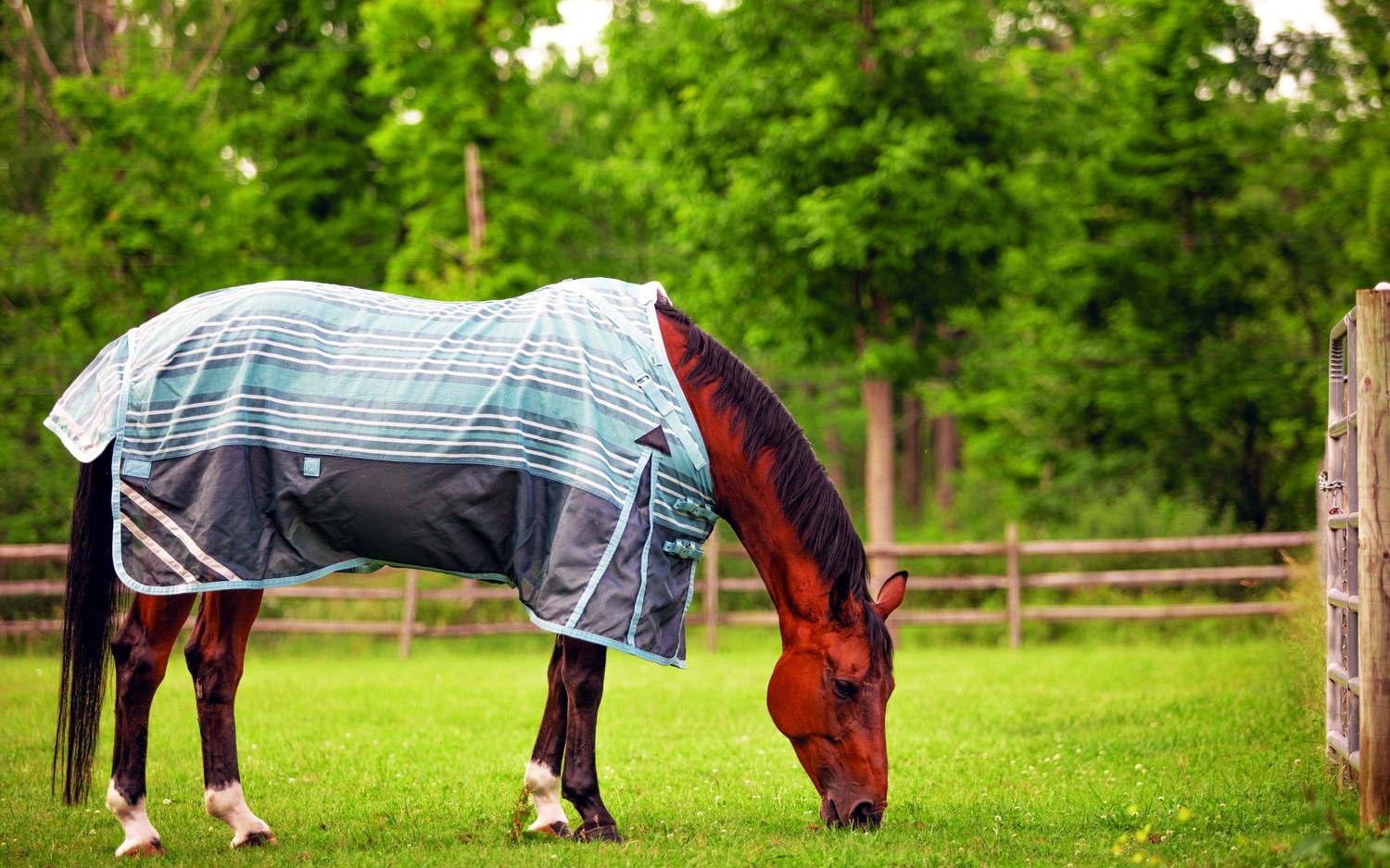
A fly sheet that fits well protects; one that doesn't creates its own problems. Rubs show up as broken hair or bald patches at the high-friction spots -- shoulders, withers, and chest -- and a small tear can shift how the whole sheet sits, throwing off the fit. Catch a snag early and it's a five-second fix. Let it go and you're shopping for a new sheet.

Once a week, when the sheet comes off, run your hand over the shoulders, withers, and chest -- the three spots where a sheet moves against the coat most. You're feeling for broken or roughed-up hair and any thin or bald patches starting to form. It takes about five minutes, and your horse gets a good scratch out of the deal.
- Broken, stubbly hair means friction is already happening -- act before it becomes a bald patch.
- Thin or shiny spots at the shoulder are the earliest warning; they're easy to reverse now.
- Feel for warmth or tenderness -- a rub that's gotten sore needs the sheet off until it heals.
While you're at it, look the sheet over. A small tear doesn't just grow -- it changes how the sheet drapes and sits, which quietly throws off the fit and starts new rubs somewhere else. A snag caught today is a patch; a snag ignored is a new sheet.
- Check the shoulders and chest seams, where turnout stress lands hardest.
- Patch small tears right away so the sheet keeps its shape.
- If straps have stretched, snug them back up -- a shifting sheet rubs.

Most rubs trace back to fit. A few minutes measuring before you buy saves a season of touch-ups -- and keeps your horse comfortable from day one. Not sure how? Our step-by-step measuring guide walks you through it.
- Measure, don't guess. Run a tape from the center of the chest to the point of the tail -- that number is your blanket size.
- Sits at the wither. A good fit lays smooth at the wither without dragging back or pulling forward.
- Easy across the chest. The chest should close without straining; too tight here is the number-one cause of shoulder rubs.
- Room in the shoulder. Your horse should be able to graze and stride without the sheet catching or pulling.
- Snug straps, level hem. Leg straps and surcingles hold the sheet in place so it can't slide and chafe.
- Right cut for the build. A high-withered or broad-shouldered horse may need a specific cut -- when in doubt, ask us.
If your horse's sheet has started to rub, or it's an older favorite you're not ready to retire, don't give up on it yet. Most rubs come down to fit, and fit is almost always something you can adjust.
Start by checking the size against your horse's build, then snug the leg straps and surcingles so the sheet stays put instead of sliding and chafing. Some of our fly sheets even come with Adjusta-Fit®, an adjustable neck system that lets you dial in the fit at the withers and chest, exactly where rubs start.
Still rubbing after you've checked the size and straps? Our team of equestrians is happy to help you figure out the right fit for your horse. And if the sheet has truly worn out, thin, misshapen, or rubbing no matter what you try, it's stopped protecting your horse. That's the moment to replace it, and a fresh start is the perfect chance to nail the fit.
Spot any of these on your weekly once-over? Check the size, adjust the straps, or reach out to our team now, while it's still a quick fix.
- Broken or stubbly hair at the shoulders, withers, or chest
- Thin, shiny, or bald patches starting to form
- The sheet slipping back or sitting off-center
- Tightness or straining across the chest closure
- A small tear or snag beginning to spread
- Warm or tender skin under a high-friction spot
Not sure about the fit? Let's figure it out together.
Our team rides too -- and we're happy to help you nail the fit for your horse's build. If a sheet you bought recently is rubbing or sitting wrong, reach out right away so we can make it right.