
Stop Your Horse From Shredding Every Bandage You Apply
You spent twenty minutes wrapping that leg with care — and found it in pieces on the stall floor by morning. There's a bandage that fights back.

Your Horse Is Undoing Every Wrap You Put On
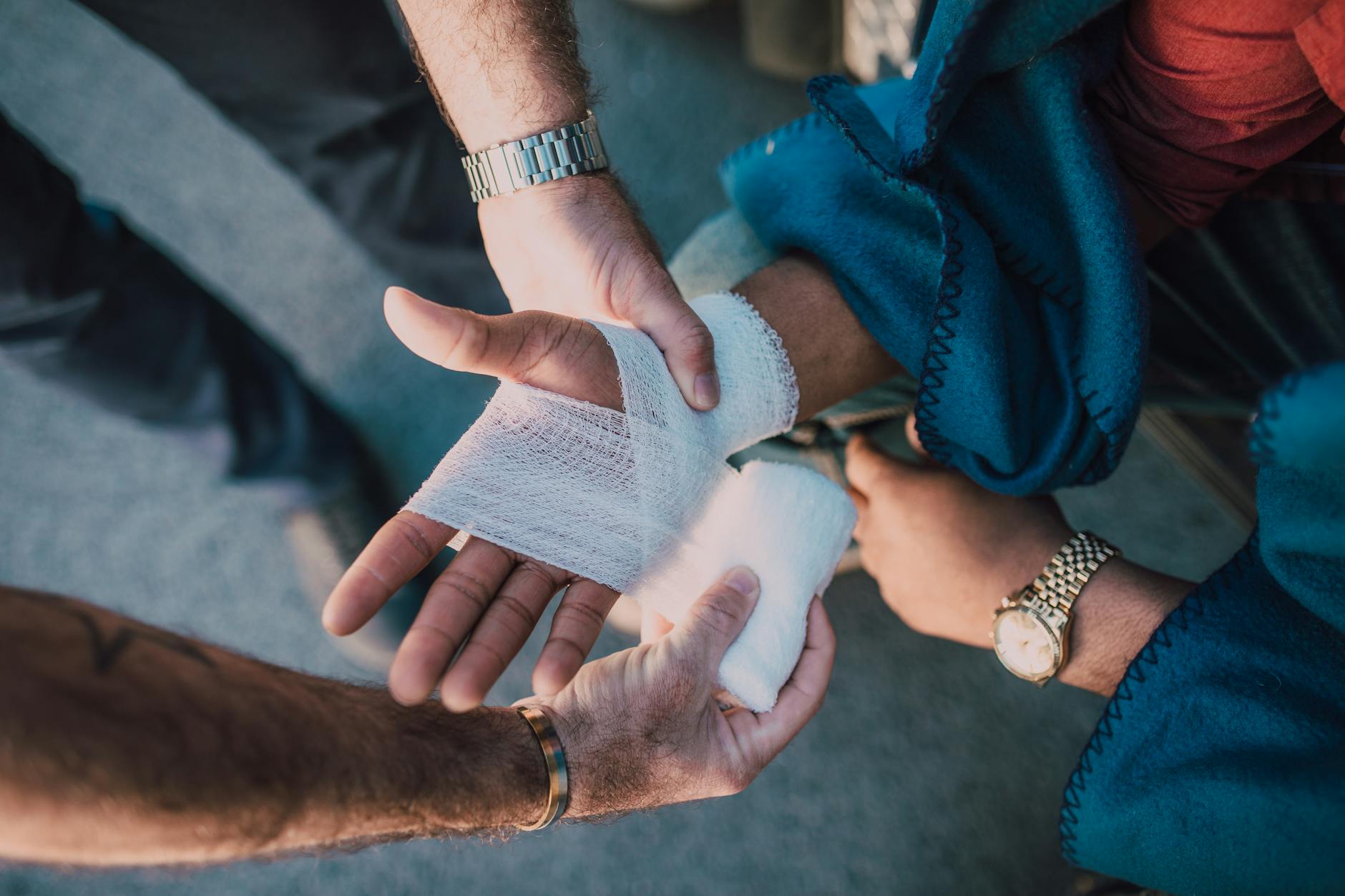
For horse owners managing an injury, wound site, or post-surgical recovery, the destruction of a bandage isn't just an inconvenience — it's a genuine setback. A horse that has been pulling at its wrap since three in the morning has likely exposed raw tissue, introduced dirt and debris to a wound that was healing, and potentially compromised the pressure system holding swelling at bay. The vet visit you thought you were avoiding just became necessary again.
This scenario plays out across barns every single day. It's particularly common with young horses, horses under stress, horses stalled for the first time, and horses recovering from surgeries that leave them bored and uncomfortable. A horse in pain or discomfort will investigate with his lips and teeth — it's a natural response. A bandage that smells faintly medicinal and crinkles under pressure is practically an invitation.
Barn managers and horse owners have tried everything — distractions, stall toys, extra layers of tape, socks over wraps, hourly check-ins. Some set alarms for 2 a.m. just to confirm a bandage is still in place. None of these solutions addresses the actual mechanism: a horse who is determined to chew will chew. Until the bandage itself becomes the deterrent.
It's Not Your Wrapping Technique — It's Your Horse's Biology
The standard advice is to wrap tighter and tape more. That trades one problem for another, and your veterinarian would rather you didn't. What you gain in deterrence you can lose in the fit of the bandage itself.
So people reach for add-ons — hot sauce painted on the outside, anti-chew sprays, whatever the barn down the road swears by. Those last a day or two, until your horse gets used to the smell or the spray wears off. Reapplying anything to a wrap that's already on a leg you're trying to protect is its own risk.
What's missing in every one of those workarounds is integration. The deterrent sits on top of the bandage, or near it, instead of in it. Every time your horse mouths the wrap and finds nothing unpleasant, he learns that persistence pays.

A Bandage With a Built-In Deterrent — From the Inside Out
Bitter Taste, Built In
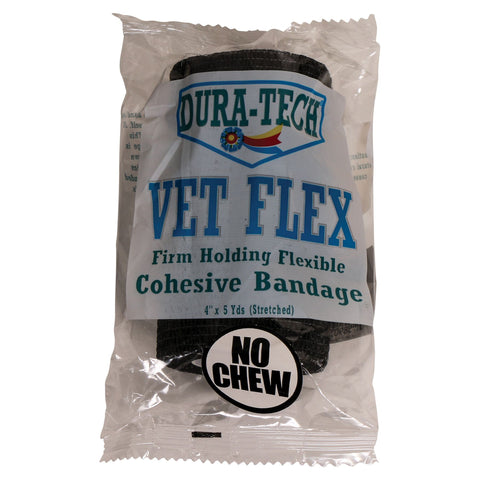
The wrap itself tastes bitter, so the deterrent is there the first time your horse puts his mouth on it — no sprays, no reapplying.
Conforms and Holds
A flexible, breathable, self-adhesive wrap that conforms to the leg and applies even pressure.
Works on Stalls Too
Wrap it around the spot in the stall your horse has decided to chew, and the same bitter taste goes to work there.
4 Inches by 5 Yards
Each roll measures 4 inches wide by 5 yards long when stretched, in black — sized for standing wraps, tail wraps, and packed hooves.
How These Equine Bandage Wraps Compare
A neutral, feature-by-feature look at published product details for three 4-inch cohesive bandage wraps. When a manufacturer or retailer did not publish a specification in the cited sources, it is marked “Not listed” rather than inferred.
| Feature | Schneiders Dura-Tech® No Chew Vet Flex Bandage - 4" | Andover PowerFlex No Chew Cohesive Bandage - Yellow | 3M Vetrap Bandaging Tape - 4" Black |
|---|---|---|---|
| Bitter-taste chew deterrent | Yes; published as a bitter taste that discourages biting, chewing, and tearing | Yes; No Chew version is published with a bitter taste intended to deter chewing | Not listed in cited sources |
| Roll dimensions | 4" wide x 5 yards long, stretched | 4" wide x 5 yards long | 4" wide x 5 yards long |
| Cohesive or self-adhering construction | Yes; published as self-adhesive | Yes; published as a self-adhering cohesive bandage | Yes; sticks to itself without pins or tape |
| Breathable or porous construction | Breathable construction listed | Not listed in cited sources | Porous construction listed |
| Hand-tear capability | Not listed in cited sources | Straight, clean hand tear listed | Clean, straight hand tearing listed |
| Sweat and water resistance | Not listed in cited sources | Sweat- and water-resistant | Not listed in cited sources |
| Published compression description | Conforms to the leg and applies even pressure | Controlled compression described as non-constricting | Maintains even compression over time |
| Color of compared product | Black | Yellow | Black |
Engineering That Works With How Horses Behave
- ✓Bitter-taste formula discourages chewing and pulling from first contact
- ✓4" wide x 5 yards long (stretched) — standard sizing for legs, hooves, and tail work
- ✓Self-adhesive cohesive wrap — adheres to itself, not hair or skin
- ✓Flexible and breathable — suitable for running bandages, standing wraps, and packed hooves
- ✓Doubles as a stall deterrent wrap for wood chewing and cribbing protection
Protection That Holds. A Deterrent That Doesn't Quit.
Keep the Wrap Where You Put It
The No Chew Vet Flex Bandage's bitter-taste formula is designed to discourage chewing on contact — no sprays, no re-wrapping at midnight, no setbacks to healing progress. Schneiders has carried trusted equine care products since 1948, and this one earns its place in every barn's first-aid kit. Add it to your order today and protect every wrap you put on.