
Stop Rewrapping: The Self-Adhering Bandage That Finally Stays Put
Every horse person knows that sinking dread of glancing down mid-trot and seeing a wrap already migrating south. There's a better way — and it doesn't require pins, tape, or a second set of hands.

Your Leg Wraps Never Stay Where You Put Them
It repeats in a hundred different ways. A horse shifts in the crossties and kicks out, and a carefully applied standing wrap unravels across the aisle. A hind leg needs covering during turnout, so you spend fifteen minutes layering cotton and vet wrap — and find it bunched around the pastern by lunch.
When you're following your veterinarian's instructions, a wrap that won't stay put is more than an annoyance. You're watching the clock and wondering whether what you applied at six is still doing its job at noon.
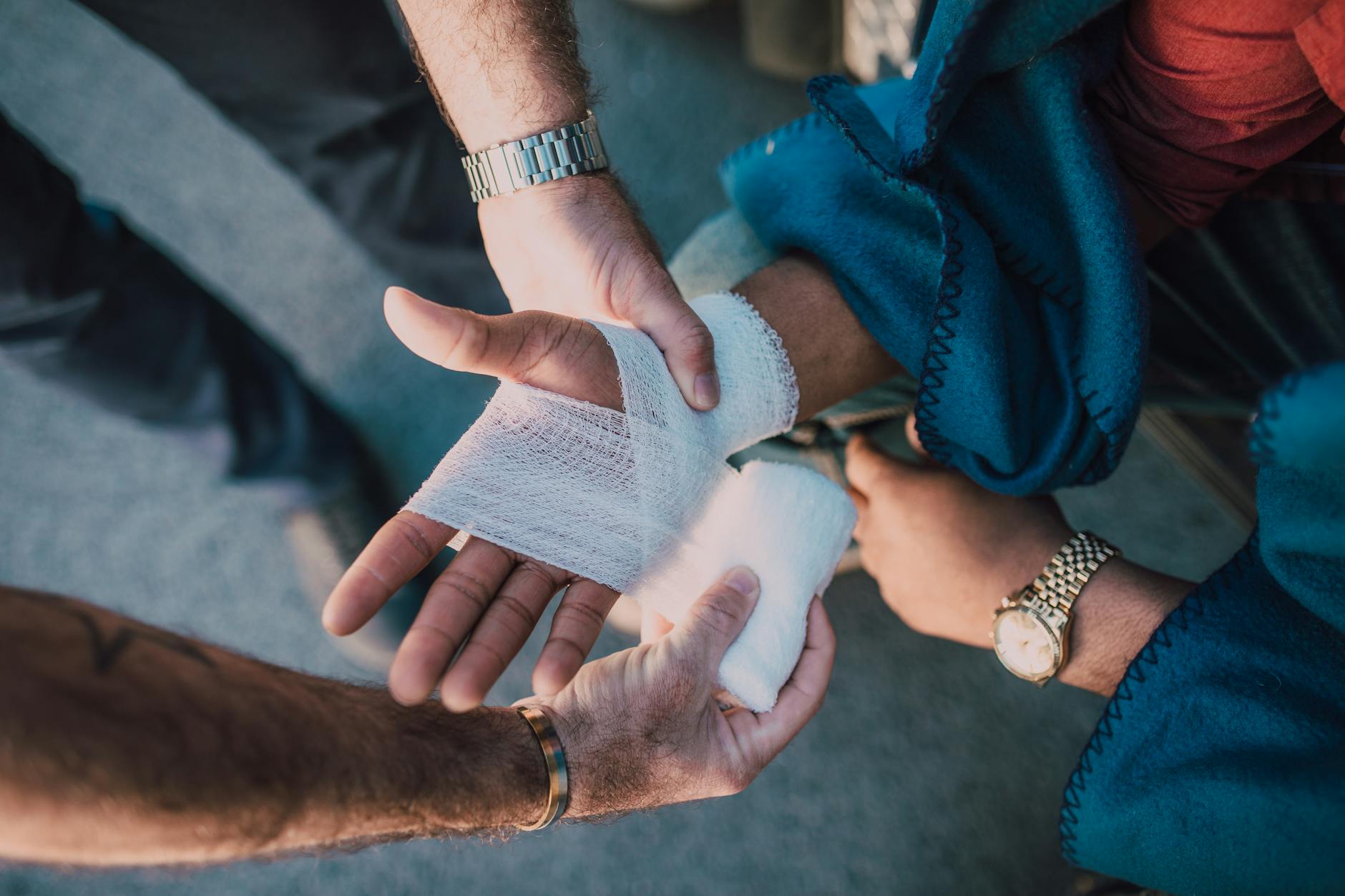
Then there's hoof packing, the job that breaks almost every standard bandage. You need something that follows an irregular shape, holds the packing against the sole, and doesn't unravel when your horse shifts his weight in the stall. Standard wraps slide. Standard tape tears before it seals.
Standard Wraps Weren't Built for Horses

A Wrap That Sticks to Itself — And Nothing Else
Each roll measures 4 inches wide by 5 yards long when stretched. Those published dimensions give you a clear starting point when planning first-aid coverage, running bandages, tail wraps, or hoof packing. The four-inch width covers a useful area with every pass, while the flexible material can follow the shape of the wrapped area. When you want a cleaner, straighter edge than hand tearing provides, the product instructions recommend using scissors.
For your horse, the practical benefit is a wrap that can be shaped around the intended area instead of requiring you to fight loose layers while you work. For you, it means one product can serve several familiar jobs in the tack room, grooming tote, trailer, or equine first-aid supplies. You can focus on smooth overlap and appropriate application rather than stopping to manage a material that will not grip itself.
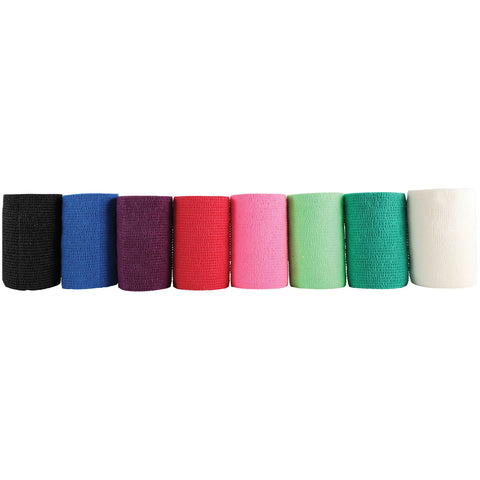
Dura-Tech Vet Flex is offered in eight Shopify-listed colors: black, blue, green, lime, pink, purple, red, and white. That selection makes it easier to organize supplies, match barn colors, or distinguish wraps at a glance. If your barn uses vet wrap regularly, the supplied product information also lists a discounted rate when 18 or more rolls are purchased. It is a straightforward, versatile bandaging option backed by equine expertise from a family business Trusted since 1948.
Self-Adhesive Hold
Each layer grips the one beneath it for a secure, non-slip hold — no pins and no tape.
Limb-Conforming Flex
Molds to the natural contours of cannon, fetlock, and pastern for even pressure on every pass.
Rips by Hand
Tear a length by hand when you're in a hurry, or use scissors when you want a clean straight cut.
Stock Up and Save
Order 18 or more rolls and they ship at a discounted rate.
See How These 4-Inch Vet Wraps Compare
These cohesive veterinary wraps share several basic features, but their published uses, color selections, application details, and package options differ. The table reflects only information listed in the supplied Dura-Tech record and cited competitor sources.
| Feature | Schneiders Dura-Tech® Vet Flex 4" Bandage Wrap | 3M™ Vetrap™ Bandaging Tape | CoFlex® Vet |
|---|---|---|---|
| Published bandage type | Self-adhering vet wrap for horses | Self-adhering veterinary bandaging tape | Self-adhering cohesive bandage for large and small animals |
| Published roll size | 4 inches wide × 5 yards long when stretched | 4 inches wide × 5 yards long | 4 inches wide × 5 yards long |
| Listed applications | First aid, running bandages, tail wraps, and hoof packing | Limb immobilization for splints and casts, support for sprains and strains, compression, and securing catheters or bandages | Fixing bandages, light compression, wound care, and identification |
| Published compression statement | Conforms to the leg and applies even pressure | Maintains even compression over time | Provides consistent compression; manufacturer states it will not constrict |
| Published application or tearing detail | Rips by hand; scissors are recommended for a clean, straight cut | Can be torn by hand and provides a clean, straight tear | Designed for quick application in a continuous motion; hand-tearability is not listed for CoFlex Vet in the cited manufacturer catalog |
| Published color availability | Eight listed colors: black, blue, green, lime, pink, purple, red, and white | Available in multiple colors; the official U.S. animal-care listing includes black, blue, hunter green, red, white, and assorted colors | Manufacturer catalog lists 11 solid color codes plus color packs |
| Natural-rubber-latex disclosure | Not listed in the supplied Shopify product record | Contains natural rubber latex | Contains natural rubber latex |
| Published bulk or quantity option | Discounted rate listed for purchases of 18 or more rolls | Available as a single roll or an 18-roll case through the cited animal-health retailer | The 4-inch × 5-yard size is listed in 18-roll and 100-roll cases |
Built for the Reality of Equine Leg Care
- ✓Self-adhering cohesive wrap — no tape or pins needed
- ✓4" wide x 5 yards long stretched — ideal for equine legs
- ✓Conforms to irregular limb contours for even pressure
- ✓Rips by hand for field use, cuts clean for precision
- ✓Bulk pricing available at 18+ rolls for busy barns
Reliable Coverage for Every Wrap, Every Time.
Get the Wrap That Stays Put — Finally.
Schneider Saddlery has been trusted by working barns since 1948 — this is the wrap we stock because it earns that trust every time a horse comes in from turnout still properly wrapped.