
Everything Fly Boots (and Why Your Horse Needs Them)
Flies love the lower leg, and a horse that stomps all day is telling you so. Here is the plain-English guide to what fly boots do, how to pick a pair, and the styles worth knowing.
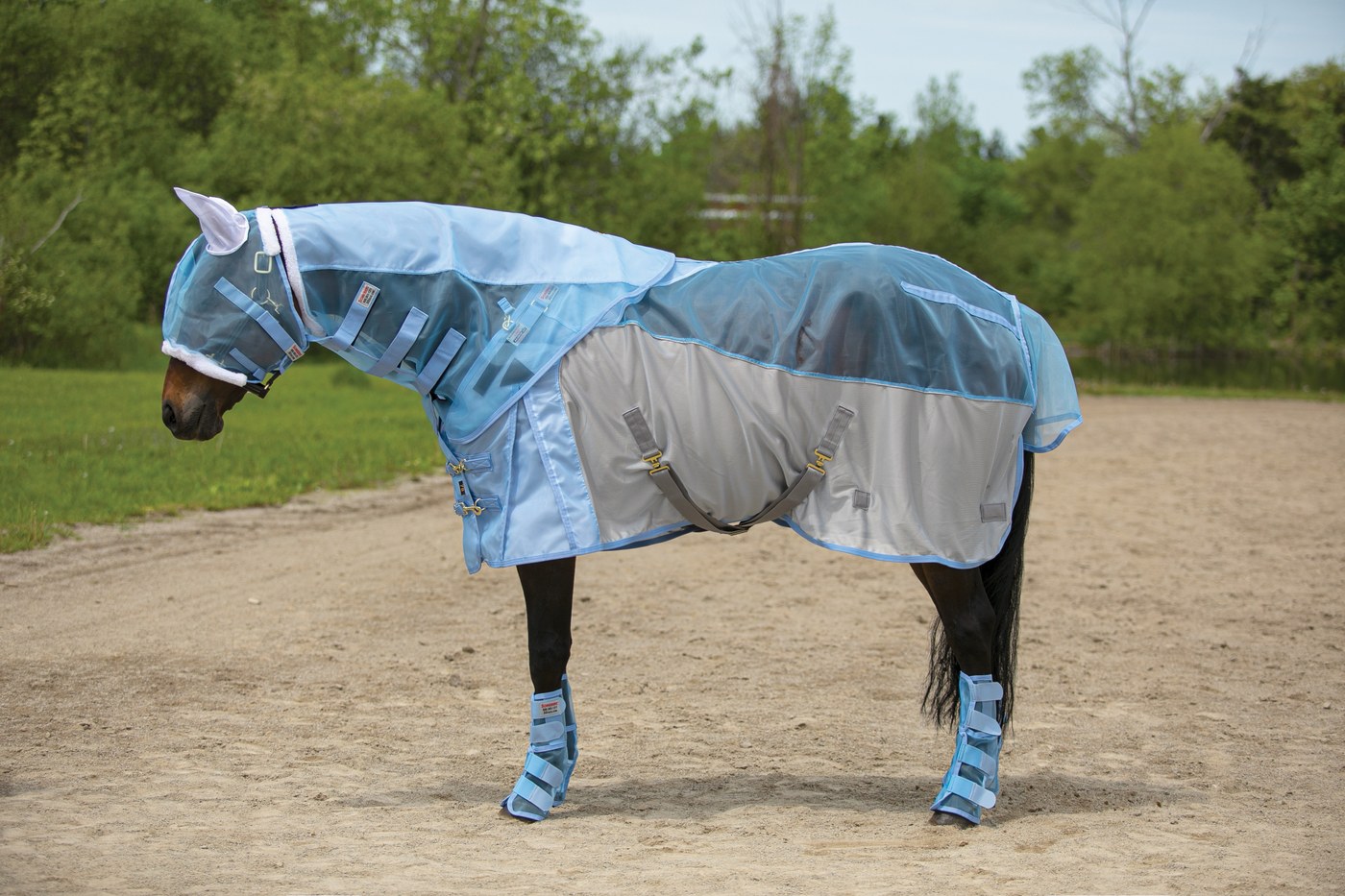
Fly boots are the piece most people add last and wish they had added first. They shut down the stomping, spare the shoes, and keep the lower leg free of bites. Here is everything you need to know.
Bites on the leg are more than an itch. The stomping they set off is what quietly costs you, from the hoof on up.
Biting flies swarm the lower legs, so a horse stomps to shake them off. All day. Every stomp sends a jolt of concussion up through the hoof and leg. Give the flies nothing to bite and the stomping stops.
Hard, repeated stomping on packed ground is a fast way to spring a shoe loose. One thrown shoe on a weekend can mean a scramble for the farrier and a horse you cannot ride.
Constant stomping and stamping loads the joints and tendons far more than easy turnout should. Over a long bug season, that low-grade wear and tear adds up.
The lower leg has thin skin and not much to hide behind. Bites there turn into raw, scabby sores and rubbed-out patches that are slow to heal and easy to reopen.
Add it up and one problem feeds the next: flies lead to stomping, stomping leads to concussion, thrown shoes, and strain. Fly boots break that chain at the very first link.
Three things decide whether a pair actually earns its keep: what they cover, how they fit, and what they are made of.
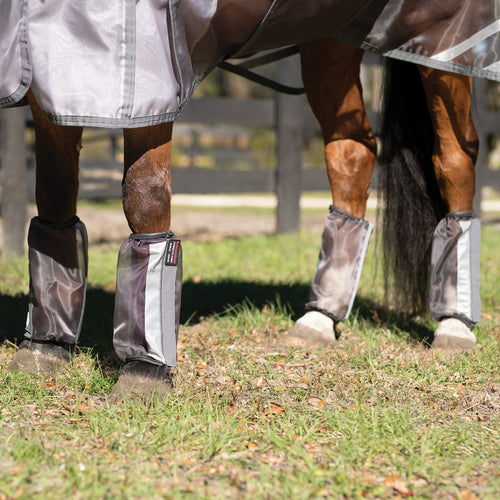
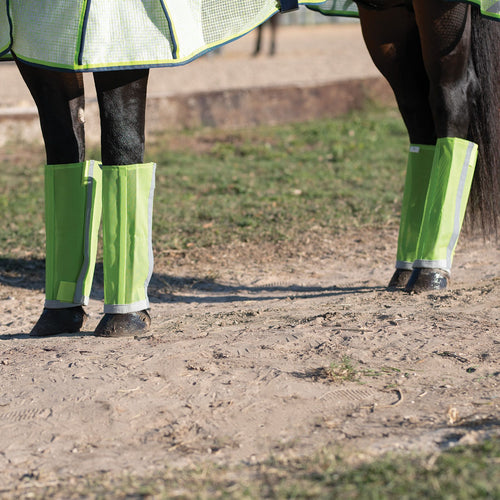
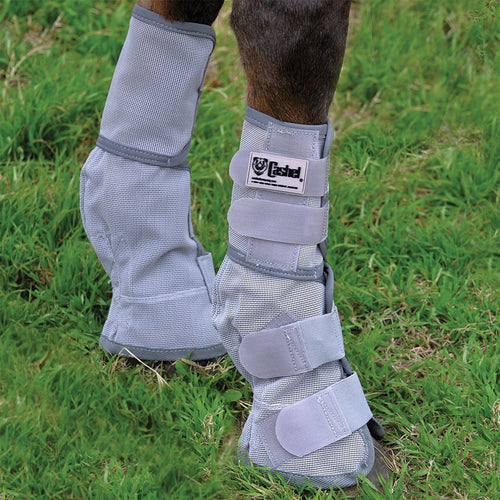
The whole point is to cover the zone the flies go for. Look for boots that reach from below the knee or hock down over the fetlock and pastern, right down to the coronet band, since that is exactly where the stomping starts.
- Full-length coverage protects the sensitive coronet band, not just the cannon bone.
- A snug, non-slip cut means the boot stays put instead of spinning around the leg.
- Reflective trim is a nice bonus for early-morning and dusk turnout.
A fly boot only works if it stays where you put it. Too loose and it slides down and gathers at the fetlock. Too tight and it rubs. Measure your horse and match the size chart rather than guessing, and remember drafts, ponies, and long-legged types often need a specific cut.
- Measure leg length and circumference before you order, every horse is built differently.
- Closures should be snug and secure but never pinching. Check for rubs the first few days.
- Not sure on size? Our team of real horse people is happy to help you dial it in.
Breathable mesh keeps legs cool and lets air move, which matters in the heat of summer. A softer lining adds comfort and can suit thin-skinned or sensitive horses. Both keep the bugs out, so the choice comes down to your horse and your climate.
- Open mesh: coolest and lightest, great for hot, humid barns.
- Heavy coated mesh: tougher against rough turnout and pasturemates who like to play.
- Soft-lined: gentler against the leg for sensitive skin or all-day wear.
Cool mesh for everyday turnout, heavy-duty mesh for the rowdy ones, and soft guards for sensitive legs. There is a right pair for every horse.
Fly spray covers the gaps the boots can't
Boots handle the legs, but the belly, barrel, and topline still need backup. A good fly spray is the invisible barrier for everywhere gear cannot reach, and it pairs perfectly with boots and a sheet.
Shop Fly Sprays & Repellents ›Legs covered. Now the rest of the horse.
Boots stop the stomping, but flies still work the eyes, ears, and body. Pair your boots with a mask and sheet and your horse is protected head to hoof.
Need sizing help? Our team of real horse people is glad to sort it out. Contact us ›