
Make your new saddle last decades
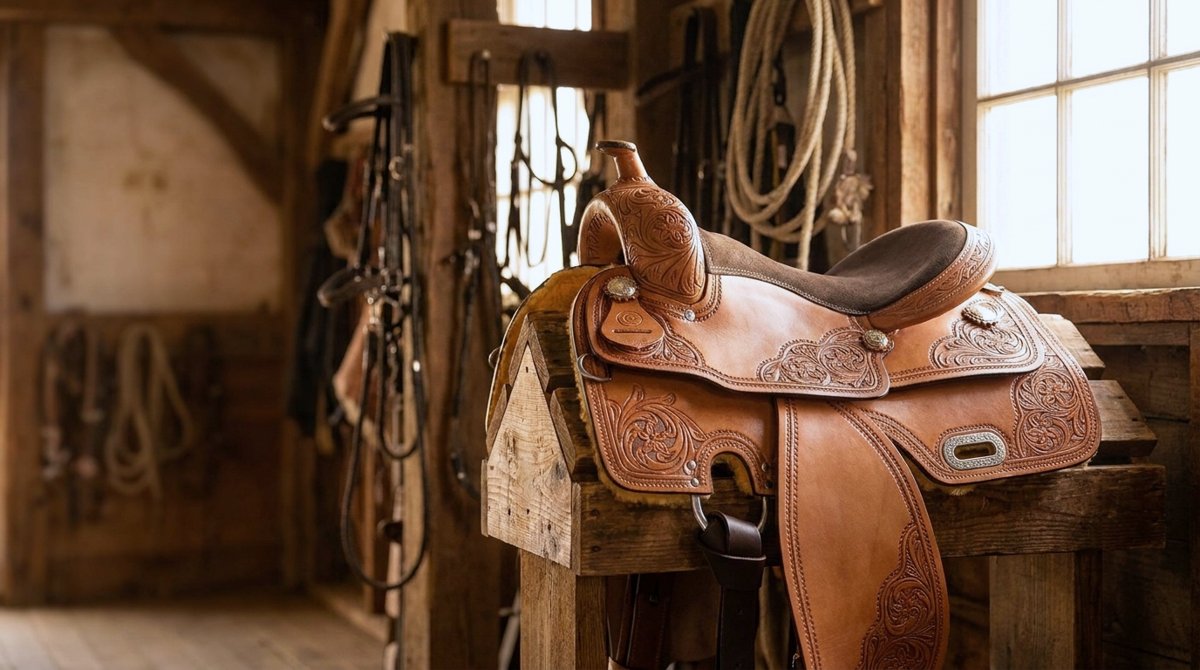
A good saddle is an investment, and treated right it will ride comfortably for years and years to come. New leather just needs a little attention up front: a gentle break-in, the right cleaning and conditioning routine, a fit that suits your horse, and smart storage. Here's how to do all four.
1. Breaking in your new saddle
Fresh leather is stiff and a little thirsty. Break-in softens it and lets the saddle settle to your seat and your horse's back, so both of you are more comfortable, faster.
- Condition it lightly first. A thin coat of leather conditioner on the skirts, fenders, and underside feeds the leather so it flexes instead of cracking. Go light -- you can always add more.
- Ride it in gradually. Start with shorter rides and build up. The leather shapes to you a little each time; there's no need to rush it.
- Work the stiff spots. Western: gently turn and roll the fenders so the stirrups hang forward and your knees thank you. Sticking a broom between the stirrups helps keep them in position to break in more quickly! English: flex the flaps and let the billets stretch naturally over the first few rides.
2. Cleaning & conditioning
Sweat, dirt, and arena dust are hard on leather. A quick wipe after rides plus a deeper clean every few weeks keeps the leather supple and the stitching strong.
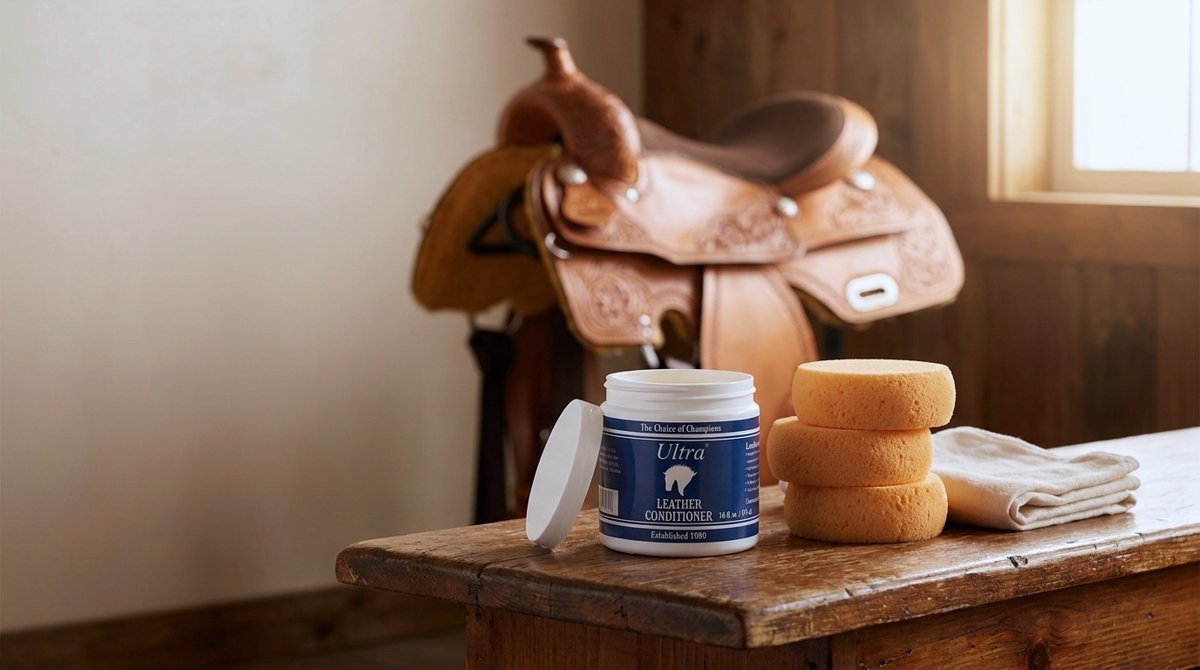
- Wipe it down. Use a damp fine-pore tack sponge to lift dust and grime after each ride.
- Clean the leather. Work up a light lather with a leather cleaner or glycerine soap, then wipe away the residue. Don't soak it.
- Condition to finish. A non-greasy conditioner like Ultra® Leather Conditioner puts moisture back so the leather stays soft and doesn't crack -- and it won't rub off on your clothes.
3. Checking the fit
A saddle that fits protects your horse's back and keeps them moving freely. Check it as the new leather settles and any time your horse changes shape (age, work, weight).
- Clearance. The gullet should clear the withers and spine all the way down the channel -- no pressure on the bone.
- Even contact. The panels or bars should sit flat against the back with no bridging or rocking.
- Level seat. The lowest point of the seat should sit level, not tipping you forward or back.
- Watch your horse. Dry spots in an even sweat pattern, rubbed hairs, white hairs, or a cold back and pinned ears when tacking up all say "have the fit checked."
4. Storage & off-season care
- Use a proper rack. Store the saddle on a saddle rack that supports the tree -- never balanced on a thin rail, which distorts the panels.
- Cover it. A breathable saddle cover keeps dust and barn grime off between rides.
- Keep it cool and dry. Avoid damp tack rooms (mold) and direct heat or sun (drying and fading). Good airflow is your friend.
- Before you store it for the season, give it a full clean and condition so it rests soft and ready for spring.