
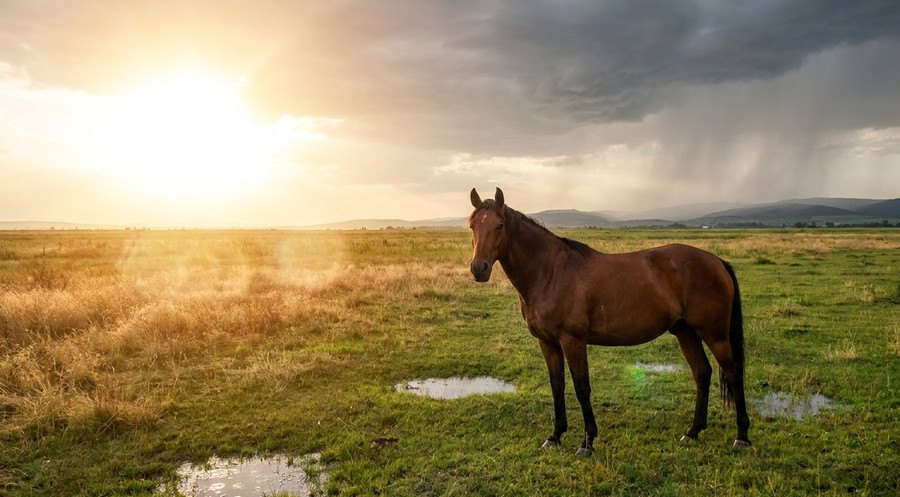
One week we're melting, the next week we're underwater.
Summer 2026 has been a whiplash of extreme heat and sudden downpours -- and both are hard on your horse. Here's how to keep your horse cool, dry, and protected, plus why wet weather sets off the worst fly stretch of the year.
A young gelding sweating through a heat advisory in Texas and an old pony standing in a flooded New Hampshire paddock have very different problems this week -- and if the heat and the rain trade places, so do yours. This guide breaks summer into three threats: the heat, the wet, and the fly explosion that follows. Jump to whatever your weather is doing right now.
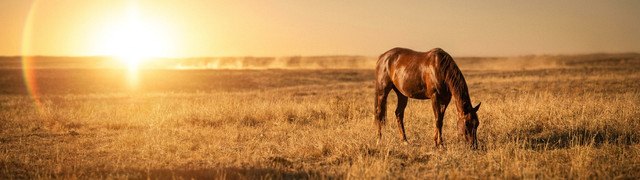
Beat the Heat
When the heat index climbs, a horse can go from uncomfortable to in trouble fast -- especially older horses, heavy-coated horses, and anyone in hard work. Cooling isn't just comfort; it protects the heart, gut, and muscles.
Signs your horse is overheating
- Heavy, fast breathing that doesn't slow after rest
- A rectal temp above 103°F that won't come down
- Sluggishness, stumbling, or a dull, distant look
- Skin that stays "tented" when pinched (dehydration)
- Little or no sweat on a hot day -- a red flag for anhidrosis
How to help your horse beat the heat
- Ride at dawn or after dusk, and skip hard work on advisory days
- Offer clean, cool water everywhere -- add a salt lick or electrolytes to keep them drinking
- Turn out in shade, or flip day/night turnout so they're in during peak sun
- Hose down the big blood vessels (neck, chest, between the legs) and scrape, repeat
- Swap heavy fly sheets for a light, cooling mesh with UV protection
- Cool tired legs after work with cold therapy boots or wraps


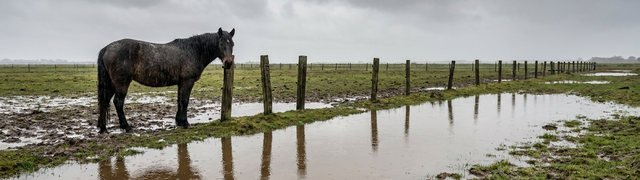
When the Skies Open: Wet & Flooded Pastures
Days of rain and standing water do more than make a mess. Constant moisture breaks down skin and hooves, and a flooded paddock is a health problem waiting to happen -- from rain rot to abscesses.
What wet weather does to your horse
- Rain rot & scratches -- scabby, crusty skin along the back, legs, and pasterns
- Thrush -- that black, foul-smelling frog rot from standing in mud and muck
- Hoof abscesses -- softened, waterlogged hooves let bacteria in
- Softened, weak hoof walls that chip, crack, and lose shoes
- Mud fever and lost turnout as pastures flood
How to keep your horse dry and sound
- Give them somewhere dry to stand -- rotate to high ground, a dry lot, or a bedded stall
- Pick out feet at least once a day and treat any thrush early
- Dry the legs and back, then keep skin dry with a drying powder or paste
- Use a breathable summer turnout or rain sheet to keep the coat dry when they're out in the wet
- Harden soft, wet hooves and poultice a hot, throbbing foot at the first sign of an abscess
- Knock down standing water fast -- it's ground zero for the fly problem below


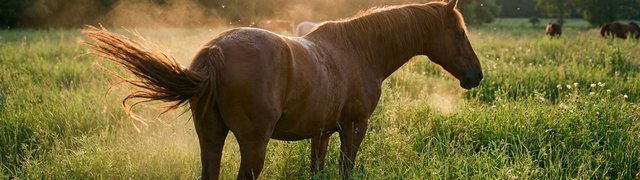
Heat + Water = a Fly Explosion
Here's the connection most people miss: the heat and the rain team up to breed flies. Warm, humid air speeds a fly from egg to adult in days instead of weeks, and every puddle, wet manure pile, and soggy patch becomes a mosquito and fly nursery. That's why the worst biting stretch of the year comes right after a wet, hot spell.
Why the bugs get so bad after a storm
- Standing water = instant mosquito and fly breeding grounds
- Heat + humidity shrink the egg-to-adult cycle to just a few days
- Wet manure and bedding become the perfect place to lay eggs
- More biting means stomping, head-tossing, sores, and weight loss
- Flies spread the eye infections and summer sores that thrive in the heat
How to break the cycle -- and protect your horse
- Dump standing water and clean up wet manure to kill the breeding sites
- Hang fly traps away from the barn to pull adults out of the rotation
- Cover your horse head to hoof: fly sheet, fly mask, and fly boots
- Reach for a fly spray for the belly and spots gear can't cover
- Add a fly mask with a sun visor to guard eyes from both flies and UV
- Not sure what fits? Take the 60-second Fly Fit Finder to match your horse


Ready for whatever the sky does next.
Heat today, downpour tomorrow, flies all week -- the horses that ride it out best are the ones set up for all three. Start with the essentials for your weather:
Quick answers
A common rule of thumb: add the temperature (°F) and the humidity (%). Under about 130 you're usually fine; 150+ means cooling is working overtime -- keep work light and short; 180+ (or a humid 90°+ day) is a day to skip hard work entirely and focus on shade, water, and airflow.
Keep skin dry. Give your horse a dry place to stand, towel off wet legs and backs, and use a drying powder or paste on damp, at-risk spots. Catch scabs early -- the longer skin stays wet, the deeper it sets in.
Yes. Standing water and wet manure are prime breeding grounds, and summer heat speeds flies from egg to adult in days. Dumping puddles and cleaning up wet muck -- plus covering your horse -- is the fastest way to get ahead of the swarm.
A light, breathable mesh sheet does double duty: it blocks flies and UV while letting heat escape. In a truly hot spell, reach for a cooling fabric; for turnout in the rain, add a waterproof rain sheet on top.
Still not sure what your horse needs for this weather? Reach out to our team -- we'll help you sort out sizing, fabrics, and what actually works for your horse and your climate. Or start with the 60-second Fly Fit Finder.