Braiding a mane before a show
Learning Center · Showing & Fitness

How many weeks of conditioning does my horse need for fall shows?

Whether it's too late to enter, when people pick braiding back up, what to pack for a show that starts at 40°F and finishes at 75°F, and how to keep a kid's pony in work once school starts.

By The Schneiders Product Team · Updated August 12, 2026
Family owned in Chagrin Falls, Ohio since 1948. We design our own blankets, sheets, and fly gear, and we turn horses out in it.

The short answer

For a horse in light but steady work, six to eight weeks of building fitness is a realistic runway to a fall show. Coming off a genuine layup, plan on twelve or more. The limit is usually not wind but the slower tissues -- tendon, ligament, and bone need months, not weeks, to adapt to load.

Fall entries have a way of sneaking up right when the summer routine has gone soft. The honest answer on timing depends less on the calendar than on what your horse has actually been doing for the last month.

The runway

Is it too late to enter fall shows if my horse isn't fit?

Probably not, if he's been in light work. Six to eight weeks builds enough fitness for most one-day fall shows. If he's had months off, be honest about the goal and aim at the later end of the season -- rushing conditioning is how soft-tissue injuries happen.

Build the slow stuff first. Weeks of walking and steady trotting on varied ground do more for tendons and bone than early schooling does, and they're what protects the horse when the intensity comes up.

A useful check is recovery rather than effort. A horse whose breathing settles quickly after a canter set is getting fitter, whatever the schooling looks like.

Braiding

How many weeks out do people pick braiding back up?

Most people start practising two to three weeks before the first show, doing a mane once a week. It's a hand skill that fades over a summer off, and the first attempt after a break always takes twice as long as you remember.

Practise on the actual horse you're showing. Manes differ enormously in thickness and length, and a technique that works on one is fiddly on another.

Pull and tidy the mane a couple of weeks out rather than the night before, so it has time to settle.

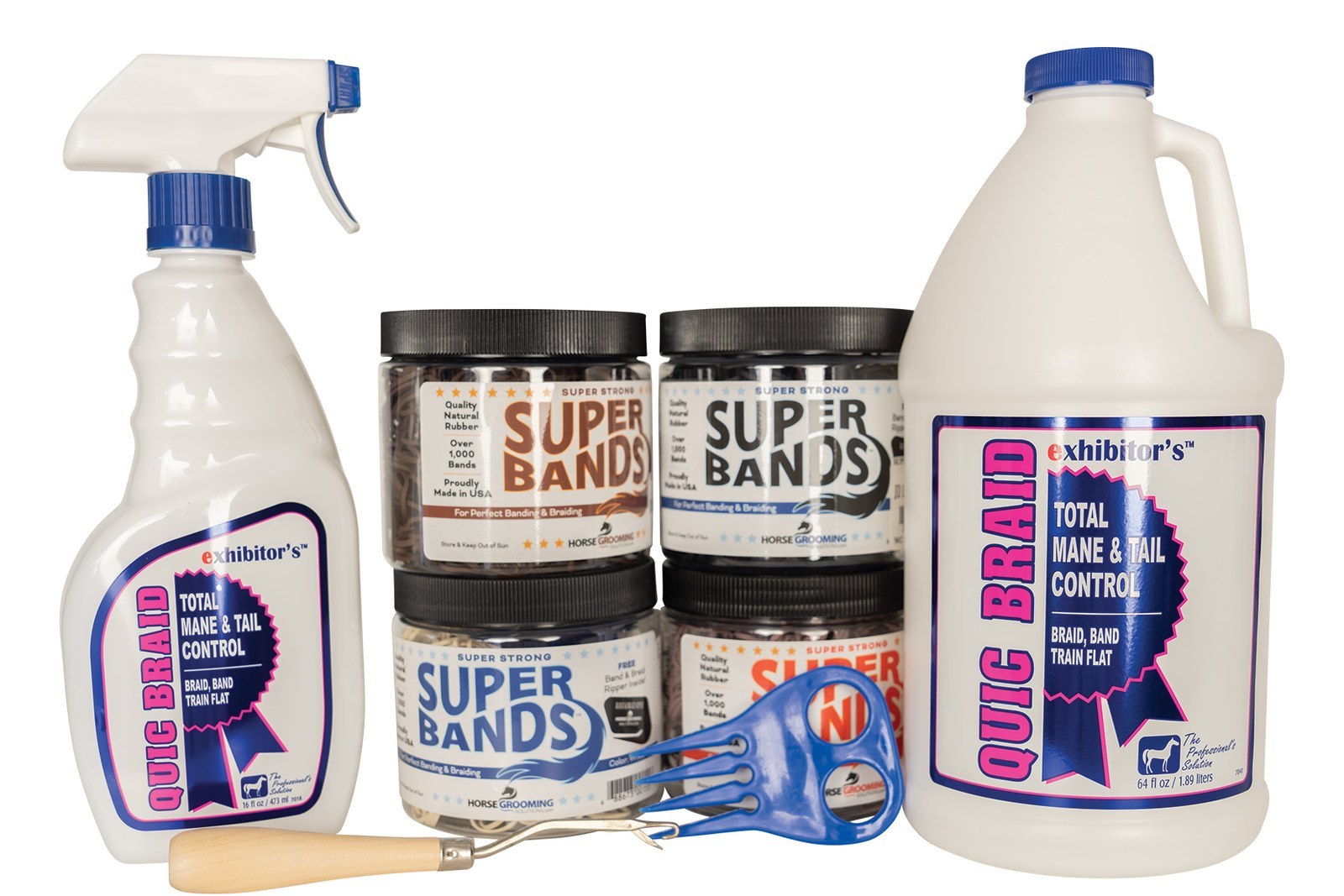
Braiding and banding
A horse turned out in the barn aisle before a show
Packing

The first fall show is cold in the morning and warm by afternoon. What am I packing that I wasn't in July?

A cooler is the big one -- a horse who works up a sweat at 8am and then stands in a 40-degree breeze needs something to dry under. Add a rain or show sheet, a warmer layer for yourself than you think, and gloves. Everything else is the summer kit.

The cooler earns its place twice over: it wicks after work and it takes the edge off standing around between classes. A fleece cooler is the usual choice, and wool is warmer for genuinely cold days.

Footing changes too. Autumn ground goes from hard to greasy after one wet night, so bring the studs or the alternative boots you didn't need all summer.

Coolers and show sheets
Hauling

Hauling in 50-degree mornings. Does anything change about the trailer setup?

Mostly ventilation and layers. Keep air moving even when it's cold, because a closed-up trailer gets humid and stuffy fast, which is harder on a horse's airway than cool air is. Add a light sheet rather than closing every vent, and check that shipping boots still fit over winter coat.

A horse generates a lot of heat standing in a moving trailer. Most people over-rug and under-ventilate on the first cold haul of the season.

Hay in the trailer keeps a horse occupied but also raises dust in a closed space. Damping it slightly helps.

Shipping and travel
Two days a week

My kid's season starts back with school and we're at the barn twice a week. How do I keep her pony in enough work?

Two quality rides a week maintains a reasonable level of fitness in a pony already in work -- it won't build much, but it holds. Fill the gap with turnout rather than stall time, and see whether a working student, a leaser, or a barnmate can add one light ride midweek.

Make the two rides count. A structured session beats a longer, aimless one, and ponies hold condition better than people expect when they're turned out rather than standing in.

If the goal is a specific autumn show, plan backwards from it and accept the level you can honestly get to on two days a week.

The fall show bag

What comes out of storage in September

A cooler, a show sheet, shipping boots, and the braiding kit -- the four things you didn't need at a July schooling show.

Coolers & Show CoversShipping Boots & WrapsBraiding & BandingHorse Show Supplies

Putting a fall show bag together? Ask our team -- most of us have loaded a trailer in the dark at least once.

← All Learning Center questions