
The Show Headstall Your Horse Will Actually Enjoy Wearing
Billy Royal's Comfort Concho Original Thread pairs patent-leather-wrapped construction with a 2,000-lb.-test stainless steel crown and permanently attached flat-sitting conchos — so you walk into the pen calm, and your horse can perform like you trained him to.
Why Most Show Headstalls Are a Fight Before the Gate Even Opens
Picture a Saturday morning at a three-day show. You've been up since five, your horse is clipped and bathed and standing in crossties looking like a million dollars. You reach for the bridle. He throws his head. You reposition, he sidesteps into the wall, and you lose the next six minutes in a quiet wrestling match that leaves both of you tense before you've even gotten to the warm-up pen. It's not the horse. It's the hardware. The conchos on a traditional show headstall sit proud off the leather, and every time your horse flexes his jaw or moves his head, those edges rotate against his cheek. He knows what's coming before you even reach over the stall door.
The frustrating part is how invisible this problem is from the outside. You can't see a concho shifting two millimeters into a horse's cheek. What you can see is the subtle poll tension that follows: the horse that won't quite drop into the bridle, the slight stiffness through the topline that wasn't there six months ago, the way he sets his jaw when you pick up contact. Trainers spend hours working on collection, softness, frame — and some of that work is being quietly undone by equipment that was designed to look good in a trophy photo rather than to work with a horse's anatomy. A horse carrying even low-grade facial discomfort is a horse that cannot fully relax through his poll, and a horse that can't relax through his poll cannot give you the collection the judge is looking for.
Live with this long enough and the bridling battle becomes your new normal. You start building extra time into your show morning just for the headstall fight. You experiment — adjust it looser, pad behind the conchos with moleskin, try lubricating the adjustment points. You spend fifteen minutes before every class repositioning hardware that was fine when you left the barn but shifted during the warm-up. Some days it works better than others. But you're managing a symptom, not solving the problem. The problem is that the conchos were never designed to stay put, and the cheek pieces were never designed to account for the range of motion a working horse's face goes through in a full class.
And if you've tried switching brands, you know how that usually goes. The budget options look cheap in the pen. The premium options cost $350 and still have the same rotating concho problem dressed up in nicer leather. You've probably already bought two or three headstalls that are sitting in your tack room right now because they didn't make the cut. Each one was a compromise: great silver, poor fit — or comfortable enough, but not the look you need when you're showing against horses with a lot of money behind them. The equipment gap between what looks show-worthy and what actually works for the horse has felt, until recently, like something you just had to accept.
A Tense Horse at the Gate Costs You More Than Just Ribbons
Poll tension doesn't stay in the poll. That's the part most riders don't fully account for. When a horse is braced at his poll — even subtly, even from something as small as repeated concho pressure — that brace travels down the entire topline. The horse that can't fully release through his poll is the horse that can't fully step under himself, can't soften through the back on a free walk, can't drop into the frame on a straight-ahead lope that the judge can see from sixty feet away. You can ride beautifully, your horse can be brilliantly trained, and a headstall that creates low-grade discomfort will chip points off your ride in ways that are genuinely hard to trace back to the equipment. The judge marks a horse that looks tense. He doesn't know why the horse looks tense. You might not either, until you make the switch and watch the difference.
Beyond the show pen, there's the daily erosion of the thing you actually came to horses for. You didn't buy a show horse to dread show mornings. But when tacking up is a negotiation — when you have to approach the bridle like you're defusing something — the joy that should be there quietly drains out. You start calculating how many more shows you have this season before you can take a break. You notice you're short with your horse in the crossties in a way you weren't two years ago. None of this is dramatic. It's just the slow grind of a small equipment problem that never gets fully fixed, compounding week after week through a show season.
And the math on the money is real. A typical three-day open show runs $250 to $400 in entry fees before you factor in hauling, fuel, stabling, and hotels. You're spending $600 to $900 per show weekend to put a tense horse in front of a judge. Every class where your horse can't fully relax is a class where that investment is underperforming. The right headstall isn't a luxury purchase — it's a performance investment with a direct line to your score card. A horse that bridles soft, stands quiet at the gate, and carries no unnecessary tension through the class is worth every dollar of the equipment that got him there.
- ✗Conchos rotate and shift mid-class, creating pressure points the rider can't see
- ✗Poll tension from facial discomfort travels down the topline and undermines collection
- ✗Bridling battles drain the joy from show mornings and create negative associations
- ✗Expensive show weekends underperform when the horse can't fully relax in the pen

Billy Royal Comfort Concho: Engineered for Horses That Have to Perform
The Billy Royal Comfort Concho Original Thread isn't a show headstall with a comfort claim tacked on for marketing. It was built from the crown down to eliminate the specific pressure points that make traditional show headstalls a performance liability. The design starts with a premise that sounds simple but is surprisingly rare in show-level western tack: the horse's comfort and the rider's show-pen requirements are not competing priorities. You can have both, if the engineering is right.
Here's how it works. The cheeks, crown, and noseband are all patent-leather-wrapped over a reinforced core — that core keeps the headstall's shape consistent through years of use rather than allowing the leather to soften and shift in ways that change the fit. The conchos are permanently attached and adjusted with a small screwdriver that comes included. Once you dial them in for your horse's face, they do not move. Not between classes, not between show weekends, not after a sweaty warm-up. The stainless steel cable crown carries 2,000 lbs. of test strength — that's not a number for a trail horse walking a flat path, that's a number for a reining horse planting and spinning, a barrel horse rated hard into a turn, a cutting horse dropping into a cow. The stainless steel rings and buckles won't corrode through a decade of wet show seasons.
What changes when the hardware stays put: the horse that used to throw his head at the bridle stands quiet. The horse that used to carry subtle poll tension starts releasing through his topline. The class that used to start with six minutes of repositioning in the crossties starts on time, relaxed, with a horse that's ready to work rather than already managing discomfort. Those gains compound. Over a show season, a horse that bridles easy and carries no equipment-related tension is a horse that shows better, trains more consistently, and builds the kind of positive association with work that lasts.
At $299.99, this headstall is backed by Schneiders Saddlery — family-owned in Chagrin Falls, Ohio since 1948, 78 years in the business of outfitting serious horse people. We carry the Billy Royal line because it meets the standard we hold ourselves to: equipment that actually does what it claims, at a price that reflects real quality rather than inflated brand margin. If it doesn't work for your horse, we make it right. That's not a corporate returns policy — it's a three-generation family promise.
Flat-Sitting Conchos That Stay Put
Set once with the included screwdriver. They don't shift between classes, between rides, or after a hard warm-up — eliminating the rotating pressure points of traditional show conchos.
Patent Leather Over Reinforced Core
Cheeks, crown, and noseband wrapped in patent leather around a reinforced core that holds shape and fit consistently, season after season, without the softening and shifting of uncored leather.
2,000-lb.-Test Stainless Crown
The stainless steel cable crown is rated to 2,000 lbs. Built for horses that work hard — reining spins, barrel turns, cutting drops — not just horses that walk quietly in a pleasure class.
Corrosion-Proof Hardware
Stainless steel rings and buckles throughout. They won't spot, pit, or corrode through wet hauling seasons, outdoor warmups, or the humidity of a summer show schedule.
What Comes Together in This Show Halter
- Patent leather-wrapped cheeks
- Patent leather-wrapped crown
- Patent leather-wrapped noseband
- Reinforced internal core
- Stainless steel rings and buckles
- Permanently attached hand-engraved conchos
- Small screwdriver for concho adjustment
How We Stack Up
| Feature | Schneiders Billy Royal (Schneiders) | Professionals Choice | Classic Equine |
|---|---|---|---|
| Conchos permanently locked — won't rotate or shift | ✅ | ❌ | ❌ |
| Patent leather wrapped cheeks and crown | ✅ | ❌ | ❌ |
| Reinforced core construction | ✅ | ⚠️ | ❌ |
| 2,000-lb.-test crown strength rating | ✅ | ❌ | ❌ |
| Flat-sitting concho design (no proud edges) | ✅ | ⚠️ | ⚠️ |
| Full stainless steel hardware throughout | ✅ | ✅ | ⚠️ |
| Screwdriver-set precision adjustment | ✅ | ❌ | ❌ |
| Show-pen ready straight from the box | ✅ | ✅ | ⚠️ |
| Backed by 78-year family retailer with guarantee | ✅ | ❌ | ❌ |
| Ships to all 50 states with free shipping tier | ✅ | ⚠️ | ⚠️ |
Every Component Was Put There For a Reason
The Comfort Concho design started with a question most headstall manufacturers don't ask: what does this feel like from the horse's side of the bridle? The patent leather wrap was chosen because it softens differently than bare leather — it stays smooth against the horse's face rather than developing the stiff edges that develop in unconditioned leather over time. The reinforced core keeps the headstall's geometry consistent so that the fit you dialed in at home is the fit you have at the show two months later. The concho attachment system — permanently fixed, screwdriver-adjusted — exists because a concho that can rotate is a concho that will rotate. Eliminating that movement was a design priority, not an afterthought.
The screwdriver-adjusted conchos are the detail most riders notice first when they switch. Dial them in once at home on a quiet day when you're not running between classes. Verify the fit, confirm they sit flat against your horse's cheek, snug them down. Then put the screwdriver in your trailer's tack compartment and forget about it. Show after show, class after class, they sit exactly where you put them — no mid-warm-up repositioning, no concho check before you enter the gate. One less thing to manage when you already have plenty to think about.
- ✓Patent leather wrapped cheeks, crown, and noseband over reinforced core
- ✓2,000-lb.-test stainless steel cable crown
- ✓Permanently attached conchos, set with included screwdriver — won't shift once locked
- ✓Stainless steel rings and buckles — corrosion-resistant through full show seasons
- ✓Conchos lay comfortably flat against the horse's face by design
Select a Size and Finish for Your Show-Halter Setup
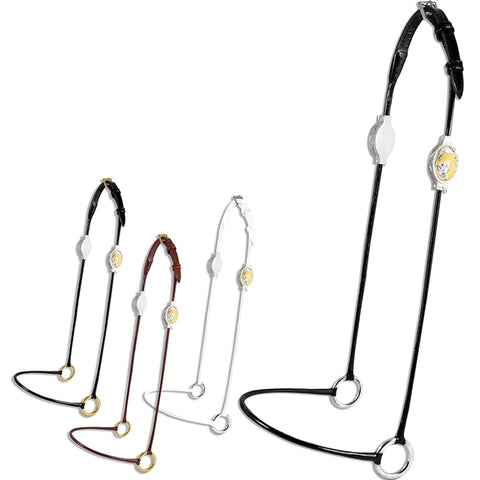
Decorative Detail Designed as Part of the Halter
This Billy Royal® design pairs a reinforced, patent-wrapped structure with permanently attached conchos that lie flat, adjust with the included screwdriver and remain where set.
Set the Crown, Adjust the Conchos and Refine the Presentation
Explore available size and finish combinations for Billy Royal® Comfort Concho Original Thread and choose the configuration suited to your show-halter setup.