Your Horse’s Back Has Been Telling You Something. It’s Time to Listen.
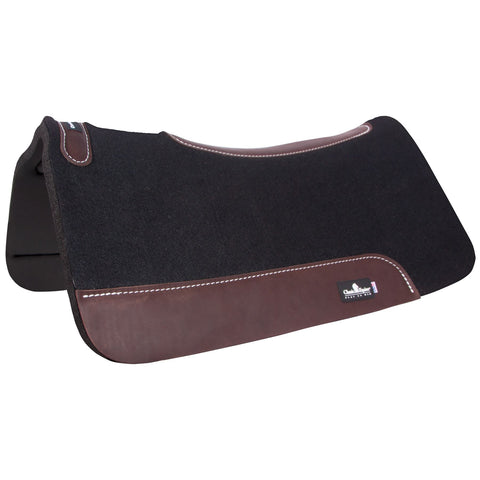
The Classic Equine® Contourpedic™ Western Saddle Pad is engineered to move with your horse — not against them. Wither relief, anti-slip foam, and a split design that eliminates pressure points from the first ride.

Every Mile on a Poorly Fitted Pad Costs More Than You Think
You tack up before first light, the same way you have a thousand times. Blanket, pad, saddle — routine as breathing. But there’s that moment, just as you’re tightening the cinch, when your horse pins his ears or steps sideways. You chalk it up to Monday morning, to the weather changing, to a grumpy day. You’ve been riding long enough to know horses have personalities, moods. So you swing up and get to work. It’s only later — maybe at the wash rack, maybe when your trainer says something, maybe when you notice the uneven sweat marks drying into the coat — that a quieter thought surfaces: what if it isn’t attitude? What if it’s pain?
Saddle pad fit problems are insidious precisely because they rarely announce themselves dramatically. There’s no sudden lameness, no obvious wound. Instead you get a slow accumulation of small signals — a back that flinches under grooming brushes, a horse who used to stand square at the mounting block but now walks off, collection that deteriorates even as your flatwork otherwise improves. The muscle along the topline will hollow, quietly, over months. A horse compensating for back discomfort shifts his weight forward, overloads his shoulders, and the soreness you eventually treat with a chiro or massage bill is three steps removed from the actual source. By the time you’re treating symptoms, the cause has usually been wearing away for a long time.
Think about what an average working day looks like from your horse’s perspective. A flat, rigid pad rolls with every stride, creating a rocking motion against the back instead of following it. Conventional foam compresses completely under the rider’s weight and stays compressed — which means the horse is essentially carrying a board after the first ten minutes of a ride. Generic pads that lack a wither cutout press down on the spinous processes every time you post a trot or absorb a lope stride. The cinch area, where the girth passes and friction concentrates, becomes a chafe point with nowhere to breathe. And if the pad is even slightly asymmetrical — from wear, from washing, from a manufacturing tolerance — one side of your horse’s back works harder than the other for every single ride, every single day, season after season.
Most riders have tried the workarounds. An extra fleece layer underneath. A therapeutic insert tucked in before the saddle goes on. A different saddle. Another fitting. Spending $400 on a custom saddle fitting only to find that the pad was the variable that changed everything. It’s not that any of these are wrong — sometimes the saddle does need refitting — but patching over a pad problem with more layers often makes things worse, raising the tree, changing the balance, shifting pressure to new spots. What you actually need is a pad engineered from the ground up to match the horse’s anatomy: a base that grips without trapping heat, materials that stay functional ride after ride, and a shape that accommodates a real spine rather than a flat board.
The Bill Keeps Coming — In Vet Visits, In Performance, In Rides You Dread
A horse carrying back pain changes the way he moves, and a horse who moves differently taxes every joint and structure downstream. Hocks work harder to compensate for a hollowed topline. Hind end engagement drops off, and with it your ability to collect, extend, or do anything that requires true power from behind. In a show horse, this translates directly to scores. In a trail horse, it means a horse that’s reluctant on the hills, that stumbles more, that feels dull and flat on days when you’d hoped for forward. Performance and soundness are not separate tracks — they feed each other, and a saddle pad that undermines one undermines both.
There is also the toll it takes on your relationship with the horse. You start wondering whether training is working. You question your aids, your position, your timing. You hire another trainer, try a different bit, experiment with a new supplement regimen. You ride with a low-grade worry that something is wrong and you can’t quite identify it — because the horse looks fine at the walk, sounds clean on the flexion test, but just isn’t the horse he was six months ago. That erosion of confidence — yours and his — doesn’t show up on a vet bill, but it’s real and it accumulates the same way the physical problems do.
Add up what the workarounds cost: a chiro visit runs $150–$300 per session, and many horses need them monthly when an underlying fit issue persists. A back injection can run $500–$800. A second saddle fitting, another pad purchase, a massage therapist on rotation — these aren’t luxuries for most riders, they’re the bill that keeps coming because the actual variable hasn’t been addressed. A $249.99 pad that actually works is not an indulgence. Set against even two chiro visits prevented, it has paid for itself. The question is never whether you can afford the right pad. It’s whether you can afford to keep not using one.
- ✗Uneven sweat marks — a classic sign of active pressure points under saddle
- ✗Back soreness that chiro visits temporarily fix but never cure
- ✗A horse that pins ears, steps away, or rushes through saddling
- ✗Performance plateaus no amount of training can break through

The Contourpedic™ Was Built Around How a Horse’s Back Actually Moves
The Classic Equine® Contourpedic™ Western Saddle Pad is not a marketing exercise in comfort — it’s a pad built with specific anatomical problems in mind. The 31” x 32” footprint provides adequate coverage for western saddles without adding unnecessary bulk, and every design decision — from the base material to the stitching layout — traces back to a real pressure-related problem that riders reported and engineers solved. After 78 years of outfitting working horses, the Schneiders team has seen what happens when pads fail, and this pad exists because the standard options weren’t good enough.
The foundation is a 3/4” non-slip closed cell foam bottom that does two things simultaneously: it stays put on the horse’s back without trapping sweat heat, and it maintains its profile under rider weight rather than compressing flat. Unlike open cell foams that collapse after a few minutes of riding, closed cell foam distributes load across a larger surface area for the duration of the ride. Above that sits a wool felt top layer that wicks moisture and stays clean without matting down the way synthetic fleece does over time. The wither cutout removes contact from the most vulnerable pressure point on a horse’s back, and the cinch area cutout allows the girth to pass without creating a fold or friction ridge. The split design lets each side of the pad move independently with the horse’s barrel swing and respiration — the pad follows the horse rather than resisting him.
Riders who make the switch typically report the same sequence of changes: first, a horse that stands quietly for saddling. Then, within a few rides, more willingness to go forward and step under. Within a few weeks, topline begins developing the way it does when a horse is using his back correctly instead of bracing against it. The antifungal and antibacterial properties of the foam bottom mean the pad stays sanitary between rides even in humid barn environments — one fewer variable in skin and coat health. And because the wool felt top retains its integrity wash after wash, you’re not replacing a degraded pad every season.
Schneiders has stood behind equestrian gear since 1948 — 78 years of family ownership in Chagrin Falls, Ohio, shipping to all 50 states. When you call with a question about fit, you reach someone who rides. When there’s an issue, it gets resolved. The Contourpedic™ carries that backing, which means your purchase isn’t just a transaction — it’s a relationship with a company that has been in this industry longer than most of its customers have been alive, and intends to be here for the next generation of horses and riders as well.
Closed Cell Foam Base
Maintains profile under load throughout the entire ride — distributes weight evenly for hours, not just the first ten minutes.
Wither & Cinch Cutouts
Engineered relief at the two highest-pressure contact zones on a horse’s back. No contact, no compression, no soreness.
Split Panel Design
Each side of the pad moves independently with the horse’s barrel swing and stride — the pad follows, not fights, the animal.
Antifungal & Antibacterial
Closed cell foam base stays sanitary between rides, protecting skin and coat health year-round in any barn environment.
What Riders Are Saying
"
My quarter horse mare has always been a tense ride — I blamed training gaps for two years. Switched to the Contourpedic™ in March and within four rides she was swinging through her back the way she never had. Got my first clean lead departure in a show pen three weeks later. Her chiro confirmed her back was finally releasing correctly. This pad is what changed. I know that sounds dramatic but I watched it happen.
""
We pack into the Cascades every fall and I’ve tried every pad on the market over fifteen years of guiding. My big sorrel mule would have an angry back by day two of a multi-day trip no matter what I put under the saddle — until this one. Four days of loaded trail work, eight to ten hours a day, and he came out of the mountains with a clean, even back. The wool top cleaned up easily and the foam never collapsed. First pad I’ve ever reordered the same model without hesitation.
""
I show in ranch riding and my gelding is extremely sensitive behind the saddle — always flinching at the brush on his loin. We tried three different pads and two saddle refits before my trainer suggested the Contourpedic™. The wither cutout made the difference I think — he stands perfectly now for saddling and his scores on the rail improved a full point class average over the summer circuit. Schneiders customer service was also great when I called with a sizing question before ordering.
"How We Stack Up
| Feature | Schneiders Classic Equine® Contourpedic™ | Reinsman | Professionals Choice |
|---|---|---|---|
| Wither cutout for spinous process relief | ✅ | ⚠️ | ⚠️ |
| Non-slip closed cell foam base | ✅ | ❌ | ✅ |
| Antifungal & antibacterial contact surface | ✅ | ❌ | ❌ |
| Wool felt top layer | ✅ | ✅ | ❌ |
| Split panel follows horse’s movement | ✅ | ⚠️ | ❌ |
| Cinch area cutout | ✅ | ⚠️ | ⚠️ |
| Keeps horse’s back cool during work | ✅ | ⚠️ | ⚠️ |
| Foam profile maintained under full load | ✅ | ❌ | ✅ |
| 78-year family brand backing | ✅ | ❌ | ❌ |
| Free shipping eligible ($99+ orders) | ✅ | ❌ | ❌ |
What Makes This Pad Different From Every Other Pad on the Rack
Most saddle pads are built to a price point, not a performance standard. The materials are chosen because they’re cheap to source, the design is generic because a specific design requires investment, and the result is a pad that looks fine in the tack room and costs your horse something every ride. The Contourpedic™ reverses that calculus. The wool felt top is sourced for longevity, not economy — it will outlast synthetic alternatives by a wide margin and won’t mat into a useless layer after a season of regular use. The foam bottom is closed cell, the same class of material used in orthopedic applications, because your horse’s back deserves the same engineering consideration applied to any load-bearing structure.
At 31” x 32”, this pad fits the vast majority of western saddles without overhang issues or coverage gaps. The antifungal and antibacterial properties aren’t a marketing claim — closed cell foam is inherently resistant to moisture penetration, which is what allows bacteria and fungi to establish in contact surfaces. Classic Equine® is a brand Schneiders has carried for years because the quality holds up in real-world barn conditions, not just on a trade show floor. This is a pad you buy once, maintain according to the care label, and ride on for years. When you do the math on replacement cycles for cheaper pads, the Contourpedic™ frequently comes out ahead on cost per ride — before you count a single vet visit it helps prevent.
- ✓3/4" non-slip closed cell foam base — holds shape under full rider weight
- ✓Wool felt top — moisture-wicking, antifungal, antibacterial, long-lasting
- ✓Wither cutout — pressure-free fit at the most vulnerable point of the back
- ✓Cinch area cutout — close contact, friction-free girth pass on every ride
- ✓Split panel design — each side follows horse’s movement independently
What You Get