The Last Saddle Blanket You'll Ever Have to Replace
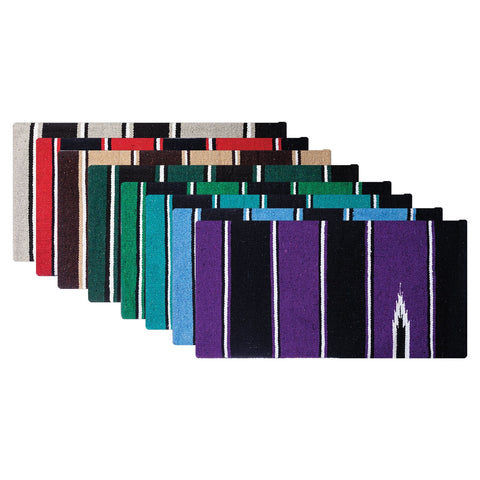
The Dura-Tech® Printed Double Layer Navajo Western Saddle Blanket delivers show-ring style and working-horse durability in one 32" x 32" blanket — at a price that makes sense whether you ride for ribbons or for the sheer love of it.
That Saddle Blanket Is Costing Your Horse More Than You Think
You grab your saddle blanket off the rack on a cool morning, give it a shake, toss it over your horse's back, and don't think much about it. It looks fine. It's clean, roughly the right size, and it's been in the tack room since before you can remember. Maybe it's got a little Navajo pattern that's half-faded now, or a corner that's worn thin, but it does the job — or so it seems. The truth is that the space between a horse's back and a saddle tree is where small problems become serious ones, and a blanket that's just "good enough" is often the thing sitting between a horse that works freely and one that's quietly telling you something hurts.
The issue is structural, and it's invisible until it isn't. A saddle blanket that has lost its internal integrity — whether from poor materials that compress after washing, loose weave that shifts under the saddle tree, or a single-ply construction that simply isn't thick enough to protect the trapezius and longissimus muscles — creates micro-pressure points with every ride. Your horse can't tell you his back is sore from a bunching blanket at mile two. He can only show you: a shortened stride behind, reluctance to go forward, ear-pinning when you tighten the cinch, or an evasion to the bit that you've been chalking up to training gaps. The blanket you barely notice is building a bill your vet will eventually hand you.
Day to day it plays out like this: you're a mile out on the trail and you feel your horse change his rhythm. You reach back and the blanket has crept an inch sideways toward the off-side. You stop, dismount, readjust, and remount — and ten minutes later you feel it shifting again. Or you pull the blanket after a show pen class and there's a sweat pattern under the tree that's uneven, one side darker than the other, which is never a good sign. You wash the blanket and a little more color bleeds out. The acrylic pills and thins. By the third season it's a rag with a pattern on it, and you've already bought another cheap one because that seemed easier than thinking harder about it. This cycle is costing you time, money, and your horse's comfort in roughly equal measure.
Most riders have tried the obvious workarounds. You've layered two thin blankets and ended up with double the shifting problem. You've bought the generic Navajo print at the local feed store for $18 and watched it become a dishcloth in six months. You've tried folding a heavy felt pad and discovered it doesn't stay folded once a horse is moving. You may have even spent more on a premium contoured pad thinking that would fix everything, only to realize that what goes under the pad matters just as much as the pad itself. The foundation of your saddle fit setup is the blanket, and most blankets sold at impulse-buy prices are designed to look like value, not to deliver it.
A Sore-Backed Horse Changes Everything — and It Starts Small
The ripple effects of a poorly fitted blanket move fast once they start. A horse that's developing back soreness from repeated pressure is girthy in the morning — not dramatically, maybe just a slight rotation away as you bring up the cinch, but it's there. Under saddle he loses the ability to swing through his back and engage from behind, which means your western pleasure horse stops floating and starts shuffling, your trail horse gets choppy on grades, and your rope horse loses the snap in his stop. You compensate by riding harder or softer or differently, and now your position is off, which loads his back differently, which makes the soreness worse. By the time you recognize the pattern you're three months into a problem that started with a blanket that cost you less than a tank of gas.
The emotional cost is harder to measure but just as real. When your horse starts going poorly you question yourself first. You wonder if your seat has gotten worse, if he needs more time off, if you're asking for something he can't give. You pull back from showing because you're not sure what he'll do, and you lose the forward momentum in your training program that took years to build. Riders who talk to a good equine vet or chiropractor often discover the answer was something mechanical all along — a tree that didn't fit, a pad that wasn't absorbing correctly, or a blanket under the pad that was folding and creating a ridge along the spine. The self-doubt you've been carrying was borrowed from a piece of equipment that should have been retired two years ago.
The financial arithmetic is quietly brutal. One chiropractic visit for a horse runs $150 to $250 depending on your area. If the back soreness has been building for a season, you may need two or three visits to see lasting improvement. An equine massage therapist adds another $80 to $150 per session. Meanwhile you've bought three or four cheap blankets at $15 to $25 each and replaced them every season, which adds up to more than the single well-made blanket that would have lasted five years. Add in the show entry fees you paid for classes your horse wasn't comfortable enough to win, and the cost of the wrong blanket — one you didn't even think much about — starts to look significant.
- ✗Blanket bunches and shifts under the saddle tree mid-ride
- ✗Cheap acrylic fades and pills after three washes
- ✗Single-ply construction fails to protect against saddle tree pressure
- ✗Back soreness costs hundreds in vet and chiro visits

Dura-Tech® Double Layer Navajo: Built for the Horse's Back, Not Just the Eye
The Dura-Tech® Printed Double Layer Navajo Western Saddle Blanket was designed to solve exactly the problems described above — not as a marketing premise, but as an engineering decision. At 32" x 32" it fits the western saddle footprint correctly, and its single-woven acrylic construction is engineered to lie flat and stay flat, with the weight and density to protect the muscles under a working saddle without compressing into dead padding after a season of use. It functions equally well as a standalone saddle blanket or as a pad liner under a contoured or foam pad, which means it adapts to however your setup evolves rather than locking you into one configuration.
The double-layer capability is the mechanical answer to the padding problem. When you fold the blanket over — which the single-woven acrylic construction allows cleanly, without lumping or ridging — you double the cushioning between the saddle tree and your horse's back. This is particularly useful in the round pen, when you're doing groundwork in a lighter saddle, or any time you want an extra buffer without hauling a second pad. The Navajo weave pattern isn't decorative only: the structured grid in the weave helps distribute saddle tree pressure across a broader surface area, reducing the concentration of force on any single point along the trapezius. That's what a proper saddle blanket is supposed to do, and it's what distinguishes this construction from a flat acrylic sheet with a pattern printed on top.
The benefits cascade. Your horse's back stays even and comfortable across the ride, which means he can engage from behind and swing through freely. His sweat pattern dries evenly on both sides, which gives you visual confirmation that your saddle is sitting correctly. The blanket washes clean in a standard machine cycle without bleeding color into the rest of your laundry or losing its structural integrity, which means the blanket you buy today looks the same two years from now. The Navajo pattern is colorfast through repeated washing, so you're not watching your investment fade wash by wash. At $29.99 it is priced as everyday equipment, not as something you need to protect from actual use.
Every product in the Dura-Tech line carries the weight of 78 years of Schneiders Saddlery behind it. We've been fitting horses and riders from our home base in Chagrin Falls, Ohio since 1948, and our private-label products are tested against what we hear from working riders — not designed in a boardroom and dropped into a catalog. If this blanket doesn't perform the way it should for your horse, we make it right. That's not a policy statement; it's how a family business stays in business for three generations.
Double-Layer Versatility
Folds cleanly for extra cushioning or lies flat as a pad liner — one blanket covers two configurations without bunching or ridging.
Colorfast Navajo Print
Machine-wash safe with a pattern that stays sharp through repeated cycles — no bleeding, no fading, no pilling.
Pressure-Distributing Weave
Single-woven acrylic construction holds its structure under load, spreading saddle tree pressure across the full contact area rather than concentrating it.
Show Ring Ready at Trail Ride Prices
Clean Navajo pattern photographs well in the show pen, and at $29.99 you can keep a backup on the shelf without flinching.
What Riders Are Saying
"
I've been trail riding my 16-year-old Quarter Horse, Captain, through the Ozarks every weekend for four years. I've gone through three different Navajo blankets that either faded to nothing after six washes or started bunching under the cantle by mile four. This Dura-Tech blanket is on its second season and still looks the day I bought it. Captain's back stays soft and even after eight-mile days with a loaded saddlebag. It's the first pad product I've bought from Schneiders that I didn't eventually have to hedge with a backup. This is just what a saddle blanket is supposed to be.
""
I run my Paint mare, Sundance Melody, in western pleasure and showmanship at APHA shows through the summer. I started using this blanket as a pad liner under my contoured pad eight months ago and the difference in how she goes is noticeable — less tension through the loin going into the lope, and she stopped pinning her ears when I tighten the back cinch. The Navajo print photographs beautifully in the show pen and hasn't faded even after I've washed it a dozen times. At $29.99 I bought a second one for my backup horse. Easy decision.
""
My roping horse Buckshot is hard on equipment — we school three days a week and compete most weekends. I needed something that could double over when I'm working him in the round pen on soft ground but lie flat and stable when we're heading steers. This blanket does both without fuss. The double-layer design means I'm not carrying two separate pads to every roping. It stays put, it washes clean, and the Navajo pattern still looks sharp a year in. My trainer noticed it first and asked where I got it. Told her: Schneiders, same place I've bought tack for fifteen years.
"How We Stack Up
| Feature | Schneiders Dura-Tech® Double Layer Navajo | Weaver Leather Navajo | Southwestern Equine Navajo |
|---|---|---|---|
| Double-layer fold capability | ✅ | ❌ | ❌ |
| Colorfast machine-washable print | ✅ | ⚠️ | ⚠️ |
| Pad liner compatible design | ✅ | ⚠️ | ❌ |
| Show ring approved fit | ✅ | ✅ | ⚠️ |
| Pressure-distributing woven structure | ✅ | ⚠️ | ❌ |
| 32" x 32" western saddle sizing | ✅ | ✅ | ✅ |
| No-fade Navajo pattern after 10+ washes | ✅ | ❌ | ❌ |
| Priced under $35 | ✅ | ❌ | ✅ |
| 78-year brand satisfaction guarantee | ✅ | ❌ | ❌ |
| Available in multiple colorways | ✅ | ✅ | ⚠️ |
32" x 32" — Sized for the Western Saddle, Not Guesswork
The 32" x 32" footprint of this blanket is intentional. It covers the contact area of a standard western saddle and extends far enough beyond the tree to protect the loins without overhanging so far it flaps or shifts. The single-woven acrylic is the same fiber construction used in classic Navajo-style blankets — it has weight and body without being stiff, so it conforms to the horse's back rather than bridging across high points. The intricate Navajo print is woven into the material, not printed on top of it, which is why it holds up when the cheap printed versions don't.
This blanket is listed as a versatile western saddle pad suitable for use as a pad liner or over another pad in the show ring — but working riders use it in every discipline from ranch work to trail to showmanship. The double-layer fold gives you options a fixed-thickness pad can't. It tacks up in the same amount of time as any other blanket and adds no complexity to your routine. That's the design intention: straightforward equipment that does its job and gets out of the way so you can focus on riding.
- ✓32" x 32" western saddle fit — covers the tree with protective overlap
- ✓Single-woven acrylic construction — body and weight without stiffness
- ✓Double-layer fold for extra cushioning — no second pad required
- ✓Colorfast Navajo print — machine washable, stays sharp season after season
- ✓Show ring approved — pad liner or standalone use in the pen
What You Get