Stop the Silent Threat Undermining Your Horse's Health and Performance
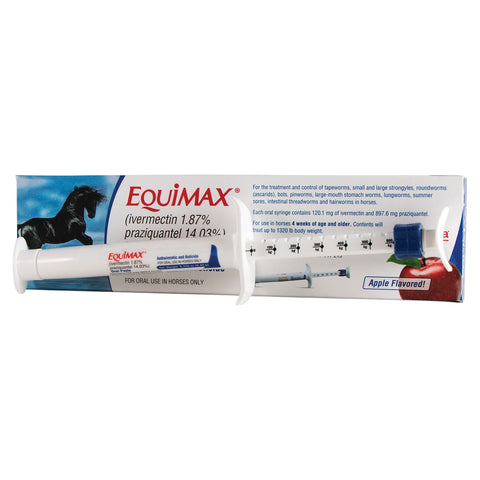
Equimax combines ivermectin and praziquantel in a single dose to eliminate the parasites your standard dewormer leaves behind—including tapeworms that fecal egg counts routinely miss. Trusted by Schneider Saddlery since 1948.
Your Horse Looks Fine. That's Exactly the Problem.
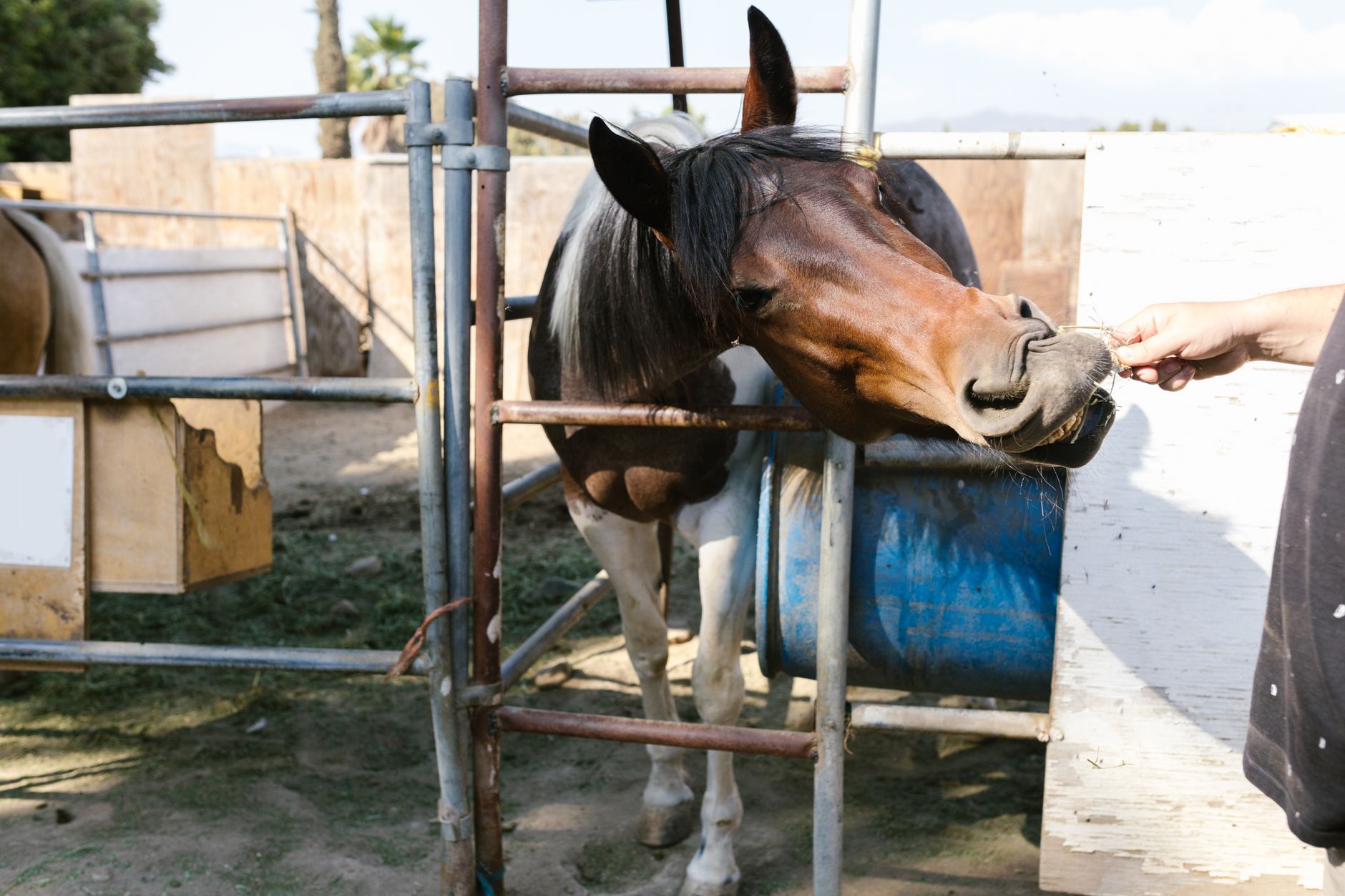
You check on your horse every single day. He finishes his grain, his coat looks decent enough, he moves out reasonably well in the arena. But there's a nagging feeling you can't quite shake—he doesn't look as sharp as he should. Not sick, not lame. Just a little flat around the edges. A little less horse than you know he can be. What most owners don't realize until a veterinarian spells it out is that a horse can carry a clinically significant parasite burden while showing almost no outward signs whatsoever. The biology is designed that way. Parasites don't benefit from killing their host quickly—they benefit from living quietly and reproducing steadily, extracting resources while their host walks, eats, and competes without anyone noticing.
The problem with internal parasites is that by the time a horse shows visible symptoms—weight loss, a rough coat, recurring colic—the infestation has already done real and sometimes permanent damage. Large strongyles migrate through arterial walls during their larval stages, and the inflammatory thickening they cause can restrict mesenteric blood flow for the rest of a horse's life. Tapeworms cluster at the ileocecal junction and are one of the most well-documented causes of a specific type of spasmodic and ileal impaction colic that frequently does not resolve without veterinary intervention. And encysted small strongyle larvae can sit dormant in the gut wall for years, waiting for environmental conditions to shift before emerging en masse—causing explosive, life-threatening larval cyathostominosis that looks like nothing was wrong until the horse is in crisis.
Here is what the math looks like in practical terms. A horse on shared pasture is exposed to larval contamination every single grazing day. A wet spring or mild winter accelerates development dramatically; a single pile of manure from an infected horse can seed an entire paddock with hundreds of infective larvae within two weeks. The parasites your horse picks up in April may not produce measurable consequences until August, when they have matured, migrated, and begun compromising gut function. Meanwhile you are buying good hay, quality grain, and premium supplements—and a meaningful portion of every calorie you spend is going toward supporting parasite populations instead of your horse's muscle development, coat condition, immune function, and competitive output. The horse you are feeding is not getting the full benefit of what you are paying for.
Many conscientious horse owners have tried to manage this intelligently. They rotate dewormers faithfully, they run fecal egg counts, they follow a calendar-based program and check off each treatment. But without a product that specifically targets tapeworms—which standard fecal egg counts miss with alarming regularity because the eggs are shed inconsistently and in low numbers—the rotation is structurally incomplete. Ivermectin alone does not touch tapeworms. Fenbendazole does not touch tapeworms. Oxibendazole does not touch tapeworms. Many well-intentioned, dutifully executed deworming programs leave the entire tapeworm population completely untreated year after year, even while the owner is entirely confident they are on top of their horse's parasite management.
The Hidden Drain You're Already Paying For
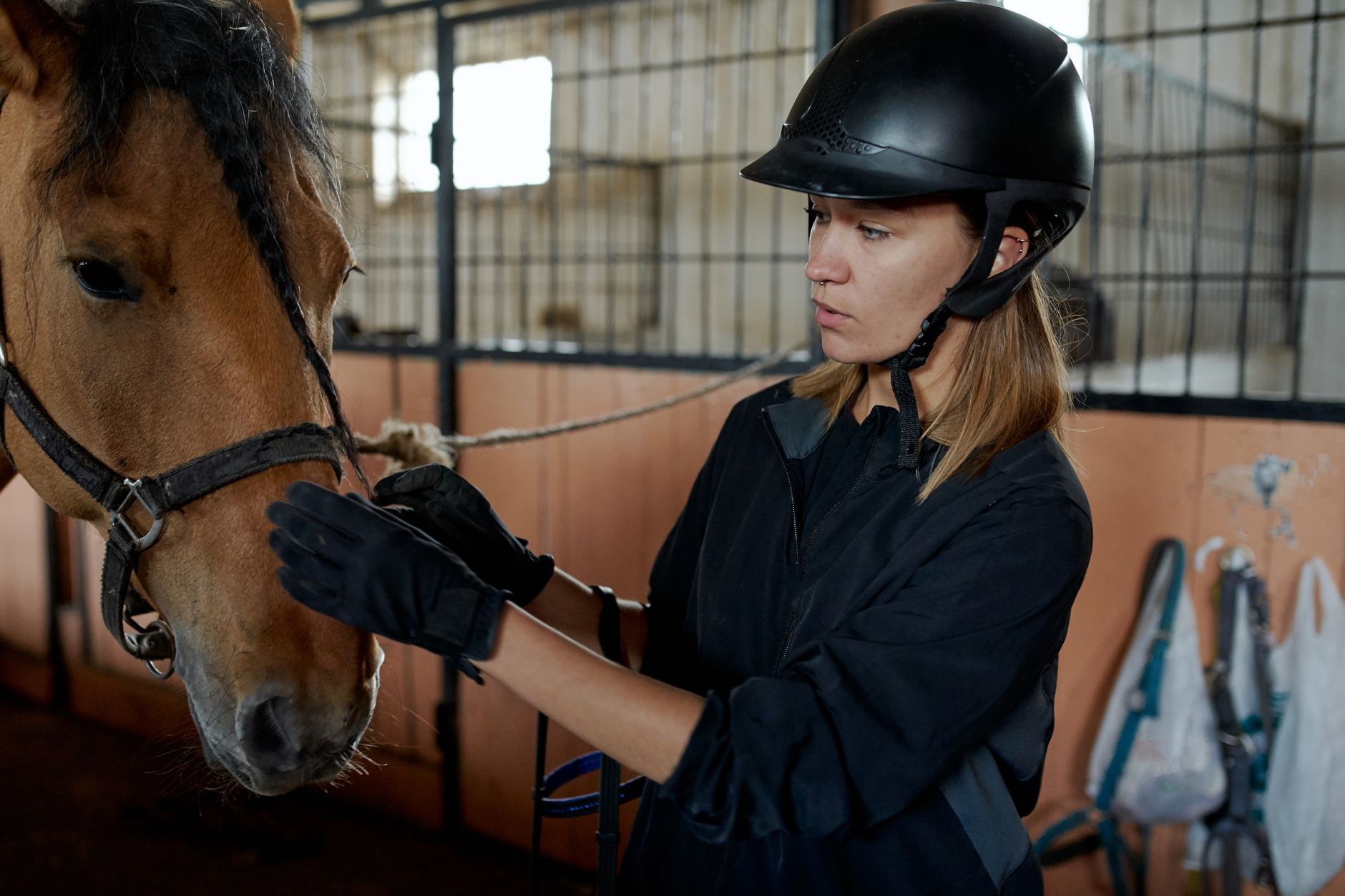
A horse carrying even a moderate parasite load is not operating at full capacity, and the effects ripple outward from every system the gut touches—which is nearly all of them. You will often see it in the coat first: that flat, slightly lackluster look that no amount of grooming oil quite fixes. Then in energy output. The horse is sound and willing, but there is a ceiling on what he gives you that feels artificial. Competition horses underperform by fractions that matter in scored classes and timed events. Trail horses tire earlier on routes they used to handle easily. Breeding stock—mares especially—produce foals that start life already nutritionally compromised because the mare spent her pregnancy competing with a parasite population for the calories you provided her.
There is a specific kind of frustration that comes from feeling like you are doing everything right and still not getting there. You have changed feeds, added omega-3s, had the saddle fit rechecked, pulled his Coggins, scheduled a full lameness workup. The vet finds nothing definitive. The farrier says his feet look fine. The trainer suggests he may just be having an off season. Meanwhile you are spending money, questioning your own horsemanship, and watching your horse underperform in ways that are difficult to articulate but impossible to dismiss. Parasite burden—and specifically the tapeworm component that standard programs routinely miss—is one of the most overlooked explanations for a horse who looks fine on paper but never quite delivers what you know he is capable of.
Run the financial numbers once and they are hard to unsee. A single spasmodic or impaction colic episode—frequently triggered by encysted larvae emerging or by tapeworm-related ileocecal dysfunction—costs between $400 and $1,500 for an emergency farm call, nasogastric fluids, and pain management, assuming you catch it early and resolve it medically. Surgical colic starts at $8,000 and can reach $20,000 or more, not counting rehabilitation time and lost use. Months of reduced performance mean entry fees, training costs, and hauling expenses that don't produce the results you budgeted for. And the digestive supplements you are pouring in to compensate—probiotics, digestive enzymes, hindgut buffers, weight builders—are treating downstream symptoms of a problem that costs less than $20 to address at the source.
- ✗Tapeworms missed entirely by fecal egg count tests
- ✗Ongoing colic risk from ileocecal tapeworm clusters
- ✗Parasite burden stealing calories from feed and supplements
- ✗Encysted larvae dormant in gut wall, waiting to emerge

One Syringe. Two Proven Compounds. Complete Coverage.
Equimax is built to close the gaps that single-compound dewormers leave open. It combines ivermectin 1.87%—one of the most extensively studied and widely trusted parasiticides in equine veterinary medicine—with praziquantel 14.03%, the acknowledged gold standard for tapeworm elimination. That two-drug formulation in a single dose means you are not just treating the parasites your fecal egg count detected. You are covering the species it missed, the migration stages it cannot measure, and the tapeworm population it cannot see at all. One treatment, full spectrum, every time you use it.
The mechanism matters, and it is worth understanding. Ivermectin works by binding to glutamate-gated chloride channels in the nerve and muscle cells of susceptible invertebrates, causing sustained paralysis and death across a broad range of parasites: large strongyles, small strongyles, pinworms, ascarids, hairworms, large-mouth stomach worms, bots, and lungworms. Praziquantel targets a completely separate pathway—it disrupts the structural integrity of the tapeworm tegument, causing the parasite to lose its grip on the intestinal wall, become paralyzed, and pass naturally. Because the two compounds work through entirely different mechanisms, there is no cross-resistance, no coverage gap, and no need to administer a second product on a separate schedule. Safe for foals four months and older, and for pregnant mares.
Within days of a properly executed deworming with Equimax, horses typically show measurable changes in appetite, gut motility, and overall energy level. Over the following weeks, owners consistently report more consistent effort under saddle, better weight maintenance on the same feed program, and that subtle brightening in the eye and coat that is hard to quantify but immediately recognizable to anyone who knows their horse well. When you eliminate the hidden nutritional drain of a parasite burden, the supplements and feed you are already investing in can do the job they were purchased to do. The horse you have been feeding finally starts showing up for you.
Schneider Saddlery has been caring for horses and the people who own them since 1948—78 years of earning trust one customer at a time from Chagrin Falls, Ohio. When we carry a product like Equimax, it is because it performs and because our customers keep coming back for it. We ship to all 50 states, stand behind every order, and if something is not right, we make it right. That is not a marketing statement. It is how a family business stays in business for three generations.
100% Tapeworm Elimination
Praziquantel 14.03% targets the ileocecal junction where tapeworms cluster and cause colic—coverage no ivermectin-only product provides.
Broad-Spectrum Parasite Control
Ivermectin 1.87% eliminates large strongyles, small strongyles, pinworms, ascarids, bots, hairworms, lungworms, and large-mouth stomach worms in a single dose.
Safe Across Your Entire Herd
FDA approved for use in foals four months and older, breeding stallions, and pregnant mares—one product you can use without sorting horses by age or reproductive status.
Proven Value at Under $20
Full dual-compound protection at a price that makes complete tapeworm coverage practical every rotation, not just once a year when you can afford the premium brand.
What Riders Are Saying
"
My mare Dusty had been running inconsistent barrel times all season and I couldn't figure out why. Changed her diet, had her back adjusted, tried everything. Finally switched to Equimax for my spring deworming specifically for the tapeworm coverage. Within six weeks her times tightened up noticeably—her pattern felt more powerful and she finished harder. I'll never go back to a product without praziquantel. Thirty seconds and eighteen dollars and my horse runs like herself again.
""
I ride a 14-year-old Hanoverian gelding who had developed a subtle resistance through the canter transitions that was driving my trainer crazy. Nothing structural on X-rays. We ran a fecal, switched to Equimax to cover tapeworms specifically, and did a full deworming reboot. Six weeks later his transitions came back. My vet suspects tapeworm-related gut discomfort was the culprit. He has been solid ever since, and I keep Equimax in my rotation every fall without fail.
""
I keep four horses and had been using a basic ivermectin program for years. My vet finally pushed me to add a tapeworm-targeting product and I went with Equimax after comparing options at Schneiders. The price is right and it ships fast. What convinced me was a full year later with zero colic episodes across all four horses, where we used to average one or two a season. Small sample, but I am not going back to the old program. The praziquantel component is doing exactly what she said it would.
"How We Stack Up
| Feature | Schneiders Equimax | Zimecterin Gold | Quest Plus |
|---|---|---|---|
| Tapeworm (praziquantel) coverage | ✅ | ✅ | ✅ |
| Ivermectin-based formula | ✅ | ✅ | ❌ |
| Safe for foals 4+ months | ✅ | ✅ | ❌ |
| Safe for pregnant mares | ✅ | ✅ | ⚠️ |
| Controls bot flies | ✅ | ✅ | ✅ |
| Controls large and small strongyles | ✅ | ✅ | ✅ |
| Controls ascarids | ✅ | ✅ | ✅ |
| Under $20 per dose | ✅ | ❌ | ❌ |
| Apple-flavored paste | ✅ | ⚠️ | ⚠️ |
| Ships to all 50 states via Schneiders | ✅ | ⚠️ | ⚠️ |
The Two-Drug Science Behind Complete Parasite Coverage
Equimax carries ivermectin 1.87% and praziquantel 14.03% in a single oral paste syringe dosed by bodyweight. Ivermectin has been a cornerstone of equine parasite management for decades because its mechanism—chloride channel disruption in invertebrate neural tissue—is highly effective against a wide range of nematodes and arthropods while being essentially non-toxic to mammals at labeled doses. Praziquantel was added specifically because ivermectin has no activity against cestodes. The combination addresses the complete spectrum of clinically significant equine parasites with one treatment and one syringe, simplifying the deworming calendar without compromising coverage.
The apple-flavored paste formulation is accepted readily by most horses without the restraint or feed mixing that liquid or granular products require. Each syringe is marked in increments calibrated to bodyweight, so dosing accuracy is straightforward whether you are treating a 900-pound Quarter Horse mare or a 1,300-pound draft cross. Keep Equimax as a rotating component in your deworming program—particularly in the spring before parasite season peaks and in the fall after bot fly season ends—to maintain comprehensive coverage across the full year and reduce the conditions that favor resistance development in your herd.
- ✓Ivermectin 1.87% + praziquantel 14.03% dual-compound formula
- ✓FDA approved for horses and ponies, all ages from 4 months
- ✓Safe for pregnant mares and breeding stallions
- ✓Apple-flavored paste, bodyweight-calibrated syringe markings
- ✓Covers 20+ parasite species including bots and tapeworms
What You Get