
Stop Burning Money on Hay That Ends Up in the Bedding
The Hay Hoops Original Collapsible Wall Hay Feeder pays for itself in saved hay within a single month — and it hangs in under an hour. If your horse is still eating off the stall floor, you are paying for bedding to soak up what a proper feeder would have kept clean and accessible.
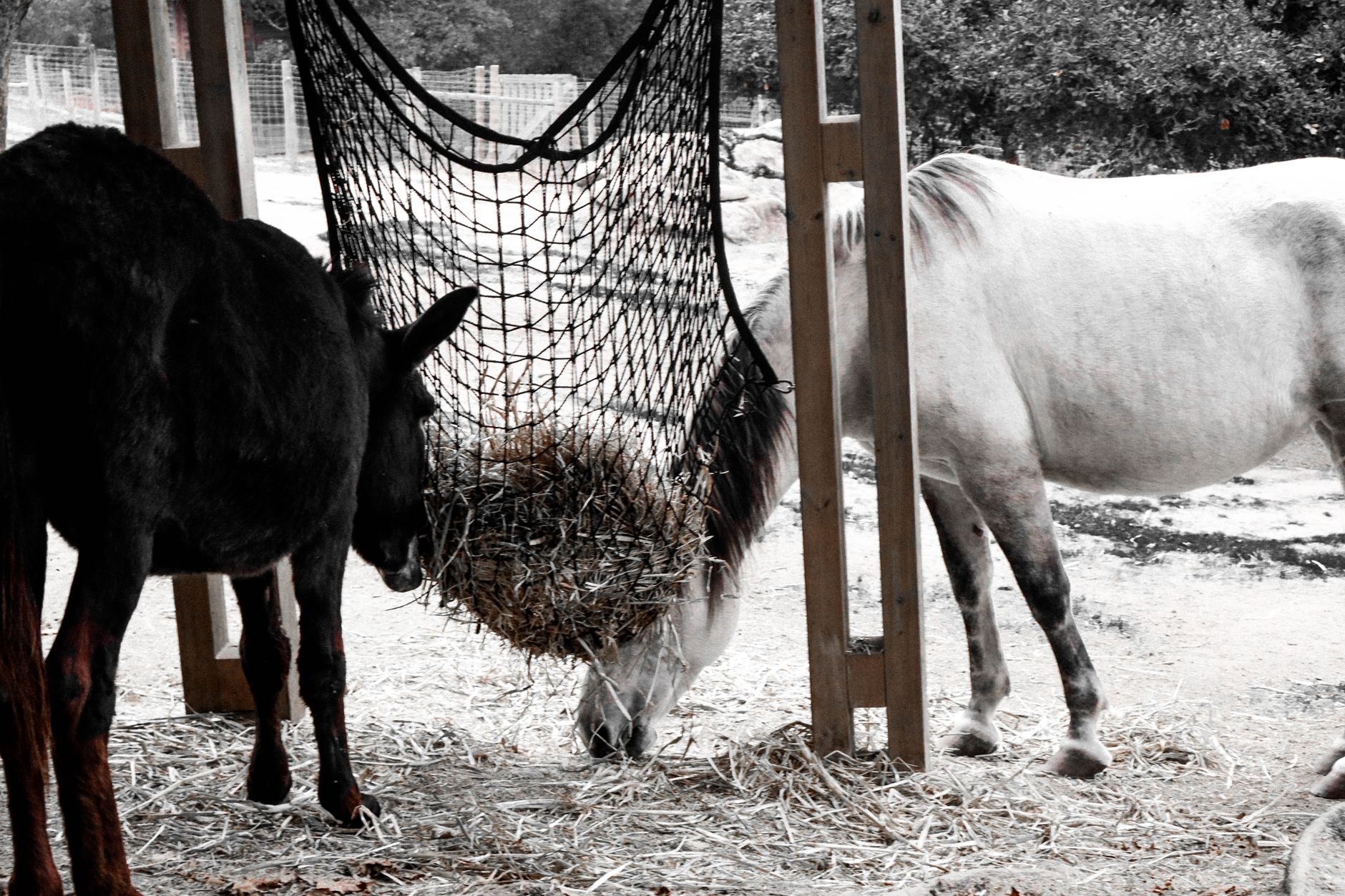
The Way Most Horses Are Fed Is Costing You More Than You Think
Picture 6 a.m. on a Tuesday. You pull open the stall door, pitch in two flakes, and by the time you have filled the water bucket and grabbed the muck fork, half that hay is already on the floor. Your horse did not eat it there — he pulled it there. Horses are designed to graze with their heads down, which means every bite they take from a loose pile in the corner involves a noseful of shavings, a scatter of stems across the mat, and a slow transfer of good feed into tomorrow's wheelbarrow load. This is not a behavior problem. This is what happens when the feeding setup does not match how a horse actually eats.
What makes this worse than it looks at first glance is the compounding math. The USDA Extension estimates that horses fed loose hay on the ground waste between 25 and 57 percent of every bale. At current hay prices in most of the country — $12 to $18 per small square bale depending on region — a single horse eating twice daily can waste the equivalent of a full bale every week. That is $600 to $900 per horse per year walking straight into your muck pile. If you have two or three horses, the number starts to feel genuinely embarrassing once you write it down. And yet barn managers across the country keep flinging hay on the ground because it is fast, and because the alternatives they have tried have not worked well enough to stick with.
The daily grind of ground-feeding creates secondary problems that most horse owners have simply accepted as part of the job. Wet hay pockets form against the mats and breed mold within hours in warm weather. Horses sort through the pile looking for the stems they want, scattering the rest. Shavings get buried in the hay and hay gets buried in the shavings, and you end up picking both out by hand while your back reminds you it is not as young as it used to be. The feeding corner of the stall becomes the dirtiest corner, requiring deeper daily cleaning and more frequent full strip-outs. Bedding costs quietly inflate. And in summer, wet hay on a warm mat is a fly magnet that no amount of fly spray fully addresses.
Most people who notice the problem try to solve it before giving up. The hay bag from the tack store seemed like a good idea until the horse figured out how to tip it and scatter the contents. The corner hay net worked for about a week until the rope stretched and the whole thing sagged to the ground. The plastic corner feeder held hay fine but the lip was too low and half of it still ended up on the floor. The round bale in the paddock solved the access problem but created a different mess and an easy path to obesity. Every partial solution costs money and time to install and then more money and time to remove when it does not hold up. The problem keeps running in the background, day after day, because nothing has actually fixed it.
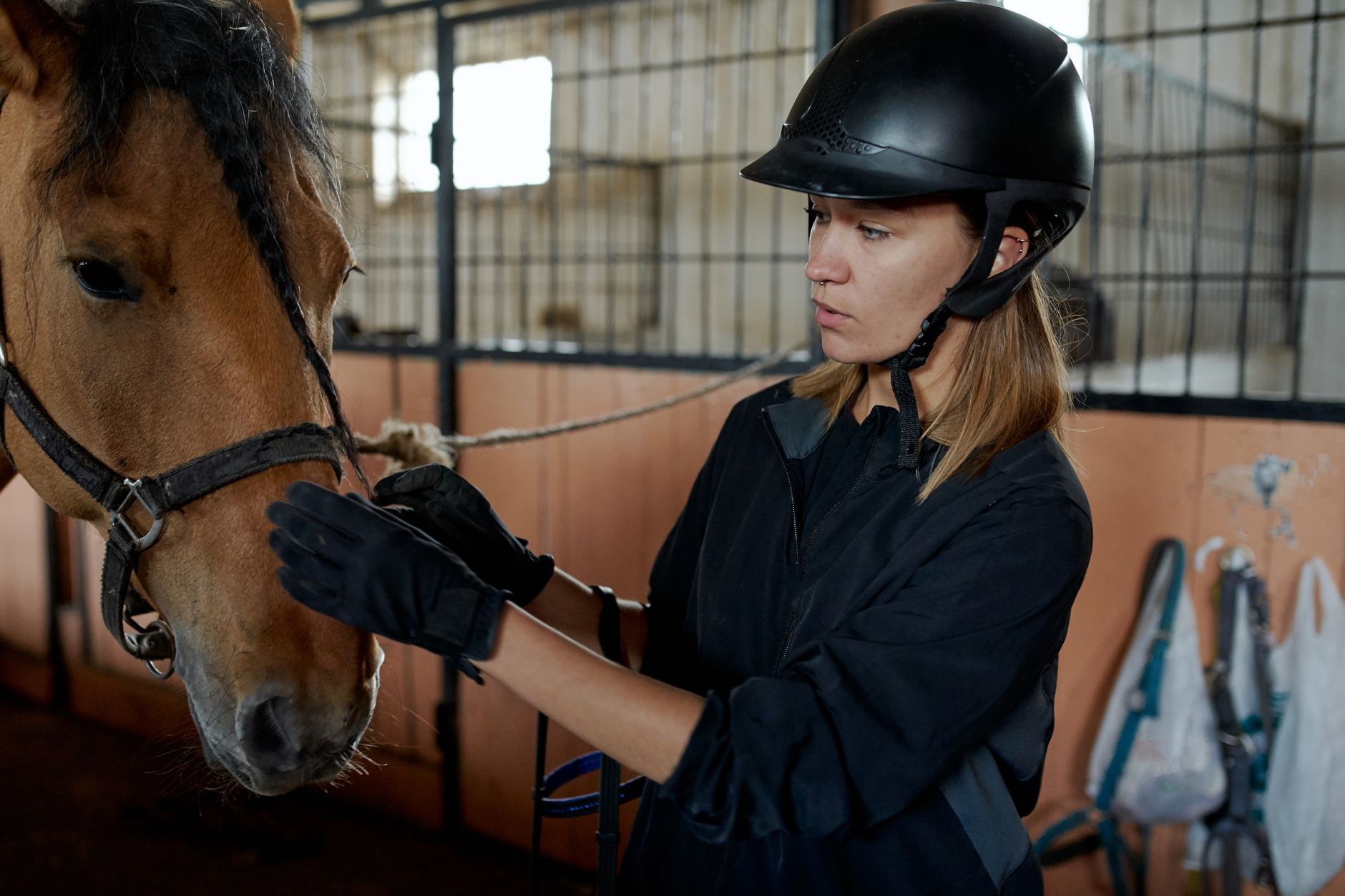
And the Longer You Wait to Fix It, the More It Compounds
Hay waste does not stay in its lane. Once you start tracking it, you start seeing the ripple. The soiled bedding from the feeding corner is deeper, which means your shavings order comes sooner, which means you are spending on bedding to absorb wasted hay on top of spending on the hay itself. Horses eating off the ground ingest sand and dirt with every mouthful — and in sandy soils, that accumulates in the gut and shows up later as sand colic, one of the most expensive and dangerous colics a horse owner can face. You do not have to live in the desert for this to be a real risk. Any dry lot, any stall with screenings under the mats, any paddock with thin grass cover — ground feeding in those environments is quietly loading the cecum.
Then there is the boredom factor, and the emotional weight that comes with it. A horse who empties his hay pile in two hours and then stands for the remaining ten hours until the next feeding does not just get restless — he develops habits. Wood chewing. Pawing. Weaving. Cribbing. These behaviors are the horse telling you he was built to trickle-feed for 16 to 18 hours a day, and the two-meals-a-day system is not meeting that need. Once those stable vices take hold, they rarely fully disappear. You manage them rather than cure them. And every time you walk into that stall and hear the rhythmic chewing on the door frame, you feel the low-grade guilt that comes with knowing something is not right and not yet knowing how to fix it.
The financial math on workarounds adds up fast. A quality veterinary farm call for a colic episode — even a simple impaction — runs $300 to $600 before any treatment. Sand colic can mean hospitalization at $2,000 and up. A set of cribbing collars runs $80 to $120 and does not address the root cause. Replacing chewed stall boards costs materials and labor. Extra shavings to compensate for the contaminated bedding around the hay pile adds $40 to $80 per month depending on your stall size. Stacked against a $48.95 hay feeder that installs once and runs for years, the cost of doing nothing is not zero — it is just distributed across enough line items that it never shows up as one clear number.
- ✗25–57% of loose hay ends up wasted on the stall floor every single day
- ✗Ground feeding deposits sand and dirt in the gut — a slow-building colic risk
- ✗Hay-soiled bedding drives shavings costs up month after month
- ✗Boredom from empty feeders creates stable vices that are hard to break

The Hay Hoops Original Solves It in One Afternoon
The Hay Hoops Original Collapsible Wall Hay Feeder is the answer horse owners keep coming back to because it works the way a barn actually operates — not the way a product designer imagined a barn might operate. It holds three to four flakes of hay against the wall at the right height for natural eating. Your horse can graze from it continuously, pulling small amounts at a time rather than dumping a full pile on the floor. When it is empty, the hammer-finished steel frame folds flat against the wall so it is completely out of the way while you muck, so nothing trips you up and nothing gets damaged by the muck fork handle.
The mechanism that makes this work better than anything you have tried before is the integrated frame design. Most hay feeders are either a bag you hang from a hook — which sways, tips, and tangles — or a fixed box that holds hay but requires you to awkwardly stuff it full from the top. The Hay Hoops frame holds the net open while you load it, so you can pitch in flakes the same way you always have. Then the top frame folds down, closing off the top and keeping the hay positioned against the wall where the horse can work it from the front. The hay stays contained. The shavings stay out. The horse eats the way nature intended — head at a comfortable level, trickle-feeding through the net mesh at a pace that supports healthy digestion.
The cascade of benefits that follows from getting this one thing right is real and measurable. Hay waste drops to nearly zero because nothing reaches the floor until it has passed through the net. Bedding stays cleaner because the feeding corner is no longer the disaster zone of the stall. Horses that previously showed boredom behaviors settle down because they have continuous access to forage. Digestion improves because they are eating slowly and steadily rather than gorging and then going empty. And because the frame is hammer-finished steel — not plastic, not painted mild steel — it does not rust out, does not fade in UV, and does not need replacing. You install it once and it is done.
Schneiders has been the barn supply retailer horse owners trust since 1948. Seventy-eight years of serving working horse people in all 50 states, through every trend and every product category that has come and gone, has taught us one thing above all: the products that earn a permanent place in the barn are the ones that do exactly what they promise and do not require a manual to operate. The Hay Hoops Original comes with our standard satisfaction guarantee. If it does not work in your barn the way we say it will, call us. We have been having that conversation with customers since before most of our competitors existed.
Virtually Eliminates Hay Waste
Net mesh keeps hay contained until your horse actively pulls it through, cutting floor waste from the industry-average 25-57% down to near zero.
Folds Flat When Empty
Hammer-finished steel frame collapses against the wall in seconds — nothing in the way during mucking, nothing for a shod hoof to catch on.
Built-In Loading Frame
The frame holds the net open while you load so you can pitch in flakes normally. No wrestling with a floppy bag in a tight stall corner.
Slows Consumption for Gut Health
Continuous trickle-feeding through the net reduces gorge-and-fast cycles, supports healthy hindgut function, and curbs boredom-driven stable vices.
What Riders Are Saying
"
I run two horses out of a small run-in shed and was burning through an extra bale a week just from waste — hay on the ground, trampled, wet, gone. Installed the Hay Hoops on a Saturday afternoon, maybe 45 minutes start to finish. My mare Juniper started using it within the hour. Three weeks later I am stretching each bale a full extra day. For $49, nothing in my barn has delivered a better return. The fold-flat design means it is completely out of the way when I am mucking.
""
I keep two warmbloods in a show barn and stall cleanliness is not optional — clients walk those aisles every day. Before the Hay Hoops, my groom was pulling soiled hay and wet shavings twice daily just from the feeding corner. We hung four of these units across the barn in one morning. Bedding costs dropped noticeably within the first month, and my gelding Vandenberg, who was starting to wood-chew out of boredom, settled right down once he had slow, continuous access to hay.
""
I barrel race and spend more time at jackpots than at home, which means hired help is doing morning feed on my four horses. Simple systems matter. The Hay Hoops is foolproof — even someone who has never been around horses can fill it correctly. My horses are eating slower, dropping less, and my vet commented at the last farm call that their gut sounds were the best he had heard in years. I credit the slower consumption. These feeders have been on my barn wall for fourteen months without a single problem.
"How We Stack Up
| Feature | Schneiders Hay Hoops Original | Tough-1 Wall Hay Feeder | Derby Originals Corner Hay Feeder |
|---|---|---|---|
| Frame collapses flat when empty | ✅ | ❌ | ❌ |
| Built-in frame holds net open for loading | ✅ | ❌ | ⚠️ |
| Keeps hay fully against the wall | ✅ | ⚠️ | ⚠️ |
| Rust-resistant hammer-finish steel | ✅ | ⚠️ | ❌ |
| Holds 3-4 flakes per load | ✅ | ⚠️ | ✅ |
| Slows consumption with net mesh | ✅ | ⚠️ | ❌ |
| Nothing protruding when folded | ✅ | ❌ | ❌ |
| Compatible with standard hay nets | ✅ | ⚠️ | ❌ |
| Installs with two lag bolts — under 1 hour | ✅ | ✅ | ⚠️ |
| Backed by 78-year retailer guarantee | ✅ | ❌ | ❌ |
What Horse People Actually Say After a Month
The most common report we hear from Hay Hoops customers is not about the feeder itself — it is about what changed downstream. Less time mucking the feeding corner. Fewer shavings used. A horse that is calmer at feeding time because it knows hay is accessible throughout the day. A senior horse with PPID that is maintaining weight better because slow, continuous forage access keeps his metabolism steady. A mare who stopped weaving after six weeks. These are not features we can list on a spec sheet, but they are what actually happens when you fix the feeding setup.
Installation is two lag bolts into a stud, which any stall has. The included hardware works for standard 2x6 and 2x8 lumber. The unit arrives assembled and ready to hang — there is no hardware to sort, no instructions that require a second reading. Replacement nets are available separately so if the original net wears out years from now, you do not need to replace the frame. At $48.95, the Hay Hoops Original lands in a price range where the math works on the first bale saved. Most customers report recouping the cost within three to four weeks.
- ✓Holds 3-4 flakes of hay per load — covers a full evening through morning feeding
- ✓Hammer-finished steel frame resists rust and UV without annual recoating
- ✓Top frame folds away to seal the hay against the wall and keep the top closed
- ✓Works with the included net or any standard slow-feed hay net
- ✓Mounts to standard stall lumber with two lag bolts — installs in under an hour
What You Get
