
The Electric Fence That Horses Actually Respect
Six tinned-copper strands. A braided polyester jacket built for Ohio winters and Texas summers. A black checkered design horses can see. HorseSafe Electric Braid delivers a consistent, reliable charge — so your fences do their job night and day, season after season, without you losing sleep over it.

Bad Electric Fence Wire Doesn't Just Fail — It Puts Your Horses at Risk
It usually starts small. A hot summer afternoon, you're doing evening chores, and you notice one of your horses grazing a little closer to the fence line than they should be — maybe pushing at it, maybe just standing against it without flinching. You grab your fence tester and get a reading half what it should be. The wire that tested fine in April is giving your horses a tap when it should be giving them a jolt. You move on, make a note, tell yourself you'll deal with it on the weekend. That's how it starts.
The problem with cheap or corroded electric fence wire is that the failure is invisible until it isn't. Bare steel conductors corrode from the inside out. Polypropylene jackets crack and abrade against fence posts and T-bar corners. Each failure point is a dead spot in your fence — a place where the charge drops, where a 1,200-pound horse will lean and then push and then step right through onto the county road, or into your neighbor's hay field, or into the paddock with your stallion. A fence that looks fine and tests fine in July can be a liability by September after two months of summer UV, dew cycles, and horses pawing at the bottom wire.
Horse owners who've dealt with fence failures know the particular grind of it. You're out there at 5 a.m. in a headlamp tracing a dead circuit through 600 feet of fence. You're re-splicing corroded connections with your bare hands in the rain. You're replacing sections of wire that degraded in a single season because the manufacturer used bare steel strands instead of tinned copper. Your horses have learned exactly where the weak spots are — horses always do — and they test those spots on a schedule that would impress a structural engineer. Every gap in fence integrity becomes a gap in your sleep and your peace of mind.
And the workarounds add up fast. Horse owners trying to compensate for failing fence wire patch with extra insulators, add a second energizer, run a second strand below the first to cover low spots, or — and this is the one that really costs — replace entire fence runs every two or three seasons because the wire simply can't be salvaged. Others give up on electric altogether and go to board or pipe, spending ten times as much to solve a problem that started with wire that cost them forty dollars a roll. None of it is cheap, none of it is fun, and none of it actually fixes the root cause: wire that wasn't built to last in real-world farm conditions.
The Real Cost of Fence Failures Goes Way Beyond Replacing Wire
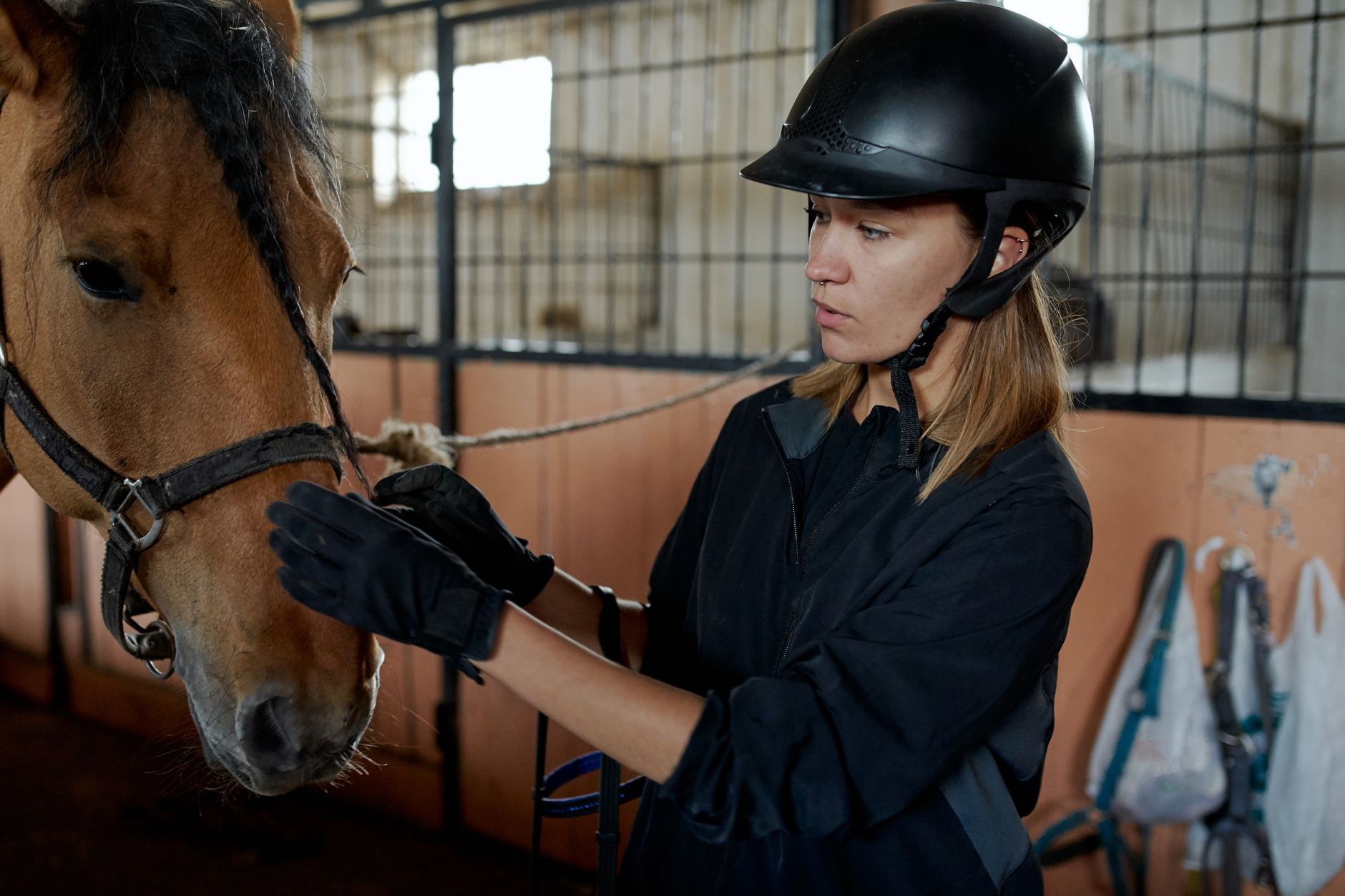
When a horse gets through a failing fence, the ripple effects touch every corner of your operation. A mare that slips out at midnight doesn't just cost you the two hours of sleep you lose catching her — she can get onto a road, get struck by a vehicle, tangle in loose wire, or injure herself on the neighbor's property in ways that translate directly to emergency vet calls. A gelding that learns he can push through a dead spot doesn't just escape once. He teaches every other horse in the paddock. Within a week you can have a whole herd testing every inch of your fence line, and your containment system has effectively stopped working even though the wire is still technically in place.
There's an emotional weight to this that horse people don't talk about enough. The background anxiety of wondering whether your fence held overnight is exhausting. Checking the fence before you leave for work, before you go to bed, before a storm rolls in — it becomes a ritual, and not a good one. That hypervigilance is a sign that your containment system isn't doing its job. Your fence should be something you trust, not something you monitor. When you've already had one escape, or one close call on the road, it changes how you manage your property for months. You start second-guessing every system, every piece of equipment, and that anxiety has a cost in your time, your focus, and your enjoyment of owning horses.
The financial math on cheap fence wire is almost always worse than it looks up front. A single emergency vet call runs $300 to $800 before you factor in trailering and after-hours fees. Property damage from an escaped horse — to your neighbor's fence, their garden, or their vehicle — can run into thousands. And the ongoing cost of replacing wire every two or three seasons, plus the labor hours spent testing circuits, splicing repairs, and re-stringing bad sections, compounds across a five- or ten-year horizon into real money. A roll of fence wire that fails in eighteen months isn't cheaper than one that lasts a decade — it's dramatically more expensive, in dollars and in headaches.
- ✗Corroded wire loses conductivity — horses learn your fence is a suggestion
- ✗A single overnight escape can mean a vet bill, a lawsuit, or worse
- ✗Replacing cheap wire every 1-2 seasons costs more than buying right the first time
- ✗Low-visibility fence means horses hit it at speed — and so does your equipment

HorseSafe Electric Braid: Built for the Conditions Real Horse Farms Actually Face
HorseSafe Electric Braid starts from a simple premise: electric fence wire for horses needs to deliver a reliable shock every single time, in every season, across every inch of a thousand-foot run. That means the conductors can't corrode, the jacket can't degrade under UV, and the whole assembly needs to be visible enough that horses respect the line before they ever touch it. This product checks every one of those boxes in a way that general-purpose polywire simply does not.
The mechanism is what separates it. Six strands of tinned copper wire are braided into a polypropylene core, then wrapped in a braided polyester jacket. Tinned copper resists corrosion better than bare steel — the tin coating protects the conductive surface, so your fence tests consistently year after year. Six strands instead of three means more surface area delivering the charge, which translates to a more consistent shock response even through a thick winter coat. The braided construction distributes tension across the whole assembly rather than concentrating stress at splice points, so it holds up to horses leaning on it, to post movement in freeze-thaw cycles, and to the mechanical wear of running through corners and insulators year after year. The black checkered pattern isn't cosmetic — it gives horses a visible cue before they get close enough to test the wire.
The cascade of benefits from switching to a wire your horses actually respect is real. Horses that don't test the fence line don't break fence posts. They don't create the low spots that let neighboring animals in or young foals under. They don't get wire abrasions from pushing through. Your energizer runs more efficiently because there are fewer shorts and leakage points. You spend less time walking the fence and more time riding. Your neighbors stop getting middle-of-the-night calls. The math on a 1,000-foot roll at $159.99 is easy when you put it against the alternative.
Behind this product is Schneiders Saddlery — family-owned since 1948 in Chagrin Falls, Ohio, shipping to all 50 states for decades. If this wire fails to perform under normal use, we stand behind it and will make it right. That's the Schneiders commitment, and it's been our commitment to horse people since before most of the competition existed.
6-Strand Tinned Copper Core
More conductor strands mean more shock surface area — and tinned copper won't corrode the way bare steel does, keeping your charge consistent for years, not seasons.
Braided Polyester Jacket
The braided polyester outer layer resists UV degradation, abrasion at corners and insulators, and the mechanical stress of real-world fence conditions season after season.
High-Visibility Black Checkered Pattern
Horses see it before they touch it. The bold black check gives horses a visual cue that trains better behavioral response and reduces the load on your energizer.
1,000 ft Roll for Full-Perimeter Coverage
One roll covers a serious perimeter — enough for a five-acre paddock without splicing. Backed by a family business that has been serving horse people since 1948.
What You Get with HorseSafe Braid
- Braided polyester outer jacket
- Polypropylene internal core
- Tinned copper conductive wire
- Non-corrosive conductor material
- Black checkered visual pattern
- Construction intended to withstand weather and time
- Electric braid made for horse fencing
How We Stack Up
| Feature | Schneiders [Product Name] |
|---|
What Goes Into a Thousand Feet of Wire That Actually Works
Most electric fence wire fails not because the concept is wrong, but because the materials cut corners in ways that don't show up until the wire has been through a season or two. Bare steel corrodes. Three-strand construction leaves gaps in the shock delivery zone. Twisted jackets abrade and crack where they contact insulators. HorseSafe Electric Braid addresses each of those failure points directly: tinned copper conductors that resist corrosion, six strands braided for maximum surface contact, and a polyester-over-polypropylene construction that distributes mechanical stress rather than concentrating it. The result is a wire that tests consistently from one end of a paddock to the other, in January and in July, in the first year and the fifth.
A 1,000-foot roll is the right unit for serious horse operations. It covers a 250x250-foot paddock perimeter on a single spool — no mid-run splices, no joints to fail, no voltage drop at the far end. The black checkered design is visible to horses at a distance that gives them time to turn before they contact the wire, which means less fence-testing behavior overall. Run this wire with a quality charger, use good insulators at corners, and your fence system will do its job quietly for years while you focus on everything else a horse farm requires.
- ✓1,000 ft roll — covers a full 5-acre perimeter without mid-run splices
- ✓6 tinned copper strands for maximum, consistent charge delivery
- ✓Braided polyester jacket — UV-resistant, abrasion-resistant, built for real conditions
- ✓Black checkered pattern horses see before they touch — better behavioral response
- ✓Backed by Schneiders Saddlery, family-owned since 1948, with free shipping on orders over $99
Why This Braid Belongs on a Horse-Fence Materials List
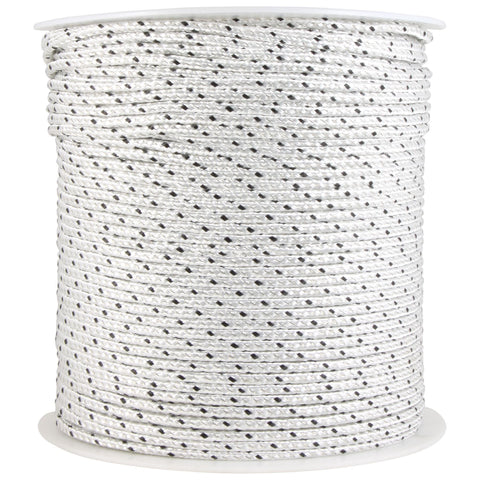
Visibility, Conductivity, and Outdoor Construction in One Braid
HorseSafe Braid brings together a visible black checkered pattern, weather-resistant braided construction, and tinned copper conductors for an electric horse-fence line with clearly published materials.
Choose a Clearly Specified Braid for Your Electric Horse Fence
Shop Horse Safe Electric Braided Horse Fence from Schneiders and plan your fence line around its published materials, conductive braid, and visible black checkered design.