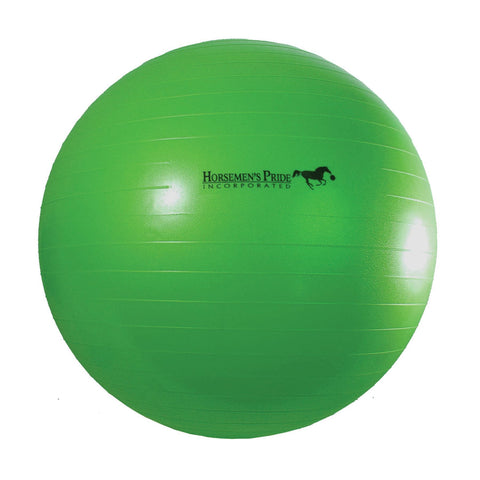
The 40" Ball That Turns a Stall-Sour Horse Into a Happy One
The Jolly Mega Ball gives stalled, pastured, or confined horses a purpose — something big enough to push, chase, and obsess over. Anti-burst construction rated to 2,500 lbs means it holds up to even your most determined draft cross. $49.99. Ships free over $99.
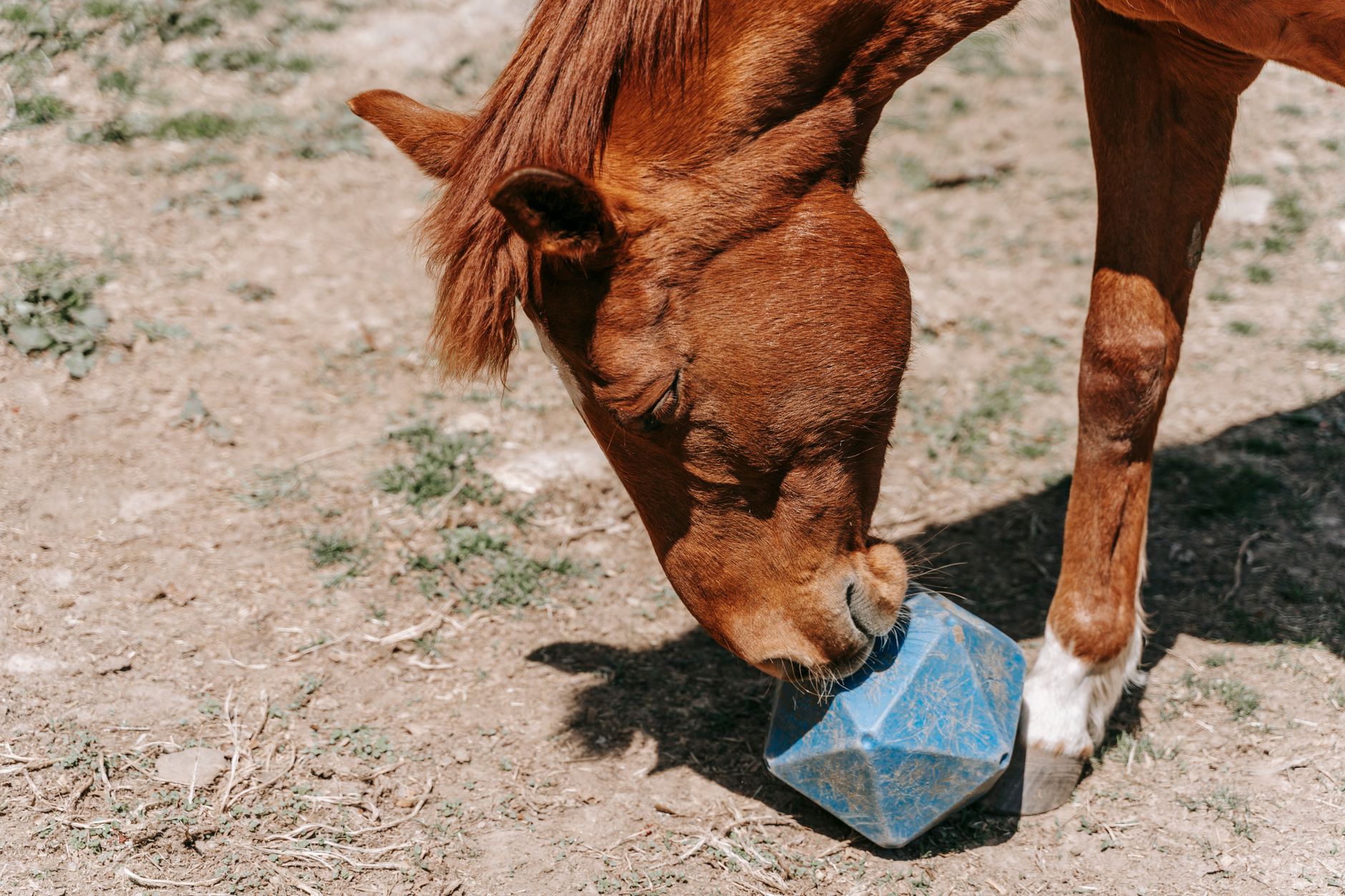
A Bored Horse Is a Problem That Snowballs Fast
It starts subtly. You walk into the barn on a Monday and your horse is weaving at the stall door — just a little, just two or three sways, easy to dismiss. Or maybe he's started cribbing on the top rail, or wood-chewing the corner of the stall. Or he pins his ears when you bring his neighbor out first. These aren't personality quirks. They're distress signals, and every horse person who's been at this long enough knows exactly what's coming next if you don't address the root cause: a horse with too much brain and not enough to do.
The problem is worse than it looks because horses evolved to move. A feral horse covers 20 to 30 miles a day foraging, socializing, and simply existing in space. Your stalled horse — especially one on stall rest, competing on the road, or wintering in a small paddock — covers maybe a quarter mile between turnout and work. That gap between what a horse's nervous system expects and what it actually gets is immense. The boredom isn't laziness; it's a physiological mismatch that builds pressure like water behind a dam.
The daily grind of managing a bored horse is exhausting. You're watching for new vices every week. You're fielding questions from your vet about stereotypic behaviors that are now established habits. You're putting up with a horse who comes out of the stall keyed up, distracted, and difficult — not because he's bad, but because he's been sitting in his own head for 20 hours with nothing to focus on. Lateral work gets harder. Trail rides get spookier. Ground manners erode. The whole relationship degrades from the edges in, and the culprit is something as basic as under-stimulation.
Horse owners try everything. Hay nets help but don't fix the need for physical interaction and play. Stall mirrors can reduce anxiety but add nothing to occupy an active mind. Treat balls run out in ten minutes and then just roll into a corner. Salt licks provide five seconds of engagement. Turnout helps enormously when you have it, but turnout isn't always possible — frozen ground, post-surgical restrictions, weather, limited acreage, show schedules. None of the standard fixes actually give a horse something large, responsive, and interesting to push around and interact with at full-body scale.
Every Day Without Enrichment Makes the Problem Harder to Reverse
Stall vices that start as mild boredom behaviors — weaving, cribbing, stall walking, wood-chewing — become neurological habits within weeks. The horse's brain literally rewires around the repetitive motion, releasing endorphins that make the behavior self-reinforcing. Once that's established, removing the boredom doesn't automatically remove the vice. You're now managing a behavioral addiction on top of the original enrichment deficit. The enrichment problem you ignored in October is the cribbing collar and vet bill you're dealing with in February.
The emotional cost lands on you too. There is a specific kind of fatigue that comes from managing a horse who is never quite settled, never quite right, always a little too much. You start dreading certain moments — bringing him in, tacking up in a rush at a show, the first five minutes of every ride where you're just waiting to see what version of him showed up today. You got into horses because of a feeling, and that feeling has been replaced by vigilance. That's a real loss, and it accumulates quietly until you find yourself wondering whether you want to keep competing at all.
The financial math on workarounds adds up fast. Cribbing collars run $60–$120 and don't fix the cause. Stall toys that break or go flat cost $20–$40 every few months. Hay nets, slow feeders, and enrichment feeds add $50–$150 per month. Vet consultations for behavioral issues — before you even get to a referral to an equine behaviorist — start at $75 a visit. And the hidden cost nobody tracks: the rides you cut short because your horse was too wound up, the shows where your score suffered because he was stall-sour and distracted, the training sessions that accomplished nothing because he wasn't mentally available. A bored horse is expensive in ways that never appear on a single line item.
- ✗Stall vices like weaving and cribbing that set in within weeks
- ✗A horse that's keyed-up, distracted, and hard to manage
- ✗Vet bills, collars, and broken cheap toys that don't fix the root cause
- ✗The slow erosion of the relationship you wanted with your horse

The Jolly Mega Ball: 40" of Something Worth Doing
The Jolly Mega Ball is exactly what it looks like: an enormous 40-inch ball made specifically for horses, sized so that a full-grown horse can push it, roll it, chase it, and interact with it at full body weight without it disappearing under a fence or rolling into a corner and becoming irrelevant. At $49.99, it costs less than one vet visit and less than two months of stall toys that break. It is the simplest and most effective boredom solution we've found in 78 years of selling to horse people, and we've tried them all.
The mechanism is straightforward: horses are prey animals with strong play drives and an instinct to interact with moving objects at herd scale. A 40-inch ball triggers that drive in a way a 14-inch ball or a hanging treat toy simply cannot. The horse can push it with his nose, chest, and knees. He can rear and bring his front legs down on it (anti-burst construction rated to 2,500 lbs handles this without flinching). He can chase it across a paddock, lose it, find it, and start the whole sequence again. It occupies foraging instincts, play instincts, and social interaction instincts simultaneously — giving a stalled or confined horse multiple reasons to keep engaging rather than one novelty that wears off in a day.
The cascade of benefits is real and measurable. Horses with adequate enrichment come out of the stall calmer and more focused. They're easier to tack up, more responsive in work, and less reactive on trail or at shows. Established stall vices often decrease in frequency once boredom is genuinely addressed — not always eliminated, but reduced. You get a horse who's been doing something for the past four hours instead of nothing, and that difference shows up in every interaction you have with him that day. Owners consistently report better ground manners, more willing rides, and improved barn relationships within the first two weeks.
Schneider Saddlery has been outfitting working horse people since 1948 — three generations out of Chagrin Falls, Ohio. We carry the Jolly Mega Ball because it holds up, because horses actually use it, and because we've watched it work in barns from Kentucky to California. If it doesn't do what we say it does for your horse, we'll make it right. That's the same guarantee we've stood behind for 78 years, and it's not a policy statement — it's how we operate.
Anti-Burst Rated to 2,500 lbs
Engineered to withstand full-body horse contact — chest pushes, front leg strikes, and the weight of a horse leaning in. Holds air and shape through serious use.
True 40" Horse Scale
Big enough to engage a full-sized horse — pushable with nose, chest, and knees. Doesn't disappear under fences or into corners the way smaller balls do.
Indoor and Outdoor Use
Rated for indoor or outdoor use — works in stalls, paddocks, arenas, and dry lots without needing to be brought in between sessions.
Reduces Boredom Vices
Owners report measurable reduction in weaving, cribbing, and stall walking within weeks of regular use. Addresses root cause, not just symptoms.
What Riders Are Saying
"
My 17-hand Warmblood gelding, Duke, had been weaving and cribbing every morning — classic stall boredom. I put the Jolly Mega Ball in his paddock on a Tuesday. By Thursday he'd figured out he could roll it into the fence and chase it back. Weaving dropped off almost completely within two weeks. My vet noticed the difference at his next visit before I even mentioned the ball. Worth every penny of $49.99.
""
I barrel race and my mare is in a stall 18 hours a day at competition weekends. She used to be a nervous wreck by Sunday — pace, sweat, calling constantly. I started tossing the Mega Ball in with her at shows and the change is remarkable. She'll push it around for 30–40 minutes at a stretch and come out of the stall relaxed and forward, not hot. The anti-burst rating matters — she's 1,200 lbs and she leans into this thing hard.
""
We run a small TB rehab farm and need low-impact enrichment for horses on stall rest. Most toys get destroyed in a week. The Jolly Mega Ball has been in rotation for four months across six horses and still holds air perfectly. Our 16.2 OTTB pushed it straight into the automatic waterer on day one — ball survived, horse was delighted. For horses that can't be turned out, this is genuinely the best $50 we spend on their mental health.
"How We Stack Up
| Feature | Schneiders Jolly Mega Ball 40" | Horsemen's Pride Amazing Ball | Huff N Puff Horse Ball |
|---|---|---|---|
| Ball Diameter | 40 inches | 30 inches | 25 inches |
| Anti-Burst Construction | ✅ | ⚠️ | ❌ |
| Pressure Rating | 2,500 lbs | Not rated | Not rated |
| Indoor & Outdoor Rated | ✅ | ✅ | ⚠️ |
| UV-Resistant Material | ✅ | ⚠️ | ❌ |
| Draft Horse Suitable | ✅ | ⚠️ | ❌ |
| Adjustable Firmness | ✅ | ✅ | ✅ |
| Price | $49.99 | $39.99 | $29.99 |
| Backed by 78-Year Retailer | ✅ | ❌ | ❌ |
| Satisfaction Guarantee | ✅ | ⚠️ | ❌ |
What Forty Inches Actually Means in Practice
Most horse toys are designed to a human scale of "big" and end up undersized for real equine interaction. At 40 inches in diameter, the Jolly Mega Ball is roughly the same height as a horse's knee — big enough to push back, light enough (about 5¾ lbs uninflated) to be moved with a nose nudge, and rigid enough when inflated to travel across a paddock and invite a chase. That size-to-weight ratio is what makes it work: it's responsive without being so light it goes over the fence, and so heavy it's no fun to push. The pump is not included, which lets you dial in exactly the right firmness for your horse — stiffer for a pushy draft, a little softer for a youngster still figuring out how ball physics work.
The anti-burst construction is not marketing language — it's a rated engineering spec. The ball is designed to deform under extreme pressure rather than pop, which matters when a 1,300-lb warmblood decides to rear and come down hard on it. It will slowly lose air over time the way any inflatable does, but it won't fail catastrophically from normal horse contact. Keep a standard ball pump on hand and top it off every few weeks. The green color is bright enough to be interesting without being startling, and it doesn't show dirt the way white toys do after two days in a paddock.
- ✓40" diameter — proper horse scale for full-body engagement
- ✓Anti-burst construction rated to 2,500 lbs of pressure
- ✓Indoor/outdoor rated — arena, stall, paddock, dry lot
- ✓Lightweight (approx. 5¾ lbs) for easy horse-powered movement
- ✓Adjustable firmness — inflate to preference, no pump included
What You Get