Stop Feeding the Ground — Start Feeding Your Horse
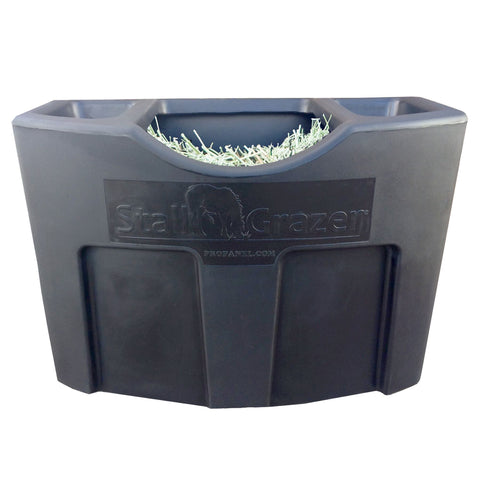
The Pro Panel Wall Grazer® 3-in-1 Flat Wall Horse Feeder puts hay, grain, and salt exactly where your horse needs them — mounted flush to the panel, off the dirt, and at a natural grazing angle that actually mirrors how horses eat in the wild.
Every Flake You Throw on the Ground Is Money Your Horse Never Eats
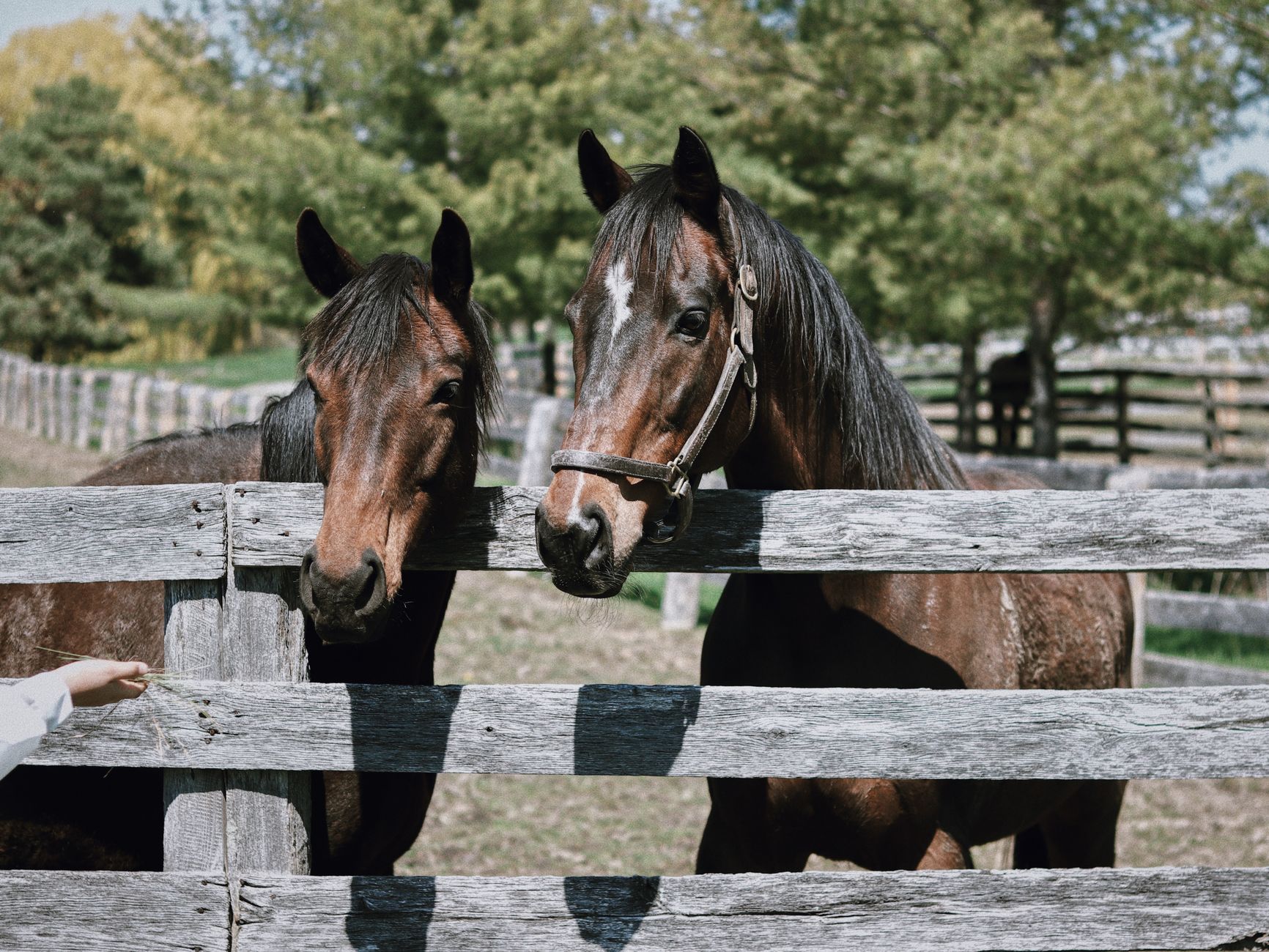
It's 6:30 in the morning. You've pulled on your barn boots, hauled a hay bale across the paddock, and broken off three flakes for your horse's morning feeding. You watch him lower his head, take a mouthful — and then the wind catches the loose stems and spreads them across twenty square feet of dirt and manure. He steps on half of it before he's done chewing. You tell yourself you'll figure out a better system. You've been telling yourself that for two years. This is the daily reality for tens of thousands of horse owners who are feeding without a proper wall-mounted feeder, and most of them don't realize exactly how much it's costing them — in hay, in health, and in time.
The problem runs deeper than waste. When a horse eats off the ground in a paddock or dry lot, he's not just eating hay — he's ingesting sand, dirt, and whatever else has been trampled into the surface. Sand accumulates in the ventral colon and large intestine at a rate that surprises most owners. Sand colic is one of the most preventable equine emergencies, yet it still accounts for a significant portion of colic cases in dry-lot horses. Feeding off the ground is a direct, repeated contribution to that risk every single morning and evening. And if your horse has any respiratory sensitivity — even mild heaves or IAD — a face buried in dusty ground-level hay is the worst possible feeding position. Horses are designed to breathe with their heads slightly lowered, but not pressed into dirt and debris.
Then there's the arithmetic of waste. A 60-pound bale of premium grass hay at current prices runs anywhere from $18 to $28 depending on your region. Horses in dry lots or paddock runs routinely waste 15 to 30 percent of what's thrown on the ground — hay that gets stepped on, soiled, or blown into corners before it can be eaten. For a two-horse operation, that can translate to three or four bales of waste per month. Over a year, you're looking at the cost of a full winter's worth of hay just evaporated into ground cover. And yet most people keep doing it because they haven't found a feeder that actually solves the wall-mount problem without adding a clunky structure or a product that doesn't hold up through a cold Ohio winter or a hot Texas summer.
You've probably tried other things. Maybe you've used a rubber tub on the ground — better than bare dirt, but it tips, collects rainwater, and your horse can still scatter hay over the rim. Maybe you've tried a hay net hung from a panel hook — horses that paw at them pull the whole thing loose, and then you've got a dragging net that's a leg-entanglement hazard. You may have tried a commercial wall feeder that cracked after one season or that required welding a custom bracket to mount. Or you simply gave up and accepted that wasted hay is the price of horse ownership. It doesn't have to be. The engineering exists. The question is whether the product is built to match the actual conditions of a working paddock or stall — and most of them aren't.
It's Not Just Wasted Hay — It's Wasted Health, Time, and Peace of Mind
When feeding inefficiency becomes a daily constant, the ripple effects touch every corner of your horse management. A horse who routinely eats from ground level in a sandy or dirty paddock doesn't just accumulate gut sand — he also has chronically elevated exposure to manure bacteria and environmental pathogens at the exact moment his respiratory tract is open and working hard during digestion. Add a horse who's already underweight because 25 percent of his calories hit the ground before he can eat them, and you're fighting a losing battle on conditioning, coat quality, and energy — not because your feeding program is wrong, but because your delivery system is broken. Good hay means nothing if it's being wasted on the floor.
There's an emotional dimension that doesn't get talked about enough. If you've stood at the fence on a cold January morning watching your horse pick at hay that's embedded in frozen mud, you know the knot it puts in your stomach. Horse people care deeply about the animals they're responsible for. Knowing something is wrong and not having a clear fix is genuinely stressful. That nagging feeling at morning and evening feed — the sense that you're doing your best but still falling short — is a real cost that doesn't show up in any hay invoice but wears on you over months and years of horse ownership.
The financial picture gets worse when you factor in workarounds. Slow-feeder hay nets that need replacing every eight to twelve months. Rubber feeders that crack in freeze-thaw cycles and have to be replaced every couple of seasons. Vet visits related to sand colic — a diagnostic workup, psyllium supplementation, and monitoring can easily run several hundred dollars, and a surgical colic case is a five-figure event. The math is not abstract: a proper wall-mounted feeder that eliminates ground feeding is not an expense — it is risk mitigation with an obvious payback period. The only question is whether the feeder you choose is actually engineered to handle real-world paddock conditions, or whether it's going to become another short-lived workaround in a long line of them.
- ✗Hay scattered across dirty ground before your horse finishes half of it
- ✗Sand and manure ingestion at every meal — a slow-building colic risk
- ✗Feeders that tip, crack, rot, or pull loose from panels after one season
- ✗No clean place to put grain and supplement alongside hay at the same feeding

One Feeder. Three Sections. Built to Stay Put on Any Panel System.
The Pro Panel Wall Grazer® 3-in-1 Flat Wall Horse Feeder is the answer to every problem outlined above — not because it's flashy, but because it solves the actual engineering challenge: how do you put hay, grain, and mineral supplement in one feeding station that mounts flush to a panel wall, holds up through any weather, and doesn't require a custom bracket or a trip to the hardware store? Schneiders has been answering questions like that for 78 years, and this feeder reflects exactly the kind of functional, durable product thinking that comes from a company that was started by horse people, for horse people, in 1948.
Here's how it works. The Wall Grazer is molded from a single piece of high-density polymer — no seams, no joints, no weld points that can crack or collect bacteria. The center section is sized for a generous flake of hay, and the two flanking compartments handle grain on one side and loose salt or mineral supplement on the other. The feeder's profile is deliberately flat so it mounts directly against a panel or stall wall without protruding awkwardly into the space. A sloped bottom in the hay section angles the feed naturally downward, mimicking the head-lowered grazing position that horses use instinctively. Drainage channels are built into the base so rainwater and morning dew don't pool and rot uneaten hay. Mounting is straightforward — the feeder is designed around standard panel rail dimensions so no custom fabrication is needed.
The cascade of benefits that follows from clean, wall-mounted, angle-appropriate feeding is significant. Hay waste drops immediately and measurably — most users report a noticeable reduction in leftover ground hay within the first week. Ground-level dirt and sand ingestion at feeding time is eliminated. Horses with neck arthritis or cervical stiffness eat with less strain because the feeder is at an ergonomic reach height rather than at ground level. Horses who were anxious or competitive at feeding time tend to settle when their hay is contained and predictable rather than scattered. Your cleanup is faster. Your hay bill is lower. Your horse looks and moves better inside of 60 days.
Schneiders backs this feeder with our standard product warranty and the full weight of 78 years of customer service experience out of Chagrin Falls, Ohio. If you have a question about installation, compatibility with your panel system, or how to configure the side sections for a horse on a specialty supplement program, you're calling a team that actually knows horses — not a call center reading from a script. That's what family ownership for three generations buys you: people on the other end of the phone who will give you a straight answer.
3-in-1 Feeding Station
Hay in the center, grain or supplement on one side, loose salt or mineral on the other — everything your horse needs at one stop, no separate buckets or nets required.
Natural Grazing Angle
The sloped base positions hay at the low head angle horses use naturally, supporting proper chewing, better digestion, and reduced respiratory exposure to ground-level dust and debris.
Single-Piece Molded Polymer
No seams means no cracks, no bacteria traps, no rust, and no failure points at weld joints. One solid piece that handles freeze-thaw cycles and UV exposure season after season.
Flush Panel Mount Design
Designed to mount directly against standard paddock panels or stall walls without protruding hardware or custom brackets — stays in place, doesn't tip, and doesn't create entanglement hazards.
What Riders Are Saying
"
I run a small barrel operation in central Texas — six horses, all on paddock panels. I switched to the Wall Grazer after my AQHA mare, Cinnamon Twist, started dropping weight despite eating the same amount of hay. Turns out she was wasting nearly a quarter of every flake on the ground. After six weeks on this feeder, she's back to her competition weight and my hay bill dropped noticeably. The three-section design is perfect: I load hay in the center and supplement and loose salt on the sides. Setup took maybe twenty minutes total.
""
My Hanoverian gelding, Prince Revel, has always been a messy eater — he'd scatter half his hay across the stall floor and then refuse to touch it once it hit the shavings. The Wall Grazer changed that completely. Because it mounts flush to the panel wall, he can't tip it or drag hay out sideways. The sloped bottom means he eats at a low, natural angle, and I've noticed he chews more thoroughly now. I also appreciate that the polymer is seamless — no crevices collecting old grain or mold. Genuinely the best equipment purchase I made this year.
""
I board at a facility that recently upgraded all twelve paddock runs with the Pro Panel Wall Grazer. The difference at feeding time is remarkable — the horses aren't competing over spilled hay on the ground, and cleanup takes a fraction of the time it used to. My older TWH mare, Magnolia, has arthritis in her neck and eating off the ground was clearly uncomfortable for her. Now she can reach the hay at a natural head position without strain. The two side bins for her joint supplement and trace mineral salt are a brilliant design touch. We won't go back to ground feeding.
"How We Stack Up
| Feature | Schneiders Pro Panel Wall Grazer® 3-in-1 | Porta-Grazer | Tarter Farm & Ranch |
|---|---|---|---|
| 3-in-1 hay + grain + salt design | ✅ | ❌ | ❌ |
| Flush flat-wall panel mount | ✅ | ❌ | ⚠️ |
| Single-piece molded construction (no seams) | ✅ | ⚠️ | ❌ |
| Sloped natural grazing angle | ✅ | ✅ | ❌ |
| Integrated drainage channels | ✅ | ⚠️ | ❌ |
| UV-resistant polymer | ✅ | ✅ | ❌ |
| No custom brackets or hardware needed | ✅ | ❌ | ⚠️ |
| Freeze-thaw cycle durability | ✅ | ⚠️ | ❌ |
| 1-year manufacturer warranty | ✅ | ⚠️ | ❌ |
| Family-owned, US-based customer support | ✅ | ❌ | ⚠️ |
The Engineering Details That Make It Work in a Real Paddock
Most horse feeders are designed in a conference room. The Pro Panel Wall Grazer® was designed around actual paddock conditions: horses that paw, push, and lean; Ohio winters where polymer takes a beating; Texas summers where UV degradation is a real concern; and busy horse owners who need a feeder that installs in under 30 minutes and then stays out of their way for years. The flush-wall profile means it doesn't create the leverage point that causes most panel-hung feeders to eventually pull loose or deform their mounting brackets. The drainage architecture is integrated into the mold, so water exits without puddling and without the owner having to tip the feeder daily. At $289.95, it's priced at the intersection of professional quality and practical value — the kind of number that makes sense when you run the math on annual hay waste and compare it to the one-time cost of solving the problem for good.
The three-section configuration also solves a management headache that single-compartment feeders create: what do you do when your horse needs a daily supplement alongside his hay? Most people end up with a separate grain bucket hung somewhere else on the panel, a hay net in a third location, and a mineral block on the ground in a fourth spot. The Wall Grazer consolidates all of that into one station that can be managed in a single pass at feeding time. For a multi-horse setup where you're hitting six or eight runs in sequence, that time savings adds up fast across a week, a month, a season.
- ✓Three-section design: large center hay bay + two side compartments for grain and salt/mineral
- ✓Single-piece high-density polymer construction — no seams, no joints, no rust
- ✓Sloped base promotes natural low-head grazing angle, reduces hay scatter and waste
- ✓Integrated drainage channels prevent water pooling in hay section
- ✓Flat-wall panel mount profile — fits standard paddock panels, no custom hardware needed
What You Get