Train Smarter. Ride Quieter. The Texas Training Fork That Actually Works.
Premium Grade A leather, solid brass hardware, and a split-fork design refined over decades — the Schneiders® Texas Training Fork gives green horses the gentle guidance they need to find a soft, correct headset without a fight.
Your Horse Pokes His Nose, Braces Through His Back, and Every Ride Feels Like Negotiating With a Brick Wall
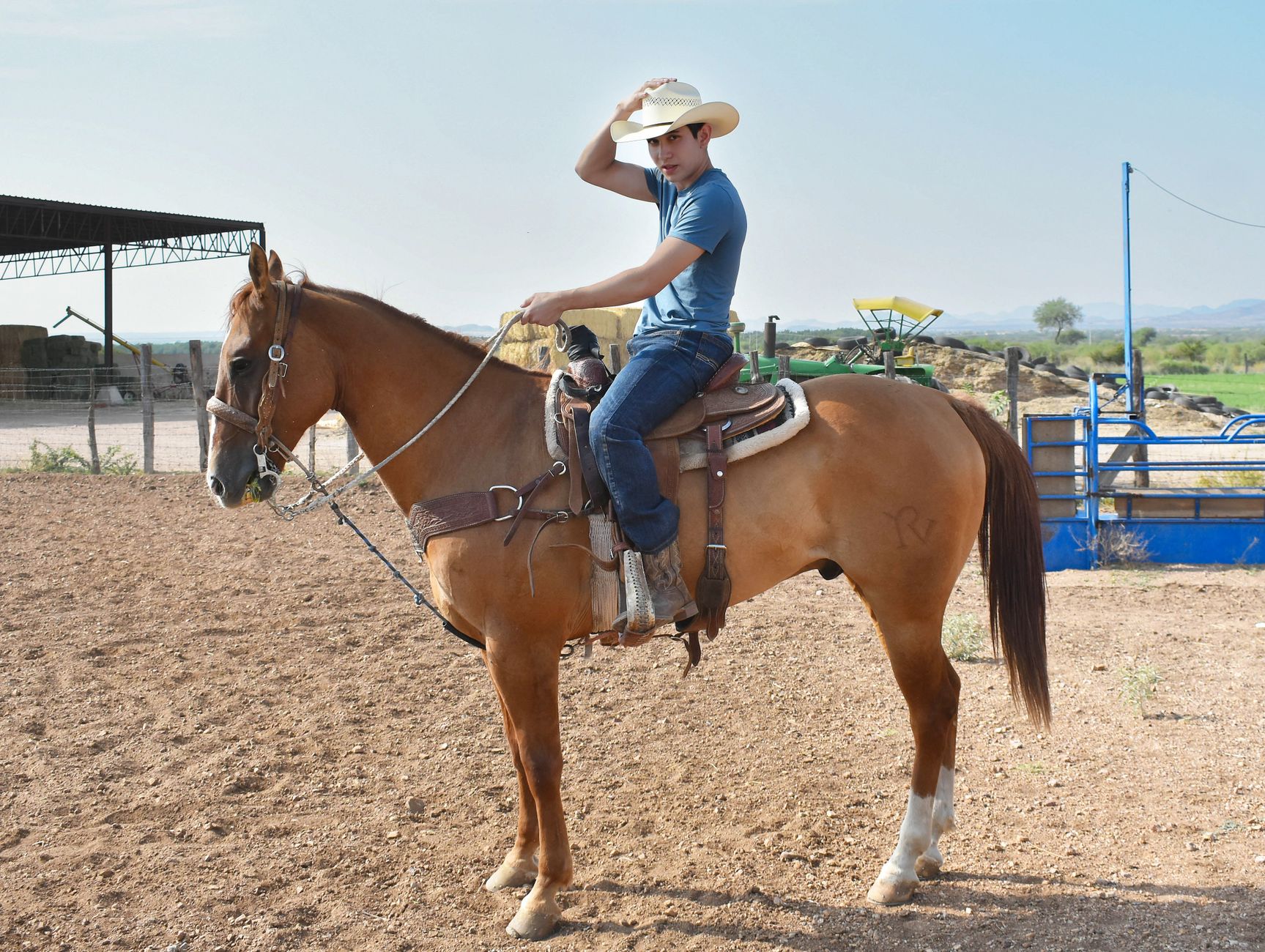
Picture this: you've tacked up, warmed up at the walk, asked for the trot, and the moment you add any leg, your horse throws his head skyward, hollows his back, and stiffens through his entire topline like a plank of wood. You try to ride him forward into a soft contact. He inverts harder. You soften your hand. He flips his nose. You've been at this for twenty minutes and you're already sweating through your shirt, and you haven't even asked for a canter yet. This isn't a bad day. This is Tuesday, and Wednesday, and every day before a show.
The head-high, inverted horse is one of the most discouraging training problems a rider faces because it isn't just cosmetic. A horse that travels inverted is loading his front end improperly, hollowing the muscles that run along his topline, and quite literally making it physically harder for himself to engage his hindquarters and step under his body. The longer this pattern goes uncorrected, the more entrenched the muscle memory becomes — and the more physical effort it takes from the horse to ever find a round, relaxed frame. You are not dealing with a bad horse. You are dealing with a horse whose body has learned a defensive posture, and the habit is compounding every single ride.
On a practical level, the daily grind of riding an inverted horse is exhausting in ways that are hard to explain to someone who hasn't lived it. Your arms are always working. Your leg is always pushing. Your core is always bracing because the horse underneath you never quite settles into a rhythm you can sit. Flatwork sessions that should be fifteen minutes of productive schooling stretch into forty-five minutes of management just to get a horse soft enough to do the actual training work you planned. Trail rides stop being relaxing. Arena sessions feel like a battle of attrition. You leave the barn tired in a way that isn't satisfying — it's just depleting.
Most riders try everything: draw reins that are too severe, side reins adjusted too tight too fast, tie-downs that address the symptom and miss the cause entirely, and a rotating cast of bits that chase the problem from one end of the bridle to the other. Some of these tools work on some horses some of the time. But the gadgets that demand submission rather than teach self-carriage tend to produce a horse that's robotic and shut down, not a horse that genuinely seeks the contact. You end up with a horse that gives to the pressure the second you remove the tool and immediately returns to the old pattern — because nothing ever taught him that carrying himself correctly is comfortable.
The Longer You Wait, the Harder This Gets — and the Bill Keeps Growing
An inverted horse doesn't just make riding unpleasant — the inversion creates a cascading set of physical and competitive consequences that compound over months and years. A horse that consistently travels with his head high and his back hollow is concentrating impact forces on structures that weren't designed to absorb them that way. Veterinary bills for horses with chronic back soreness and hock issues are not cheap. Neither are the chiropractic and bodywork appointments that become a regular line item in your horse budget when the underlying movement problem never gets solved. Meanwhile your horse's topline deteriorates season by season, because the muscles he's not using are atrophying while the wrong muscles compensate and overdevelop.
Beyond the physical toll, there is a very real emotional cost. Riders who spend month after month fighting a horse for basic softness start to doubt themselves. You wonder if you're the problem. You wonder if this horse is ever going to be what you hoped. You start dreading the barn instead of looking forward to it. You watch other riders on soft, willing horses and feel a quiet, grinding frustration that's hard to shake. That relationship with your horse — the one you're investing time and money and emotional energy into — starts to feel transactional and exhausting instead of joyful. That is not why anyone got into horses.
The financial cost of workarounds adds up faster than most people realize. A round of chiropractic work runs eighty to a hundred and fifty dollars per visit. A new bit costs anywhere from forty to three hundred dollars, and you'll try at least three before you accept the bit isn't the problem. Draw reins from a quality maker are sixty dollars or more. Lessons with a trainer who specializes in frame and contact issues are eighty to a hundred and twenty dollars an hour — and if your horse isn't mentally ready to receive what the trainer is offering, you're paying for a session where half the time gets spent just getting the horse settled enough to work. None of these expenses are wrong or wasteful; but they are solving the wrong problem. A correctly fitted training fork that teaches a horse to seek a soft contact rather than flee from it costs thirty-nine dollars.
- ✗Head-high, hollow-backed movement that strains the horse's topline and shortens his stride
- ✗Exhausting rides where you're constantly managing instead of actually training
- ✗Escalating vet and chiro bills from the physical consequences of chronic inversion
- ✗Draining the joy out of the horse-rider relationship one frustrating session at a time

The Schneiders® Texas Training Fork: Simple Design, Proven Results, Built to Last the Life of the Horse
The Schneiders® Texas Training Fork is not complicated, and that is precisely the point. After 78 years of selling, making, and thinking hard about tack, the team in Chagrin Falls knows that the most effective training tools are the ones that communicate clearly, fit correctly, and hold up through years of hard use. This fork does all three. It's made from Premium Grade A leather that arrives soft, supple, and hand rubbed with oil — not stiff, not raw, not going to crack apart after one muddy season. The hardware is solid brass throughout: the rings, the girth snap, every contact point. There is no chrome plating waiting to flake off, no zinc alloy that'll corrode in a humid barn, no plastic that'll fatigue and fail at the worst possible moment.
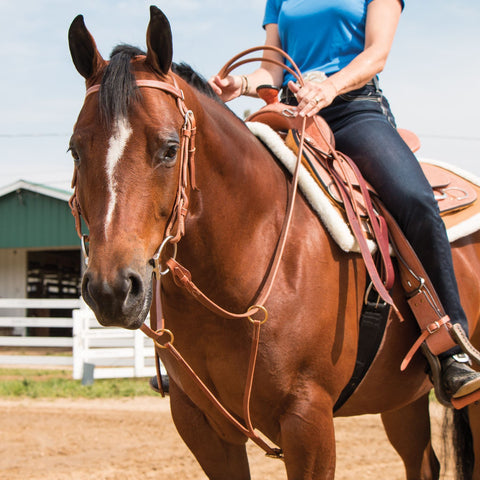
The mechanism is elegantly simple. The split fork sits across the horse's chest and neck, running from the girth snap up through the breast region and connecting to the bit rings via the solid brass rings on either side. When the horse raises his head beyond the correct carriage zone, he creates mild, consistent pressure through the fork — pressure that releases immediately and completely the moment he lowers his poll and steps into the contact. This is operant conditioning at its most honest: a clear signal that the horse can turn off by finding the right position. There is no constant constriction, no punishment for moving, no override. The horse figures out very quickly that carrying himself in a relaxed, forward frame is the most comfortable option available to him. You are not forcing a headset. You are removing the discomfort that the horse himself creates when he inverts.
The cascade of benefits from correct, consistent use of the training fork goes well beyond the head position. When a horse carries himself forward and soft through the poll, he can engage his abdominal muscles, lift his back, and drive from his hindquarters the way he's built to do. Topline development improves because the right muscles are working. The stride lengthens because the back is swinging instead of rigid. The contact becomes lighter because the horse is no longer bracing against the rider's hand — he is seeking it. Trail rides get relaxing again. Arena sessions produce actual training progress in a fraction of the time. The adjustable girth strap — which runs from 24 to 31 inches — means this fork fits the narrow-chested two-year-old and the wide-barreled stock horse with equal precision, so the geometry of the tool is always correct for the individual animal.
Schneiders Saddlery has stood behind tack since 1948, shipping to all 50 states from a family-owned operation that still makes decisions based on what's right for the horse and the rider rather than what's cheapest to produce. Every product carries the Schneiders satisfaction guarantee. If the Texas Training Fork doesn't do what it's supposed to do, return it. The company that has been in this business for 78 years is not going anywhere, and neither is its commitment to the people who trust it with their horses.
Grade A Leather, Ready to Work
Hand rubbed and oiled at the factory — soft, supple, and ready for the first session without a lengthy break-in period.
Solid Brass Hardware Throughout
Every ring, snap, and contact point is solid brass: no plating to flake, no alloy to corrode, no plastic to fail mid-ride.
Adjustable Girth Strap: 24"–31"
Fits narrow-chested young horses through wide-barreled stock horses with the same correct geometry — no guessing, no compromising.
Clear Signal, Immediate Release
Pressure appears only when the horse inverts, releases the instant he softens — teaching self-carriage instead of demanding submission.
What Riders Are Saying
"
My four-year-old quarter horse had a serious habit of flipping his nose to the sky every time he got nervous on the trail. I tried three different gadgets before I found this fork. Within two weeks of consistent groundwork and light riding sessions, he was reaching into the bit and dropping his poll like a seasoned horse. The leather is thick and supple right out of the box — no break-in drama. The brass snap on the girth attachment closes with a satisfying click and has never once come loose on me, even on a long loop through rough terrain. This is the last training fork I will ever need to buy.
""
I coach a small reining program and I recommend the Schneiders Texas Training Fork to every student who comes to me with a horse that gets strong and inverted in the loin. The adjustable girth strap is the detail that matters most — being able to dial in exactly where the fork sits on each horse's individual conformation means I'm not guessing. My own mare, a six-year-old NRHA-eligible sorrel, went from bracing against my hand in about every fast circle to hunting her face down within three thirty-minute sessions. At this price point there is simply nothing else in the market built with this quality of hardware and leather.
""
Barrel horses can get heavy on the forehand between cans, and I had been struggling with my mare all spring. My trainer suggested a training fork for flatwork between runs. The Schneiders fork was the one she used back in the day and she swore by it. I ordered it on a Tuesday and it arrived by Thursday. The leather on this thing is gorgeous — hand rubbed, already soft, smells like a real tack room. After six weeks of using it on our conditioning days, my mare is carrying herself differently. She's lighter in my hand coming around the second barrel and her stride off the third barrel has actually lengthened. My times reflect it. I'm a believer.
"How We Stack Up
| Feature | Schneiders Schneiders® Texas Training Fork | Weaver Leather Training Fork | Classic Equine Training Fork |
|---|---|---|---|
| Leather Grade | ✅ | ⚠️ | ⚠️ |
| Solid Brass Hardware | ✅ | ⚠️ | ❌ |
| Hand Rubbed & Oiled at Factory | ✅ | ❌ | ❌ |
| Adjustable Girth Strap (24–31") | ✅ | ⚠️ | ✅ |
| Split Fork Design | ✅ | ✅ | ⚠️ |
| Snap Girth Attachment | ✅ | ✅ | ❌ |
| Self-Release Mechanism | ✅ | ✅ | ⚠️ |
| Satisfaction Guarantee | ✅ | ⚠️ | ❌ |
| Family-Owned Maker Since 1948 | ✅ | ❌ | ❌ |
| Ships All 50 States | ✅ | ✅ | ⚠️ |
What Makes the Texas Training Fork Different From Everything Else on the Rack
The market is full of training aids that address head carriage by applying constant, unrelenting pressure — draw reins held at a fixed point, tie-downs that physically block upward movement, running martingales that load the bars of the mouth whether the horse is soft or braced. These tools produce compliance. The Texas Training Fork produces understanding. Because the pressure is entirely self-generated and self-released by the horse's own movement, the lesson transfers when the tool comes off. Horses trained consistently with this fork in the early stages of their education arrive at the contact differently than horses drilled into a frame by external force. They are looking for the release. They know where it is. That is a trained horse, not a managed one.
The split fork design keeps the load distributed evenly across the horse's chest rather than concentrating it at a single point. The brass rings allow smooth movement without binding or catching, so the signal stays clean even when the horse moves through corners, circles, or transitions. The snap girth attachment is designed for quick, secure connection and just as quick removal — important when you're cooling out and want to strip the training aid without fighting hardware that has seized up from sweat and dirt. The Light Oil finish deepens with conditioner and ages beautifully, the way good leather should. This is not a disposable tool. It is a piece of tack built to be on your rack twenty years from now, used on the second and third horse after the one you're training today.
- ✓Premium Grade A leather, hand rubbed and oiled for immediate supple feel
- ✓Solid brass rings and snap girth attachment — no plating, no alloy, no plastic
- ✓Split fork design distributes pressure evenly across the chest
- ✓Adjustable girth strap 24"–31" fits most horses regardless of conformation
- ✓Light Oil finish that deepens with conditioning and ages with the horse
What You Get