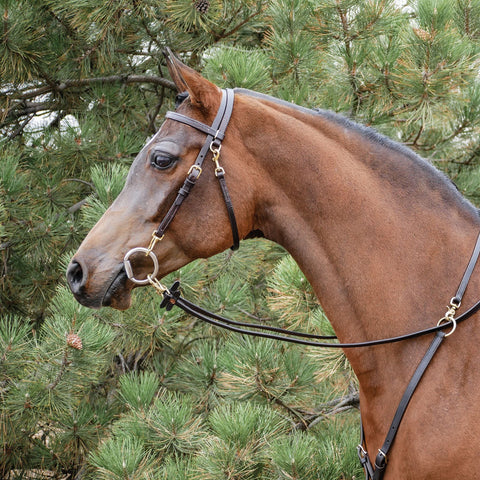
The Training Bridle That Works as Hard as You Do
The Victor Supreme Bob Hart Training Bridle is hand-cut and hand-stitched by Amish craftsmen in the USA — top-tier bridle leather, snap throatlatch, dual adjustable cheeks, and double-stitched construction built to hold up through every training session. Backed by 78 years of horseman expertise at Schneiders Saddlery.

You're Serious About Training. Why Is Your Bridle Holding You Back?
Every dedicated rider knows the feeling: you're at the barn before sunrise, horse groomed and ready, and before you've even finished tacking up you're already fighting equipment. The throat latch won't stay buckled. The cheek straps are either a hole too long or a hole too short. The leather is stiff and unyielding in the cold, or soft and floppy in the heat because it was never real bridle leather to begin with. You're not imagining it — your tack is actively working against you before your horse takes a single step.
The problem runs deeper than inconvenience. A poorly fitted bridle communicates the wrong information to your horse from the first contact. When the bit hangs too low because the cheeks won't adjust finely enough, your horse learns to evade downward rather than carry himself correctly. When the browband pinches or the throatlatch restricts flexion, the horse associates bridling with discomfort, making him harder to catch, harder to bridle, and harder to soften in the poll — exactly the opposite of what any training program is designed to accomplish. Bad tack doesn't just waste your time; it actively undoes patient training work.
Think about what that actually looks like over a season: thirty minutes of groundwork to get a horse soft in the jaw, only to have him brace again the moment the bit shifts because the cheek strap slipped. A beautiful collection exercise cut short because your horse hollows his back in response to a browband that sits a quarter inch too tight against his ears. A show-day warm-up derailed because the throatlatch that seemed fine at home won't behave correctly in humidity. These are not theoretical problems. They are the daily grind of riders who accepted a low-quality bridle as a budget compromise and are now paying the real cost in training time.
Many riders try to patch around the problem — extra holes punched in leather that was never meant to be punched, makeshift keeper fixes, a second browband zip-tied on because the original one cracked after one winter. Some switch to synthetic tack hoping for easier care, only to find it stretches unevenly and looks dull within a season. Others spend up on a brand-name import that looks beautiful in photos but arrives with stitching that pulls free in the first wet month. The workaround cycle is exhausting, and it delays the one outcome every trainer wants: a horse that goes soft, willing, and correct into the contact from the first ask.
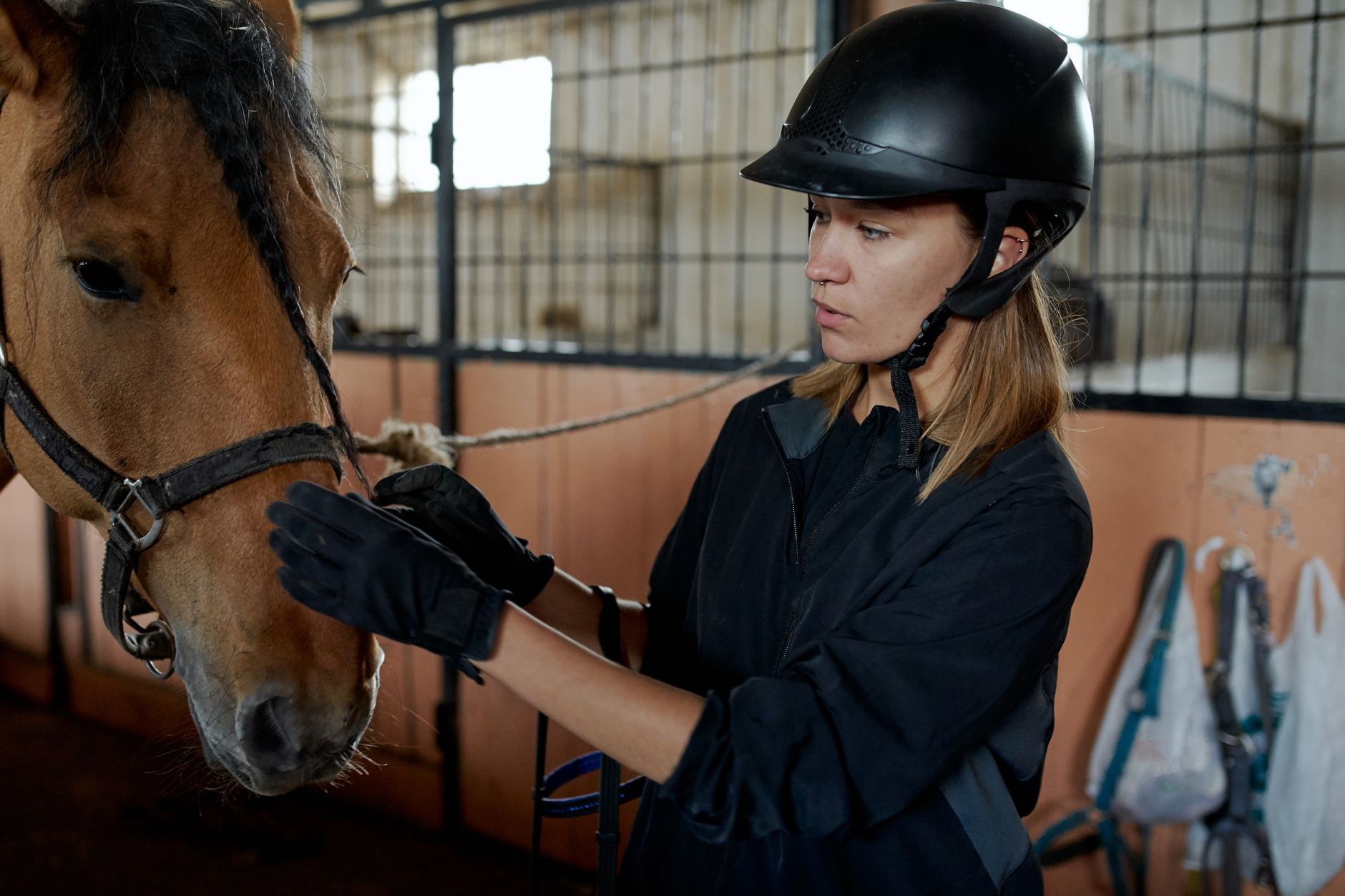
Every Bad Training Session Has a Cost You're Not Adding Up
The ripple effects of poor bridlework go far beyond a frustrating ride. When a horse learns to associate the bridle with discomfort or inconsistent pressure, he develops compensating habits — head tossing, ear pinning, coming above the bit, or going behind the vertical — that take weeks or months of patient reschooling to unwind. One season of riding in ill-fitting tack can create tension patterns in the poll and jaw that a skilled body worker will charge good money to address. The bridle isn't a neutral tool. It is the primary channel of communication between your hands and your horse's mouth, and a compromised channel sends corrupted signals that confuse even the most willing animal.
There is also an emotional cost that horsewomen and horsemen rarely talk about openly. The frustration of feeling like you're fighting your equipment rather than training your horse erodes confidence — yours and your horse's. You start second-guessing your aids, wondering whether it's the horse or the tack when something goes wrong, and you never quite settle into the quiet, focused work that produces real progress. The barn should be the place where you leave the noise of the rest of your life behind. When your equipment is unreliable, that mental space disappears and tacking up becomes yet another problem to solve.
And the financial arithmetic of cheap bridles is worse than it looks at first. A $45 import that lasts eighteen months before the stitching fails costs you $30 a year just in replacement — not counting the conditioning products you buy trying to salvage leather that was never properly tanned, or the extra bit purchases you make trying to compensate for a fit that was never right. Add up two or three replacement cycles, the ancillary conditioning costs, and the occasional emergency tack-shop run the day before a show, and you've spent well past what a quality USA-made bridle would have cost in the first place — with nothing left to show for it but a tack trunk full of stripped buckles and cracked leather.
- ✗Cheek straps that won't dial in to the right position, leaving the bit hanging wrong
- ✗Browbands that pinch or restrict, making horses ear-shy and resistant to bridling
- ✗Import leather that stiffens in cold, stretches in heat, and cracks within a season
- ✗Throatlatches that slip or require two hands to fasten when you're working alone

Amish-Crafted. USA-Made. Built to Train Every Day and Last Every Year.
The Victor Supreme Bob Hart Training Bridle was designed from the ground up around how working riders actually use a training bridle — not as occasional show tack, but as a daily-use tool that gets sweated in, rained on, and expects to perform correctly every single time it's buckled up. Bob Hart's design starts with genuine top-tier bridle leather, the same dense, close-grained hide used in the finest western and English tack, hand-cut and hand-stitched by Amish craftsmen who have spent their lives building leather goods that outlast the horses that wear them.
The mechanism that separates this bridle from everything else in its price class is the combination of dual adjustable cheeks and a snap throatlatch working together. Dual adjustable cheeks mean you have twice the fine-tuning range of a standard single-adjustment cheek — critical for the precise bit placement that collection and lateral work demand. The snap throatlatch isn't a gimmick; it closes securely in one hand, in one motion, which matters when you're tacking up in low light or managing a horse that won't stand still. Double-stitched browband and cheeks mean the load of daily use is distributed across two rows of thread, not one, so the bridle maintains its integrity through repeated wetting and drying cycles that destroy lesser stitching.
The cascade of benefits flows naturally from the quality of fit. A horse that is bridled correctly — bit at the right height, browband free of pinch, throatlatch with proper clearance — begins every session already relaxed through the poll and jaw. That relaxation is not small: it is the foundation of every correct movement from a square halt to a flying change. Riders who switch to the Bob Hart consistently report that their horses are easier to bridle, softer in the mouth within the first week, and more willing to seek the contact rather than evade it. The tack stops being a variable and becomes what it should be — invisible.
Schneiders has been fitting riders and their horses since 1948, three generations and 78 years out of Chagrin Falls, Ohio. We stand behind this bridle completely. If it doesn't hold up to everything a training program asks of it, we make it right. That's not fine print — it's how a family business earns the trust of riders who've been buying from us for decades and whose kids are buying from us now.
Dual Adjustable Cheeks
Twice the adjustment range of standard cheeks — dial in exact bit placement for collection, lateral work, or a green horse still finding its way.
Snap Throatlatch
One-handed, one-motion closure that fastens securely every time — faster tack changes and no fumbling in low light or with a fidgety horse.
Amish Hand-Cut & Hand-Stitched
Double-stitched browband and cheeks by craftsmen who have built leather goods their whole lives — not machine-stamped, not imported, not approximate.
Top-Tier USA Bridle Leather
Dense, properly tanned bridle leather that breaks in to your horse's shape, stays supple through the seasons, and ages into a richer bridle than the day you bought it.
What Riders Are Saying
"
I've been training cutting horses for twenty-two years and I've gone through more bridles than I can count. Put the Victor Supreme on my five-year-old AQHA mare six months ago — the leather broke in faster than anything I've used, and those dual-adjustable cheeks let me dial in the fit exactly where I needed it for collection work. The snap throatlatch alone saves me five minutes every session. This thing is built like it means it.
""
My off-track Thoroughbred, Copper Ridge, has the narrowest head I've ever tried to fit. Most bridles I've tried either pinch at the browband or gap at the cheeks. The Bob Hart's adjustability solved both problems in about thirty seconds. The Amish stitching is immaculate — I showed it to my trainer and she immediately asked where I got it. Three months of daily flatwork and it still looks showroom-fresh with minimal conditioning. Worth every penny at this price.
""
Trail riding solo in the Cascades means I need tack I can trust absolutely. My gelding Dusty has a big warmblood head and most training bridles don't have enough adjustment. The Victor Supreme fit him on the first try. The USA-made bridle leather is noticeably stiffer and more substantial than anything I've ordered from overseas — you can feel the quality in your hands. Been through mud, rain, and a river crossing. Still perfect. Schneiders has earned a customer for life.
"How We Stack Up
| Feature | Schneiders Victor Supreme Bob Hart | Weaver Leather Pro Training | Tory Leather Classic Training |
|---|---|---|---|
| USA-Made | ✅ | ❌ | ⚠️ |
| Hand-Cut & Hand-Stitched | ✅ | ❌ | ❌ |
| Top-Tier Bridle Leather | ✅ | ⚠️ | ✅ |
| Dual Adjustable Cheeks | ✅ | ❌ | ❌ |
| Snap Throatlatch | ✅ | ❌ | ❌ |
| Double-Stitched Construction | ✅ | ⚠️ | ✅ |
| Amish Craftsmanship | ✅ | ❌ | ❌ |
| Price Under $100 | ✅ | ✅ | ❌ |
| 78-Year Brand Warranty Backing | ✅ | ❌ | ❌ |
| Minimal Break-In Period | ✅ | ⚠️ | ✅ |
What Bob Hart's Design Gets Right That Others Miss
Most training bridles are built to a price point, which means the designer is making compromises before the first hole is punched. The browband gets a single-stitch pass. The cheeks get one adjustment slot. The leather is tanned fast and dyed heavy to hide the variation in the hide. The Bob Hart design inverts that logic: it starts with the specific demands of training work — fine adjustment, fast changes, structural integrity under daily use — and builds the bridle to meet them. That's why the cheeks are dual-adjustable when single-adjustment is cheaper. That's why the snap throatlatch is there when a standard buckle would cost less. Every feature is a decision made in favor of function.
The Amish craftsmanship is not a marketing claim. It means every bridle that leaves the shop has been touched by hands that know leather at the level of years, not months. The hand-cutting ensures the grain runs in the right direction for strength along the stress lines. The hand-stitching means a craftsman decided where the thread goes, not a machine programmed to be consistent within tolerances. When you hold this bridle and feel the evenness of the stitching and the weight of the leather, you are feeling the difference that process makes. It is the kind of bridle that gets passed down, not thrown out.
- ✓Top-tier bridle leather, hand-cut for grain strength along stress lines
- ✓Double-stitched browband and cheeks for structural integrity through wet/dry cycles
- ✓Dual adjustable cheeks for precise bit height placement
- ✓Snap throatlatch for secure one-handed, one-motion closure
- ✓Proudly made in the USA by Amish craftsmen — not imported, not approximated
What You Get