The Last Halter You'll Need to Replace This Season
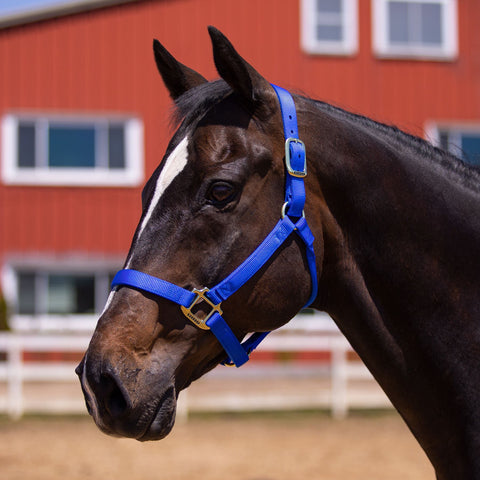
The Weaver Non-Adjust Nylon Halter is built the way halters used to be built — double-ply web, box-stitched stress points, heat-sealed holes, and brass hardware that doesn't corrode green. At $23.99, it costs less than a vet call for a horse that got loose because a cheap halter let go.
Most Nylon Halters Are Engineered to Fail — Just Slowly Enough That You Blame Yourself
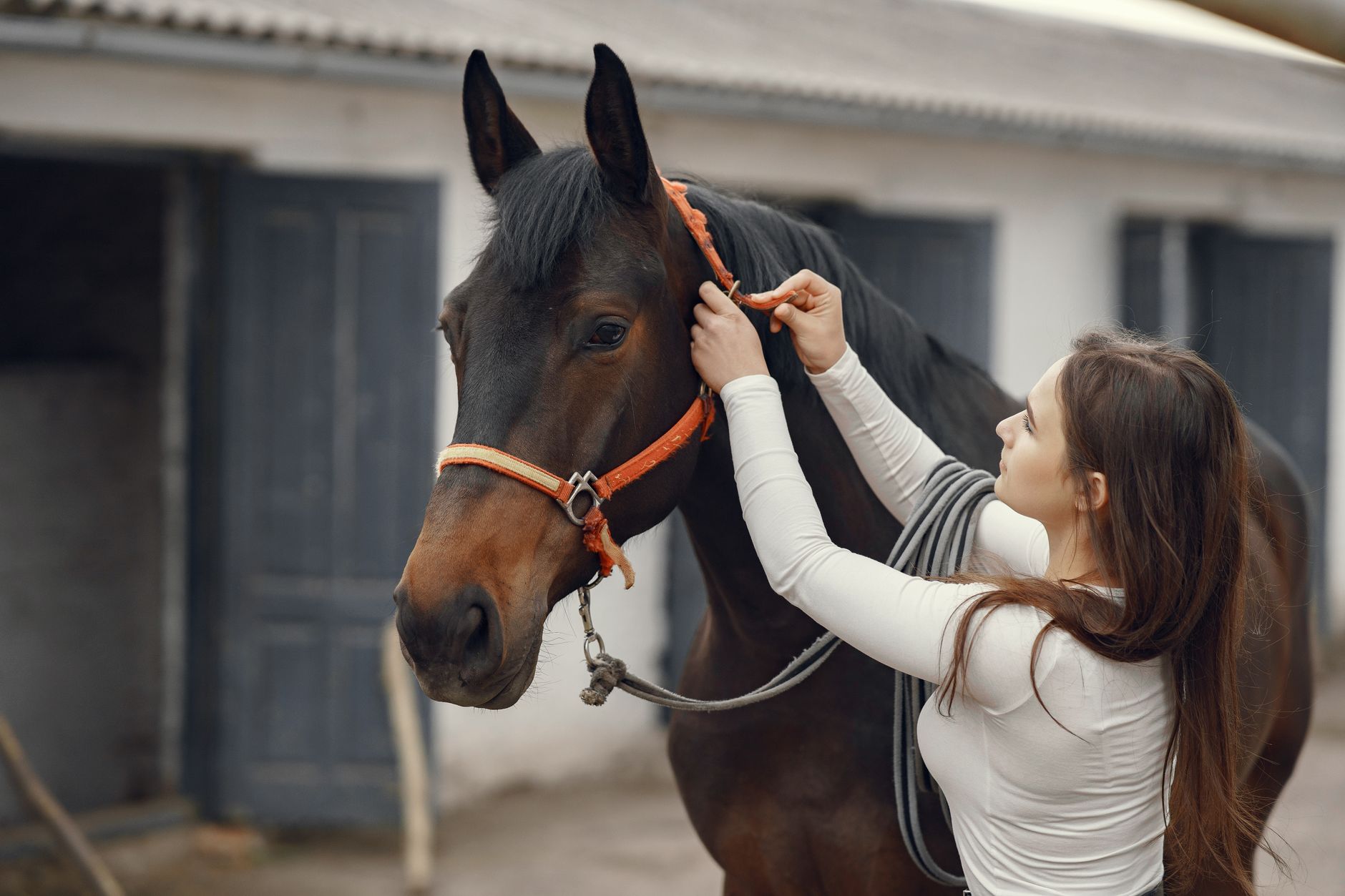
You've done everything right. You chose nylon over leather because you wanted something low-maintenance and tough. You bought a size up because your horse has a big head. You even stored it correctly, hanging dry in the tack room instead of leaving it balled up in a bucket. And still — somewhere around month three or four, you start noticing the fraying at the buckle holes, the way the nose band has gone from flat to slightly twisted, the faint creak in the hardware when your horse leans into pressure. You're not imagining it. The halter is failing. It just hasn't finished yet.
The uncomfortable truth about most entry-level nylon halters is that they're manufactured to a price point, not a standard. Single-ply webbing looks the same as double-ply on a hanger. A raw-cut buckle hole and a heat-sealed one are indistinguishable until the raw one starts to unravel. Zinc-plated hardware and brass-plated hardware catch light the same way until six months of dew and sweat turn the zinc ring a chalky gray-green. These shortcuts are invisible at the point of sale and only reveal themselves through use — meaning you're the quality-control checkpoint, and the cost of failure lands on you.
In a working barn, a halter isn't used occasionally — it's used constantly. Morning feeding, turnout, vet checks, farrier visits, grooming, trailer loading, evening check. A horse might go in and out of a halter eight to ten times on a busy day. Every buckle closure, every lead-snap clip, every moment a horse plants his feet and leans back puts load on the same three or four stress points. A halter that isn't reinforced at those specific points — the crown junction, the cheek rings, the nose band seam — accumulates damage with every cycle. By the time you see the fraying, it's been compromised for weeks.
Horse people try to work around this. They double up and buy two cheap halters to rotate so neither wears out as fast. They inspect the hardware monthly. They duct-tape frayed edges until they can get to the feed store. Some switch to leather, spend four times as much, and then have to deal with mold and conditioning schedules. Others buy adjustable halters thinking more hardware equals more quality, and end up with five additional failure points instead of one. None of these workarounds solve the underlying problem: the halter wasn't built to last in the first place.
A Halter That Fails at the Wrong Moment Isn't a Minor Inconvenience
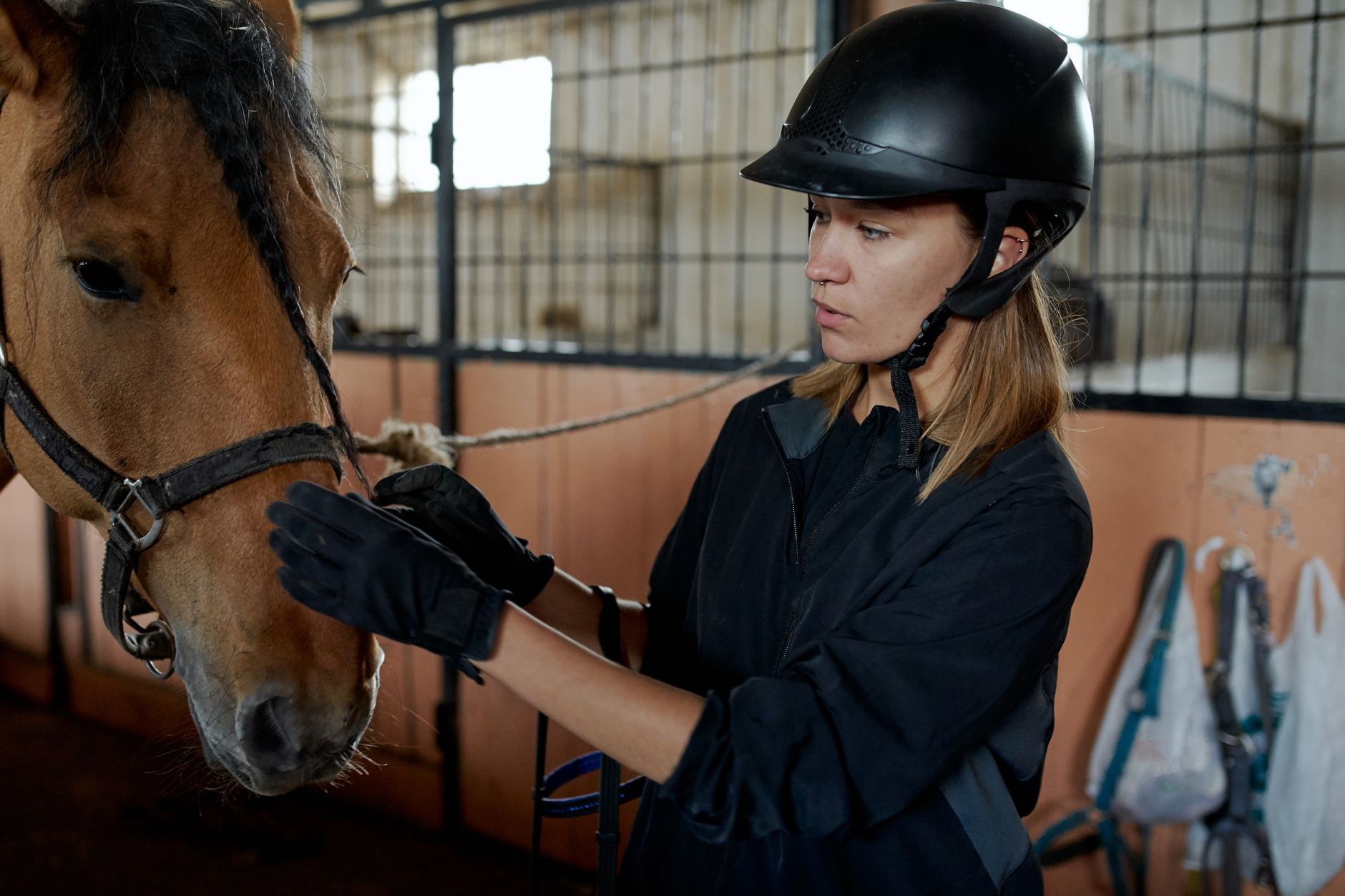
A fraying cheek piece or a corroding buckle ring doesn't announce itself before it gives out. It gives out when your horse spooks at a tractor in the turnout gate, or when a green horse sets back hard on the cross-ties, or when you're loading at 4 a.m. for a show and there's nobody around to help you catch a loose horse in the dark. The failure ripples outward fast — a horse that gets loose near a road, a horse that panics and injures himself in a fence line, a horse that learns he can break free and starts testing every piece of equipment you own afterward. Horsepeople know this instinctively, which is why a compromised halter sits at the back of the brain as a low-grade, constant anxiety. You meant to replace it last week. You keep forgetting. You tell yourself it'll hold one more turnout.
There's also an emotional cost that doesn't show up on any receipt. Trust between a horse and handler is built in small daily interactions — and a halter that doesn't fit correctly, that pinches or twists or sits unevenly, communicates something to the horse every single time it goes on. Horses that are repeatedly handled with ill-fitting equipment become subtly defensive about their face and ears. They learn to evade the halter, to throw their head, to make catching and haltering a negotiation instead of a routine. That behavior problem didn't come from nowhere. It came from years of equipment that wasn't quite right, repeated hundreds of times until the horse made it a habit.
And then there's the plain dollar cost. A $10 halter that lasts four months and gets replaced three times a year costs $30 annually — more than the Weaver. Multiply that across a four-horse barn and you've spent $120 a year on halters that are in a landfill by December. Add the cost of the replacement cheek ring you had to order after the hardware corroded, the lead rope you bought because the snap on the old halter wouldn't clip cleanly anymore, and the farrier surcharge for the extra time it took to work with a horse that's now head-shy from poorly fitted equipment. The cheap halter was never cheap. It was just billing you in installments.
- ✗Buckle holes fray and unravel within months of regular use
- ✗Single-ply webbing stretches and twists under normal load
- ✗Zinc hardware corrodes to a tacky green residue that stains light-colored horses
- ✗Poorly fitted halters create head-shyness and catching problems over time

Weaver Built This Halter to Hold — Schneiders Has Stood Behind It for 78 Years
The Weaver Non-Adjust Nylon Halter is not a reinvention of the wheel. It's a straightforward piece of equipment built to an honest standard: double-ply 1-inch nylon web, box-stitched at every stress point, with heat-sealed buckle holes and brass-plated hardware. There's one adjustment point — the crown buckle — which means one potential failure point instead of five. The result is a halter that fits the way a halter should fit, holds the way a halter should hold, and lasts through the kind of daily use that exposes every shortcut a manufacturer tried to take.
The construction logic is straightforward. Double-ply web is twice as thick as single-ply at the same width, which means the webbing resists stretching, twisting, and abrasion at a rate that single-ply simply cannot match. Box stitching — the X-pattern reinforcement used at high-load junctions — distributes tension across a grid of thread rather than a single seam line, so when a horse sets back hard, the load spreads instead of concentrating at one thread until it snaps. Heat-sealed buckle holes are finished by melting the cut edge of the nylon, fusing the fibers together so they cannot fray or unravel with repeated buckle use. Brass-plated hardware resists corrosion in wet conditions — mud, sweat, morning dew — without developing the chalky oxidation that ruins zinc hardware and stains light-colored coats.
What this means in practice: a halter that comes out of the wash looking the same as it went in. A crown buckle that opens and closes cleanly after six months of daily use. A nose band that stays flat and doesn't develop the spiraling twist that makes a horse flinch every time it goes on. Sizes from Yearling (300–500 lbs.) through Oversize (1,100–1,600 lbs.) mean you can outfit an entire mixed-size barn with one halter line and never compromise fit for availability. The fit is fixed rather than adjustable by design — a properly sized fixed halter sits more consistently than an adjustable one that drifts between horses or gets buckled in the wrong hole by someone in a hurry.
Schneiders has carried Weaver equipment since before most of our current customers were born. We were founded in Chagrin Falls, Ohio in 1948, and in 78 years we have learned exactly one thing about equipment recommendations: if it doesn't hold up in a working barn, we don't carry it. The Weaver Non-Adjust Nylon Halter holds up. We back it with our standard satisfaction guarantee, and we ship to all 50 states — including next-day to most of the Midwest from our Ohio warehouse. If it doesn't work for your horse, we'll make it right.
Double-Ply Nylon Web
Twice the thickness of single-ply halters at the same width — resists stretching, twisting, and abrasion through years of daily use.
Box-Stitched Stress Points
X-pattern reinforcement at every high-load junction distributes tension across a thread grid so no single seam fails under pressure.
Heat-Sealed Buckle Holes
Cut edges are fused by heat, locking the nylon fibers together so holes stay clean and never fray no matter how many times you buckle them.
Brass-Plated Hardware
Resists corrosion from sweat, mud, and weather without oxidizing green — clean hardware that works smoothly and won't stain light-colored horses.
What Riders Are Saying
"
I run a small lesson program with eight school horses and turnout happens twice a day. I've gone through more cheap halters than I can count — frayed crowns, snapped cheek rings, and one that literally split at the nose band mid-lead. I switched my whole herd to the Weaver Non-Adjust three years ago. My Appendix, Duke, has worn the same full-size halter through two Ohio winters and it looks nearly new. The box stitching at the stress points is the difference maker. No pilling, no stretch, and the brass hardware hasn't gone green once.
""
My mare Duchess is a paint with a broad jaw and a narrow crown — she's notoriously hard to fit. Most adjustable halters either gap at the crown or pinch the cheek. I ordered the Cob size on a recommendation and it landed like it was made for her. I do barrel racing and trail, so she's in and out of this halter multiple times a day. The heat-sealed buckle holes mean I don't have to fight fraying every time I fasten it. Six months in, zero problems. Honestly should have bought two — I keep forgetting it's not a spare.
""
I manage a draft cross rescue and we take in everything from thin yearlings to oversize drafts. Finding halters that cover that range without breaking the budget is a constant challenge. The Weaver Non-Adjust line goes from Yearling up to Oversize, and the double-ply nylon holds up even on our strongest pullers. One of our rescue geldings, a 1,400-pound Percheron cross named Titan, wore through two other brands in his first month. He's been in the Oversize Weaver for four months. It hasn't budged. Schneiders had them in stock and shipped fast — I ordered on a Tuesday and had them Thursday.
"How We Stack Up
| Feature | Schneiders Weaver Non-Adjust Nylon Halter | Tough-1 Basic Nylon Halter | Roma Nylon Breakaway Halter |
|---|---|---|---|
| Double-ply nylon web | ✅ | ❌ | ❌ |
| Box stitching at stress points | ✅ | ⚠️ | ❌ |
| Heat-sealed buckle holes | ✅ | ❌ | ❌ |
| Brass-plated hardware | ✅ | ❌ | ⚠️ |
| Fixed fit (single crown buckle) | ✅ | ✅ | ❌ |
| Oversize fit (1,100–1,600 lb.) | ✅ | ⚠️ | ❌ |
| Yearling size available | ✅ | ✅ | ✅ |
| Colorfast dye (wash-stable) | ✅ | ⚠️ | ⚠️ |
| Under $25 price point | ✅ | ✅ | ❌ |
| Backed by 78-year retailer guarantee | ✅ | ❌ | ❌ |
The Details That Separate a Halter From a Liability
Weaver Leather has been manufacturing equine hardware since 1973 and the Non-Adjust Nylon Halter reflects that institutional knowledge. The single-buckle crown design is deliberate — every additional adjustment point is an additional failure point, and a horse that needs a different fit needs a different size, not more hardware. The heat-sealed holes are finished the same way the webbing ends are: by controlled application of heat that fuses rather than cuts. The brass plating is applied over a zinc base, giving the hardware corrosion resistance in both the plating layer and the substrate. These aren't marketing descriptions of features — they're manufacturing decisions that add cost to the product and show up in its service life.
Schneiders carries the full size run: Yearling for horses 300 to 500 pounds, Cob for 500 to 800, Full for 800 to 1,100, and Oversize for 1,100 to 1,600. If you're fitting a mixed herd, order by weight range rather than by head size — the weight ranges correspond to average skeletal proportions and will get you within one size of correct fit in almost every case. The halter is available in multiple colors, meaning you can color-code by horse in a multi-horse barn without stocking five different halter styles. At $23.99, it costs less than most single-use items in your tack room. It will outlast most of them too.
- ✓Double-ply 1" nylon web — twice the material, twice the abrasion resistance
- ✓Box stitching at every stress point — load-distributing X-pattern reinforcement
- ✓Heat-sealed buckle holes — fused edges that cannot fray or unravel
- ✓Brass-plated hardware — corrosion-resistant through sweat, mud, and weather
- ✓Four sizes from Yearling (300 lb.) to Oversize (1,600 lb.) for whole-herd coverage
What You Get