
Build More Functional Footing Where Mud Takes Over
Schneiders® Mud Control Expandable Panel provides adaptable coverage and drainage-enhancing cells for muddy paddocks, gateways, entryways, and other high-traffic equestrian areas.

Busy Paddock Entrances Can Become the Muddiest Part of the Routine
Every horse owner with a busy gateway, waterer, run-in entrance, or sacrifice area knows how quickly one soft patch can spread. Hooves disturb the saturated surface, wheelbarrow tires leave deeper tracks, and repeated foot traffic pushes loose footing into the soil. Soon, the area you use most is the area you trust least. You start planning routes around puddles, carrying spare boots, and allowing extra time simply to bring your horse in clean enough to groom.
The cost reaches beyond muddy legs. You may add more stone, scrape the gateway, or move feeders in search of firmer ground, only to watch the next stretch of rain undo the work. Routine chores take longer when you’re pushing a loaded cart through ruts or stopping to clean clumps of mud from your horse’s feet. Turnout blankets and grooming tools need more attention, and a quick trip between the paddock and barn becomes another job on an already full list.
The frustrating part is that mud is rarely confined to one rainy morning. Once heavily traveled soil loses structure, every hoofprint and tire track can keep the cycle going. Covering the surface may make it look better temporarily, but lasting improvement requires a way to support the footing, manage water, and keep added aggregate from disappearing into the ground below.

Repeated Traffic Keeps Pressing Loose Footing Into Soft Ground
When loose stone is spread directly over soft soil, repeated hoof and equipment traffic can press that material downward or move it away from the spots that need it most. Adding another load may refresh the surface, but it does not automatically create a stable framework underneath. If water continues to collect and the aggregate is not contained, the area can return to the same uneven mix of stone, soil, and standing water after another wet spell.
That creates a discouraging maintenance loop. You add material, rake it level, and feel hopeful when the gateway looks firm. Then your horse walks the same line to turnout each day, the wheelbarrow follows, and the tractor crosses during feeding or cleanup. The high-traffic path begins to rut again. You spend more time redistributing footing, cleaning legs, and hauling supplies through an area that was supposed to be fixed. Expanding the stone farther outward can increase the labor and material involved without addressing why the original surface shifted.
Temporary workarounds also demand constant compromises. You move the gate, relocate a water source, restrict access, or wait for a dry weekend before completing ordinary barn tasks. Yet many equestrian spaces cannot simply be taken out of service whenever it rains. Without a structure that holds aggregate in place while allowing water to move, you are left repeating repairs and hoping the weather gives your paddock enough time to recover.
- ✗Muddy paddock gates and run-in entrances
- ✗Lost shoes and mud-covered legs
- ✗Footing that shifts under repeated traffic
- ✗Wheelbarrows crossing soft, rutted ground

An Expandable Cellular Framework Supports the Finished Surface
Each 34-pound panel is manageable to position without handling dozens of separate rigid tiles. Twenty-five heavy-duty zip ties are included for joining sections into a continuous layout before the aggregate is placed. That expandable format lets you begin with a concentrated trouble spot, such as a paddock gate or run-in entrance, or connect multiple panels for broader coverage. The flexible construction is designed to follow prepared terrain while creating an organized base for the finished footing.
Installation begins by leveling the selected area and laying durable geotextile fabric. After expanding, positioning, and securing the panels, cover them with 4 to 6 inches of compacted crushed gravel or limestone as directed on the product page. The cells support that aggregate while the drainage openings give water a path through the system. Your horse experiences a defined, stone-covered route through an area that previously churned under daily traffic, while the cellular layer remains beneath the surface rather than directly underfoot.
For you, that means addressing the structure of the muddy area instead of repeatedly dressing up its surface. A gateway can become easier to cross with a wheelbarrow, and bringing your horse into the barn no longer has to begin with the deepest patch of the paddock. Because the panels expand and connect, you can tailor the project to the space you actually use, from a narrow entryway to a larger turnout section. It is a practical, horse-first approach to creating more functional footing where your routine puts the greatest pressure on the ground—backed by equine expertise and Trusted since 1948.
Adaptable Coverage
The panel expands to cover concentrated trouble spots or can connect with additional panels for broader paddock areas.
Drainage-Enhancing Cells
Drainage-enhancing cells help keep water moving through the selected area.
Manageable Handling
The lightweight, expandable format is designed for easier positioning without arranging many separate rigid tiles.
More Functional Equestrian Spaces
Use the panel beneath finished footing at gateways, entryways, run-ins, or larger muddy paddock sections.
Plan the Expandable Panel for the Intended Area
- Select the muddy gateway, entryway, or paddock section
- Review the intended coverage area
- Expand the panel to fit the planned space
- Use the published coverage dimensions for layout
- Position the drainage-enhancing cells in the selected area
- Follow the current installation directions
- Inspect the completed area before regular use
Compare Three Approaches to Mud Management
These products address muddy, high-traffic equestrian areas with different panel formats, unit sizes, and installation methods. Published specifications are shown without assigning an overall winner; information not stated in the cited product pages is marked accordingly.
| Feature | Schneiders Schneiders® Mud Control Expandable Panel | Lighthoof Equine Mud Management Panel | Equinox Mud Grids |
|---|---|---|---|
| Product format | Flexible expandable cellular panel | Flexible expandable cellular panel | Reversible interlocking rigid grid |
| Published unit dimensions | Expands up to 6' W x 12' L | Expands to 6' W x 12' L | 3.7' x 2.5' per grid |
| Published coverage per unit | Up to 72 sq. ft. | 72 sq. ft. | About 9.2 sq. ft. |
| Published unit weight | 34 lbs. | Approximately 24 lbs. | Approximately 50 ± 2 lbs. |
| Published material | Flexible high-density polyethylene | Not listed on the cited product page | 100% recycled and recyclable materials |
| Published cell or grid depth | 3-inch-deep cells | 3-inch-tall cells | 1.73-inch thickness |
| Connection method | Includes 25 heavy-duty zip ties for securing panels | Panels are joined cell-to-cell with included fasteners; the cited site lists 40 per panel | Individual grids interlock securely |
| Published installation guidance | Level the area, lay geotextile fabric, then cover with 4–6 inches of compacted crushed gravel or limestone | Geotextile fabric is recommended; cells are filled with compactable crushed stone and the installation is compacted | Prepare even ground; grids may be installed flat-side up or reversed and filled or covered with sand or gravel |
Create an Expandable Base in High-Traffic Areas
- ✓Durable expandable panel construction
- ✓Expandable cellular panel format
- ✓Drainage holes within the cells
- ✓Designed for muddy entryways and paddock areas
- ✓Follow current installation directions
What Goes Beneath the Finished Footing Matters
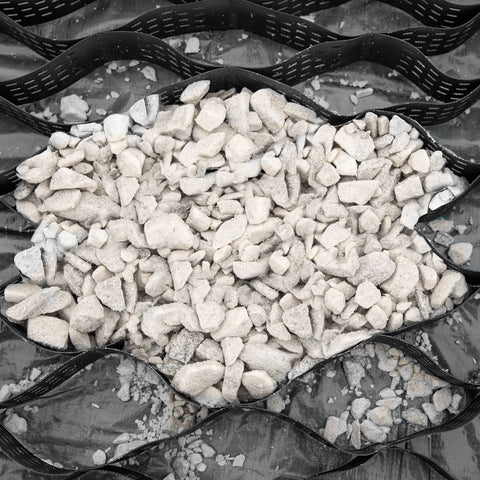
Address Mud With Expandable Coverage and Drainage-Enhancing Cells
This expandable panel is designed to provide adaptable coverage and support drainage in heavily used equestrian areas.
Create a Better-Defined Route Through Mud-Prone Ground
Shop Schneiders® Mud Control Expandable Panel for an expandable cellular base designed to help transform muddy equestrian areas into safer, drier, more functional spaces.