
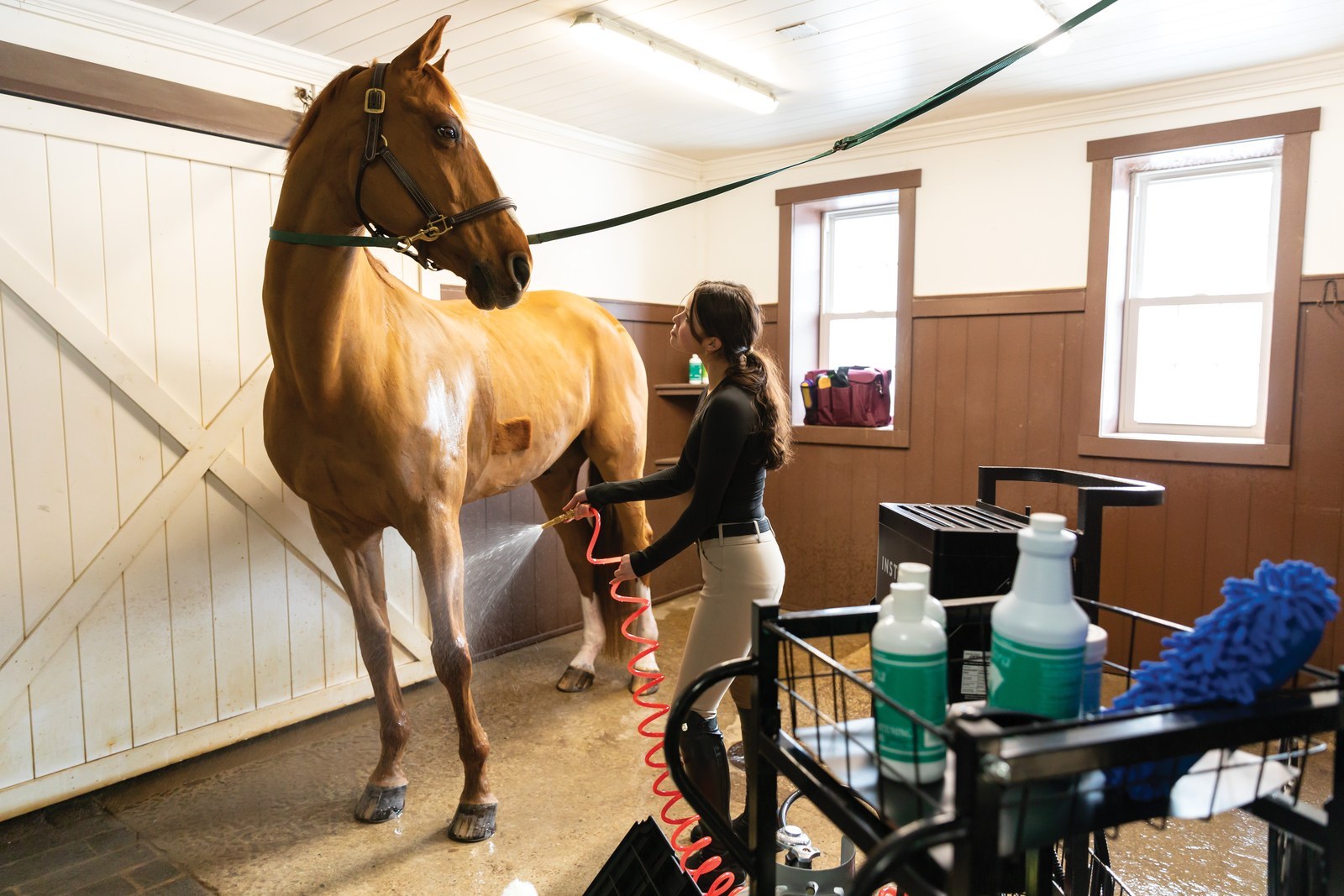
How do I prevent scratches and mud fever before mud season starts?
Getting ahead of it instead of treating it after, and what changes for hooves moving from hard summer ground to wet fall footing.
Schneiders Learning Center · Updated September 29, 2026
Family owned in Chagrin Falls, Ohio since 1948.
Prevention comes down to dry time. Scratches takes hold when skin stays wet and dirty for long stretches, so the goal is giving legs a chance to dry every day. Clean legs when they come in, let mud dry and brush it off rather than hosing daily, and keep a dry place for them to stand.
Scratches is far easier to prevent than to clear up, and the window to prevent it is now, before the paddocks turn. Almost everything that works is about time spent wet rather than any particular product.
How do I prevent scratches and mud fever rather than treating them after they appear?
Scratches, also called mud fever or pastern dermatitis, is a bacterial infection of the skin, and sometimes a fungal one alongside it, that usually settles low on the leg around the pastern and heel. The organisms involved are common on skin and in soil, and on their own they aren't the problem. They only take hold once the skin sitting on top of them has been softened by constant moisture and then abraded by mud or sand grinding against it day after day. Wet plus friction is what opens the door.
That's why prevention really comes down to one job: keep the skin dry, and keep it intact. Brushing off dried mud instead of hosing, checking legs daily, trimming feather so it can't hold water against the skin, all of it is in service of that same idea. There's no product that replaces it, because the infection needs both moisture and a break in the skin to get started, and removing either one on most days is usually enough to keep it out.
Hosing muddy legs every night feels like the clean thing to do, and it's often what keeps the skin wet enough to cause the problem. If you do rinse, dry the legs afterwards rather than leaving them damp in a stall.
A barrier cream works by keeping water off skin that is already clean and dry, not by treating an infection that's already there. Applied before turnout, it sheds moisture the way a raincoat sheds rain, so the skin underneath stays dry through a wet day outside. Put over legs that are already dirty or already broken out, it does the opposite: it seals moisture and bacteria against the skin instead of keeping them off it. That's why clean, dry legs first, barrier product second, matters more than which brand you reach for.
Clipping long feather helps for the same reason a barrier cream doesn't work in the wrong order. Feather holds water against the skin the way a wick does, so a heavily feathered leg can stay damp long after the surrounding coat and the ground have dried. Taking the length down lets air reach the skin and shortens how long it stays wet after each turnout. On a horse who relies on that hair for protection from mud and cold, that's a genuine trade-off, and it's worth a quick word with your vet or farrier rather than an automatic clip.
If scabs are already there, if the leg is hot, swollen, or sore, or if it isn't improving, that's a vet call rather than a product problem. Scratches can become a genuine infection.



Does anything change in the trim cycle going from hard, dry summer ground to wet fall footing?
Talk to your farrier rather than guessing. They see the wear pattern and will usually tell you if your horse is one who needs a tighter cycle once the ground changes.
Chips that appeared after a summer on hard ground generally grow out. Whether to address them now or wait for softer ground to sort itself is a farrier conversation, and it depends on how much wall there is to work with.
Questions about gear for a wet paddock? Ask our team -- and call your vet about any skin problem that's sore, swollen, or not improving.