
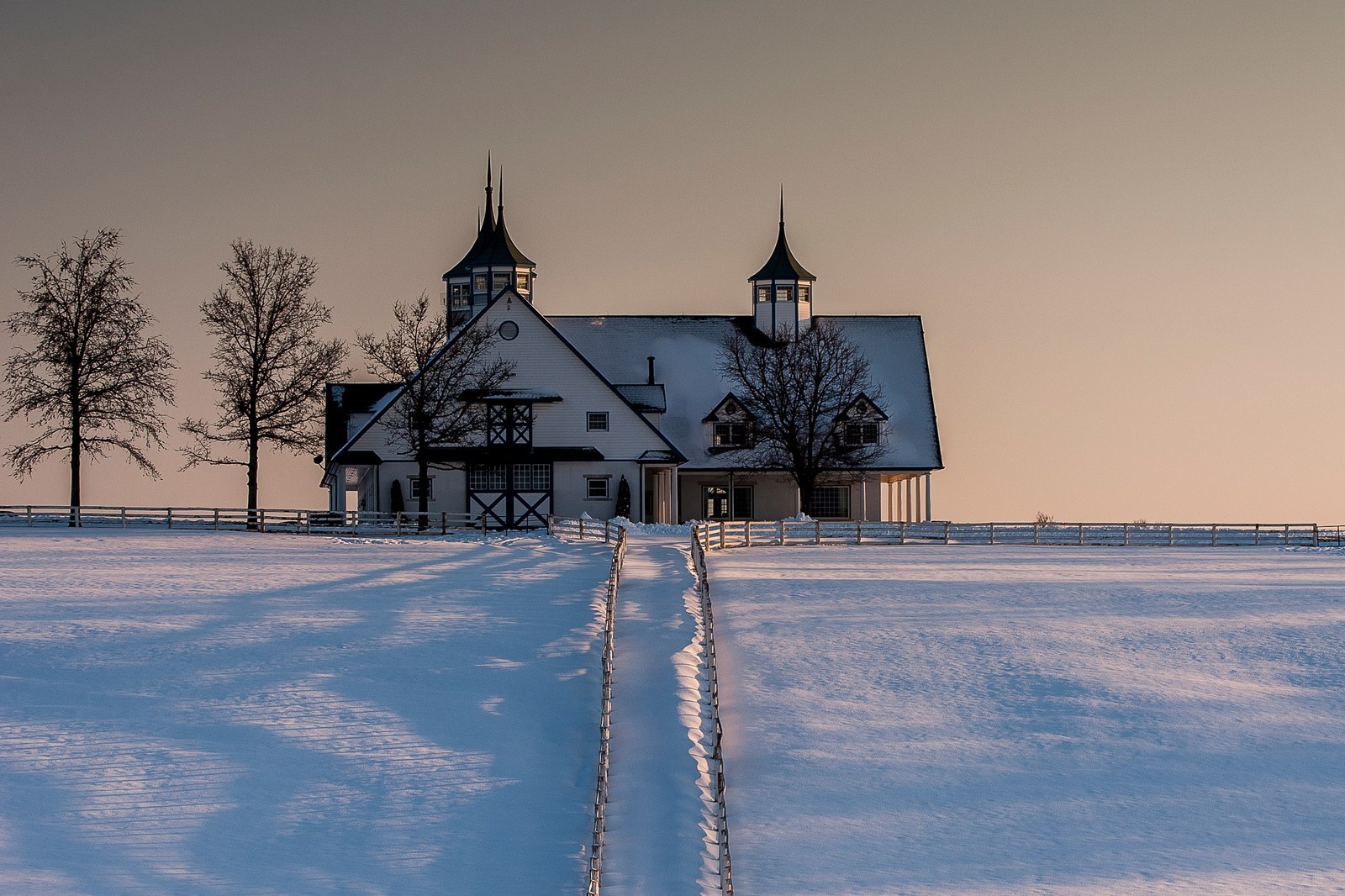
When should I winterize the barn?
When to put the water heaters in, whether insulating a line is worth it, and how to get the hay, the air, the footing, and the tack room ready before the first real cold snap.
By The Schneiders Product Team · Updated October 1, 2026
Family owned in Chagrin Falls, Ohio since 1948. We design our own blankets, sheets, and fly gear, and we turn horses out in it.
Do it before the first hard freeze, not after. Late September into mid-October is the window most people aim for in the northern US. Water is the thing that fails first and costs the most time when it does, so heaters, hoses, and lines come before anything else on the list.
Nearly every winterizing job is cheaper, warmer, and easier in October than in the second week of January. The list is short, and the order matters: water first, then hay, air, footing, and the rest.
Bucket and trough heaters -- late September, or wait for the first hard freeze?
A de-icer's wattage exists to fight two things: the volume of water it's sitting in and how exposed that trough is to wind and open air. A stock tank in an open paddock loses heat constantly, which is why the same wattage that keeps a small bucket ice-free all night can struggle to keep a big trough open once the wind picks up. Match the unit to the container, not just the coldest temperature on the forecast, because a heater that's merely adequate on a still night can lose the fight on a windy one.
Test every unit, not just the ones you doubt. Check cords for chew damage and any cracked casings while you're at it -- a compromised heater in a water trough is a genuine hazard.
Confirm your outlets are GFCI-protected and rated for what you're plugging in. A de-icer sits submerged or half-submerged in water it's actively heating, which is exactly the situation a ground fault interrupter is built for: if the unit's casing develops even a small leak to the water, a standard outlet won't notice, but a GFCI will cut power before that stray current has anywhere to go. This is one of the few barn jobs worth involving an electrician in if you're unsure.


Is it worth insulating a barn water line, or do I just accept hauling buckets in January?
Find the vulnerable stretch first -- it's usually where the line runs above ground, through an unheated wall, or into the barn. Buried pipe freezes far less often because the ground insulates it and keeps it moving slowly toward equilibrium rather than swinging with the air temperature; an exposed run has no such buffer and tracks the outside air almost directly. Still water inside that exposed section freezes faster than water that's flowing, and wind across an exposed pipe pulls heat away faster than still air does, which is why the same run that's fine on a calm night can freeze solid on a windy one at the same temperature.
Heat tape has to be the right type for the pipe material and installed to the manufacturer's instructions. Done wrong it's a fire risk, so this is worth reading carefully or handing to someone who does it for a living.
How should I store hay so it lasts the winter?
Putting a pallet under your hay allows airflow to prevent molding. A bale sitting straight on concrete or dirt wicks moisture up from below, and the bottom layer is usually the one that gets thrown out in March. Leave a gap between the stack and the wall for the same reason.
Keep an eye on a new load for its first few weeks. Hay that was baled a little damp can heat in the stack. If a bale feels hot to the hand, pull it out and call your supplier -- hay that heats enough can spoil, and in rare cases it can catch fire.
Don't forget the feeding end. Slow-feed hay bags & nets keep your horse foraging all day long without the hay waste, which matters most in winter, when the pasture is gone and hay is doing all the work. Not sure how much to plan for? See how much hay per horse per day.


Should I close the barn up tight to keep it warm?
A shut-up barn fills with moisture from breathing and wet bedding, and ammonia from urine collects low, right where horses breathe. If the windows fog up or you smell ammonia when you walk in, it's closed up too tight.
Pick stalls more often once it's cold. Wet bedding stays wet longer in winter, and that's where most of the ammonia comes from.
A clipped horse, an older horse, or a hard keeper may need a layer indoors. Stable sheets and stable blankets are made for the stall, and our blanket weight guide shows what to use at what temperature. Our Blanket Fit Finder will get you the right size.
What should I do about mud and ice before the ground freezes?
Start where the mud was worst last winter. It will be the same spot this year.
On icy walkways and in front of the doors, sand or grit adds traction. If you use a de-icer, check that it's labeled safe for animals.
Dry legs are also your best defense against scratches. More on that in how to prevent scratches and mud fever.
What should I replace or organize before it gets cold?
Cold makes plastic brittle, so the muck tub with a hairline crack in October is often in two pieces by January. The same goes for the fork with a broken tine and the bucket that leaks. Swap them now: manure forks, muck buckets & carts, and the rest of our stable supplies.
Organize the tack room now, before it's too cold to do it. A rack for every saddle and a hook for every bridle means less digging around with cold hands all winter. See tack room organization.
Clean and condition leather before it settles into a cold, damp tack room for the season. Dirt holds moisture against the leather, and that's where mildew starts. Leather care.
Everything on the list, in one place
Heated buckets, bucket wraps, hay nets, muck carts, and more -- our Winter Stable Must-Haves.
Winter Stable Must-HavesBuckets & WaterersHay Bags & FeedersStable SuppliesTack Room OrganizationTurnout BlanketsSetting the barn up for winter? Ask our team -- and bring in an electrician or plumber for anything involving wiring or pipework you're unsure about.