
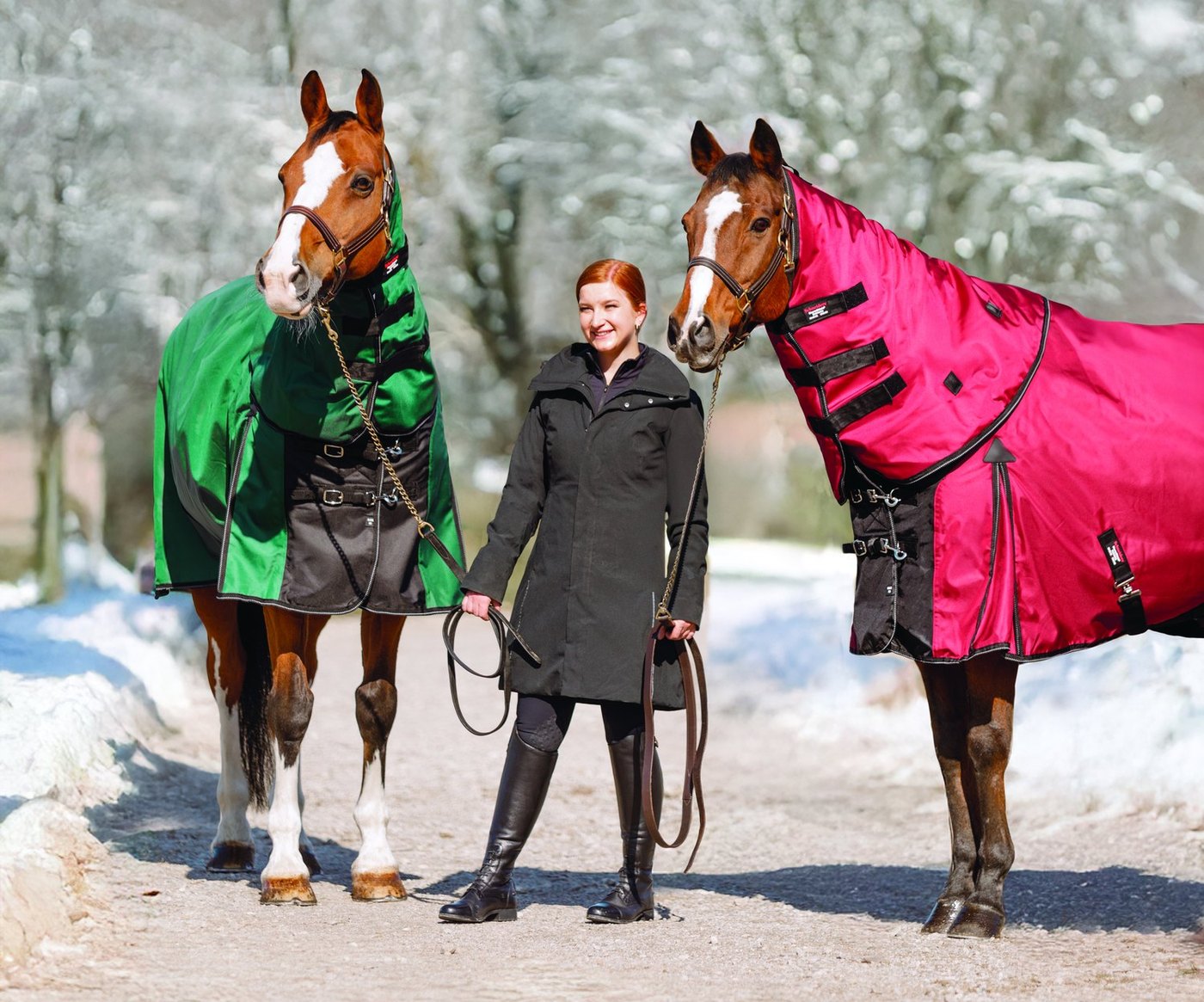
Get your horse through winter warm, watered and sound.
Cold rain, frozen buckets, mud that freezes into ruts. Winter tests every horse a little differently. Here is what to watch for, what to do about it, and the gear that helps.
Most winter trouble comes from the same five places: cold and wet weather, frozen water, not enough hay, mud, and the winter coat. Jump to the one your barn is fighting right now, or read straight through before the first hard freeze.
Cold, Wind & Wet
A healthy horse in a full winter coat handles dry cold better than most people expect. What gets through is wet and wind together: a soaked coat lies flat and stops trapping warm air, and wind strips the heat away. Clipped, older and thin horses feel it first.
Signs your horse is cold
- Shivering or muscle tremors
- Cold ears, chest or flanks
- Hunched posture or a tucked tail
- Standing with his back to the wind more than usual
- Slow weight loss over a few weeks
How to keep him warm and dry
- Give him a windbreak or run-in shed he can actually get to
- Blanket for the temperature and the weather. Wet and windy at 35°F can call for more than dry at 25°F
- Check under the blanket daily for sweat, rubs and a blanket that has shifted
- Keep a dry spare. A wet blanket on a cold night does more harm than none
- Not sure of the size? Take the Blanket Fit Finder
Learn more: What blanket weight for what temperature?


Water That Doesn’t Freeze
Winter dehydration sneaks up on you. Many horses drink less when the water is ice-cold, and a horse eating dry hay instead of grass needs more water, not less. Low water intake is linked to impaction colic, so keeping water open and drinkable is the most important winter job on the list.
Watch for
- A skim of ice on the bucket or trough by morning
- Buckets that are fuller than usual at night check
- Smaller, drier manure than normal
- Skin that is slow to flatten after a gentle pinch
- Any sign of colic. Call your vet right away
How to keep him drinking
- Use heated buckets or a heated waterer, and test them before the first hard freeze
- Insulate buckets and waterers that don't have a heater
- Keep free-choice salt available so he wants to drink
- Break and clear ice at least twice a day
- Check cords for chew marks and plug heaters into GFCI outlets
Learn more: When should I winterize the barn?


Hay Is the Furnace
Horses keep warm from the inside by digesting forage. Breaking down hay in the gut makes heat, which is why extra hay, not extra grain, is the usual answer on a cold night. Once the pasture goes dormant, hay is doing all the work.
Signs he needs more
- Ribs or hip bones easier to feel under the winter coat
- Hay gone hours before the next feeding
- Pacing, chewing wood or bedding between meals
- A dull coat heading into winter
How to feed for the cold
- Offer more hay as the temperature drops, especially on cold, wet nights
- Use slow-feed nets so he eats steadily all day and wastes less
- Check weight by feel every couple of weeks, since the coat hides it
- Ask your vet about teeth before winter hay. Sore teeth mean dropped hay and lost weight
Learn more: How much hay per horse per day?


Mud, Hooves & Skin
Freeze, thaw, rain, repeat. Winter turnout is hard on feet and legs. Constant moisture softens hooves and skin and lets bacteria in, which is how thrush, scratches and rain rot get started.
What to watch for
- Thrush: a black, foul-smelling frog
- Scratches: scabs and swelling on the back of the pasterns
- Rain rot: crusty tufts of hair along the back and rump
- Lost shoes and chipped, crumbly hoof walls
- Frozen, rutted footing at gates and waterers
How to stay ahead of it
- Pick out feet every day and treat thrush at the first smell
- Give him a dry place to stand, even if it is just the stall
- Dry wet legs before you blanket or put him away
- Keep problem spots dry with a drying powder or paste
- Fix the muddiest spots before the ground freezes
Learn more: How to prevent scratches and mud fever


Working With the Winter Coat
A thick winter coat is your horse’s best insulation. It also holds sweat for hours after a ride. Whether you clip or let it grow, the job is the same: don’t put him away wet.
Watch for
- A damp coat hours after work
- Shivering under a blanket put on over a wet horse
- Rubs at the shoulders and withers from blankets
- Dry, brittle mane and tail from fewer baths
How to manage it
- Cool him out under a fleece cooler until the coat is dry to the touch
- Clip if he works hard enough to sweat, then blanket for the hair you took off
- Groom daily with a stiff brush to lift dirt out of the long coat
- Use warm water for winter baths and dry him completely before turnout
Learn more: When should I body clip my horse?


Ready before the first hard freeze.
Blankets, coolers, hoof care, heated buckets and hay nets, all in one place for the horse and the barn.
Quick answers
There's no single number. Most horses are comfortable between about 40 and 60°F and start to feel the chill below freezing, sooner if they are wet, clipped, old or out in the wind. Watch the horse, not just the thermometer: shivering, a tucked tail and cold ears are the tells.
A healthy horse with a full coat, good weight and shelter often does fine without one. Clipped horses, seniors, hard keepers and horses without a windbreak usually need one. Our weight-by-temperature chart shows what to use when.
Keep the water open and closer to lukewarm than ice-cold with a heated bucket or waterer, and keep salt available. If his water intake or manure changes, call your vet.
Usually, yes. Digesting hay is how horses make body heat, so more forage on cold nights is the common approach. Check weight by feel under the coat, and ask your vet or nutritionist about the right amount for your horse.
Not sure what your horse needs this winter? Ask our team. Schneiders has been outfitting horses from Chagrin Falls, Ohio since 1948, and we ride through Ohio winters too. Or start with Do Horses Get Cold?